

Salt, table, iodized
Whole food · Spices and Herbs
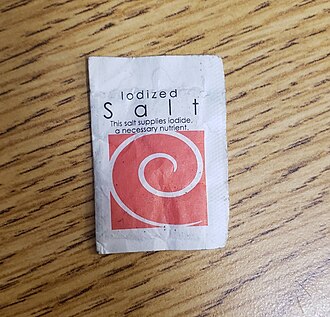
Photo: Wikipedia
Iodized table salt is a crystalline mineral, primarily sodium chloride, fortified with the essential trace element iodine to prevent deficiency disorders. Its pure, sharp, and intensely salty taste is a foundational flavor enhancer, dissolving instantly on the tongue to amplify the natural tastes of other ingredients. Nutritionally, it provides 0 calories but is a critical source of iodine, which is vital for healthy thyroid function and metabolic regulation.
💚 Why it's loved
People love it for its universal ability to transform bland food into something savory and satisfying, a fundamental building block of flavor across nearly every cuisine. Its versatility is unmatched, from seasoning a simple boiled egg to balancing the sweetness in a dessert, making it an indispensable kitchen staple.
⚠️ Watch-outs & how to enjoy it better
Excessive consumption is linked to high blood pressure and cardiovascular strain due to its high sodium content. To counteract this, practice strict portion control (e.g., using measuring spoons), opt for low-sodium alternatives, and pair salty foods with potassium-rich options like bananas or sweet potatoes to help balance sodium levels. Individuals with specific thyroid conditions should consult a doctor about iodine intake.
Key benefits
- Prevents iodine deficiency disorders like goiter.
- Enhances the natural flavor of foods without adding calories.
- Essential for healthy thyroid hormone production.
- Helps maintain fluid balance and nerve function.
🍽️ Popular dishes






🌍 Where it's eaten
💡 Did you know?
The practice of adding iodine to table salt began in the 1920s in the United States and Switzerland, dramatically reducing the prevalence of goiter and cretinism in populations with iodine-deficient soils.
Full nutrition (USDA data · scales with serving)
| Water | 0.42 g |
| Energy (Atwater General Factors) | 0.00 kcal |
| Ash | 99.0 g |
| Calcium, Ca | 50.0 mg |
| Iron, Fe | 0.00 mg |
| Magnesium, Mg | 0.00 mg |
| Phosphorus, P | 0.00 mg |
| Potassium, K | 2.0 mg |
| Sodium, Na | 38700 mg |
| Zinc, Zn | 0.00 mg |
| Copper, Cu | 0.00 mg |
| Manganese, Mn | 0.03 mg |
| Iodine, I | 5080 ug |
FAQ
Why is iodine added to table salt?
Iodine is added to prevent iodine deficiency, which can lead to thyroid disorders like goiter. It's a public health measure to ensure adequate intake of this essential nutrient.
Is iodized salt different from sea salt?
Yes, iodized salt is typically refined table salt with added iodine. Sea salt is harvested from seawater and may contain trace minerals, but it is not usually fortified with iodine unless specified.
How much iodized salt should I consume daily?
The recommended daily intake of iodine for adults is about 150 micrograms. A single teaspoon of iodized salt provides roughly 250 micrograms, so a small amount is sufficient to meet daily needs.
Dietary load (calculated from USDA values)
Sodium-to-potassium ratio: 19350.00 (lower is better — aim for ≤ 1)
Sodium:potassium per WHO potassium guidance. Computed from USDA nutrients.