

Sourdough Bread
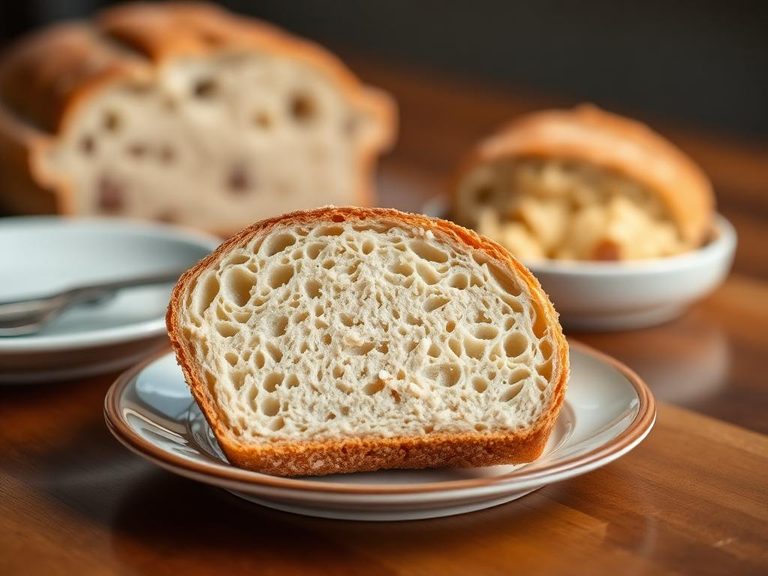
Sourdough bread is a traditional leavened bread that uses a naturally fermented starter culture of wild yeast and lactic acid bacteria instead of commercial yeast. Its primary ingredients are flour, water, and salt, with the starter providing the leavening. It is believed to have originated in ancient Egypt around 1500 BC.
🍳 View the full Sourdough Bread recipe →
🍽️ Nutrition at a glance
Sourdough is primarily a source of complex carbohydrates, with a moderate amount of plant-based protein. The fermentation process can make its minerals more bioavailable and may result in a lower glycemic index compared to conventional bread, with a typical slice containing around 120-150 calories.
Nutrition breakdown
| Calories | 130 kcal |
| Protein | 5 g |
| Carbs | 25 g |
| Fat | 1 g |
| Fiber | 1.5 g |
| Sugar | 1 g |
| Sodium | 250 mg |
| Iron | 1.5 mg |
| Thiamine (B1) | 0.2 mg |
| Niacin (B3) | 2.5 mg |
| Folate | 40 mcg |
| Selenium | 10 mcg |
| Manganese | 0.5 mg |
| Magnesium | 20 mg |
| Phosphorus | 60 mg |
Per 1 slice (approx. 50 g) · estimated, varies by recipe
💡 What's interesting
The unique, tangy flavor and chewy texture come from the long fermentation, which also breaks down some gluten and phytic acid, potentially making it easier to digest for some people. Its starter, or 'mother dough,' can be kept alive for decades, connecting bakers across generations.
🍽️ Related dishes







AI estimate may be inaccurate · Terms