

Soy Sauce
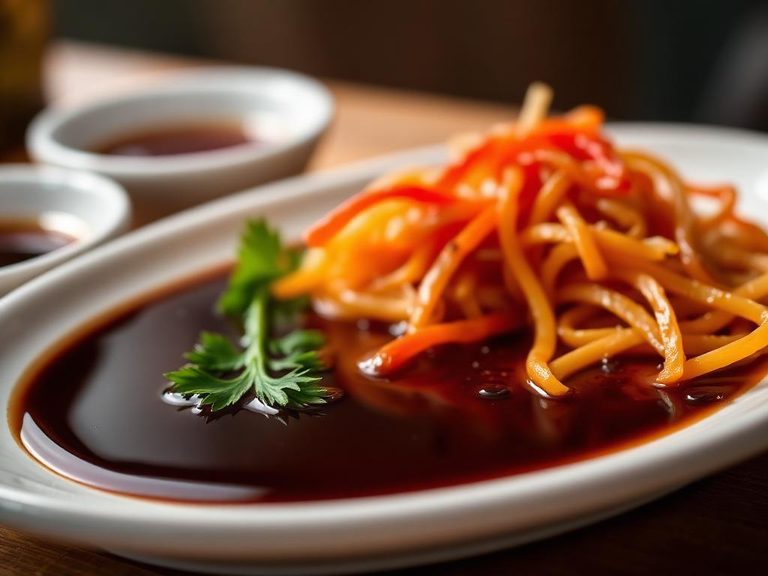
Soy sauce is a fermented liquid condiment made primarily from soybeans, wheat, water, and salt. Originating in China over 2,000 years ago, it is a cornerstone of East and Southeast Asian cuisines, used to add salty, umami depth to dishes.
🍳 View the full Soy Sauce recipe →
🍽️ Nutrition at a glance
It is very low in carbohydrates, fat, and protein, providing almost no calories. Its key contribution is sodium, along with small amounts of minerals like manganese and trace amounts of B vitamins from the fermentation process.
Nutrition breakdown
| Calories | 8 kcal |
| Protein | 1 g |
| Carbs | 0.8 g |
| Fat | 0 g |
| Fiber | 0 g |
| Sugar | 0.1 g |
| Sodium | 879 mg |
| Sodium | 879 mg |
| Potassium | 25 mg |
| Iron | 0.4 mg |
| Manganese | 0.1 mg |
| Niacin (B3) | 0.6 mg |
| Riboflavin (B2) | 0.01 mg |
| Magnesium | 3 mg |
| Phosphorus | 10 mg |
Per 1 tablespoon (15 g) · estimated, varies by recipe
💡 What's interesting
Its complex, savory 'umami' flavor develops through a lengthy fermentation process where molds, yeasts, and bacteria break down proteins and starches. Historically, it was so valuable in parts of Asia that it was sometimes used as currency or a form of payment.
🍽️ Related dishes





AI estimate may be inaccurate · Terms