

Kimchi
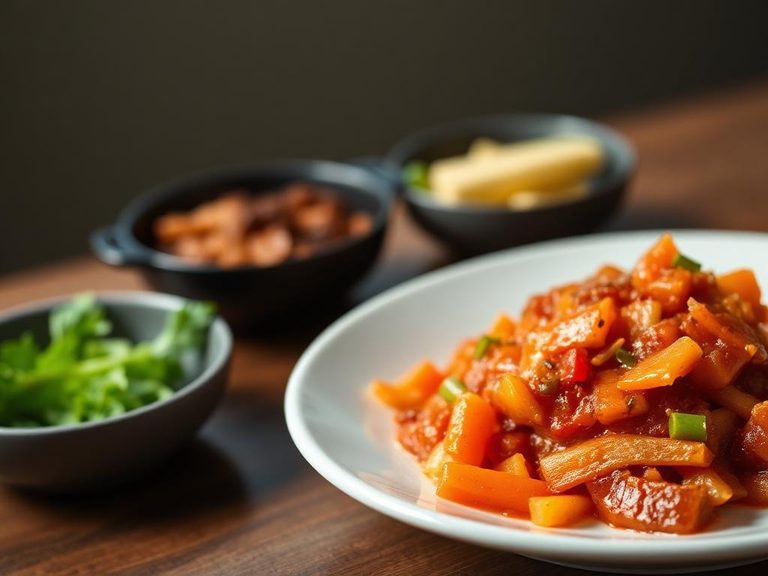
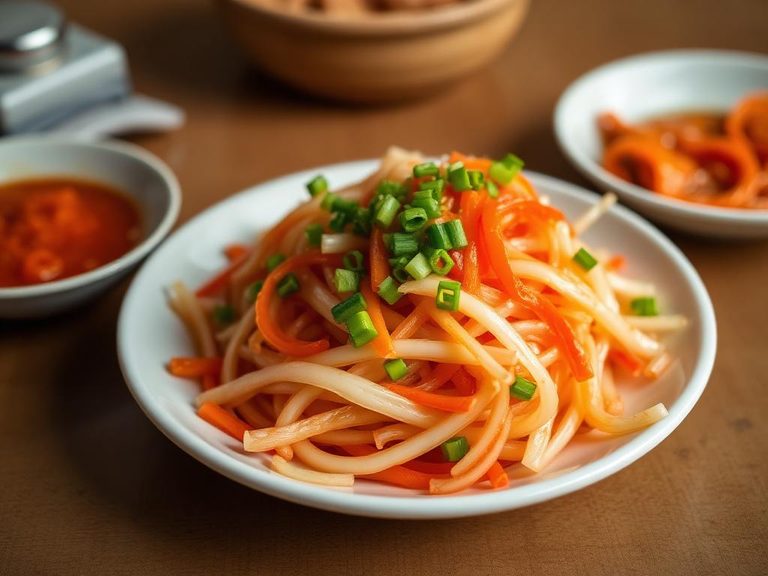
Kimchi is a traditional Korean side dish made from salted and fermented vegetables, most commonly napa cabbage and Korean radishes, seasoned with chili powder, garlic, ginger, and fermented seafood. It is a staple in Korean cuisine, known for its pungent, spicy, and tangy flavor profile that develops through the fermentation process.
🍳 View the full Kimchi recipe →
🍽️ Nutrition at a glance
Kimchi is generally low in calories and fat, providing a good source of vitamins A, C, and K, as well as dietary fiber and beneficial probiotics from fermentation. A typical 100-gram serving contains roughly 20-30 calories, with most of its energy coming from carbohydrates.
Nutrition breakdown
| Calories | 23 kcal |
| Protein | 1.7 g |
| Carbs | 4.3 g |
| Fat | 0.5 g |
| Fiber | 2.4 g |
| Sugar | 1.8 g |
| Sodium | 747 mg |
| Vitamin C | 18 mg |
| Vitamin K | 43 mcg |
| Vitamin B6 | 0.2 mg |
| Folate | 30 mcg |
| Iron | 1.5 mg |
| Calcium | 33 mg |
| Potassium | 147 mg |
| Manganese | 0.2 mg |
Per 1 cup (240 g) · estimated, varies by recipe
💡 What's interesting
Culturally, kimchi is a cornerstone of Korean identity, with annual communal preparation events called 'kimjang' recognized by UNESCO as an important cultural heritage. Nutritionally, its fermentation process creates a rich array of probiotics, which are known to support gut health, making it a functional food with historical roots in preservation and wellness.
🍽️ Related dishes
AI estimate may be inaccurate · Terms