

Radishes, raw
Whole food · Vegetables and Vegetable Products
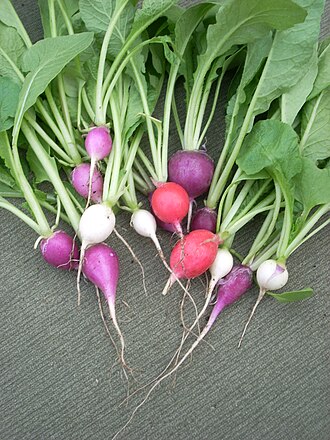
Photo: Wikipedia
The raw radish is a crisp, peppery root vegetable from the brassica family, prized for its satisfying crunch and sharp, slightly spicy bite. Nutritionally, it's a low-calorie powerhouse, delivering fiber and vitamin C with minimal impact on blood sugar.
Calorie split: 16% protein · 79% carbs · 5% fat
↓ Full nutrition💚 Why it's loved
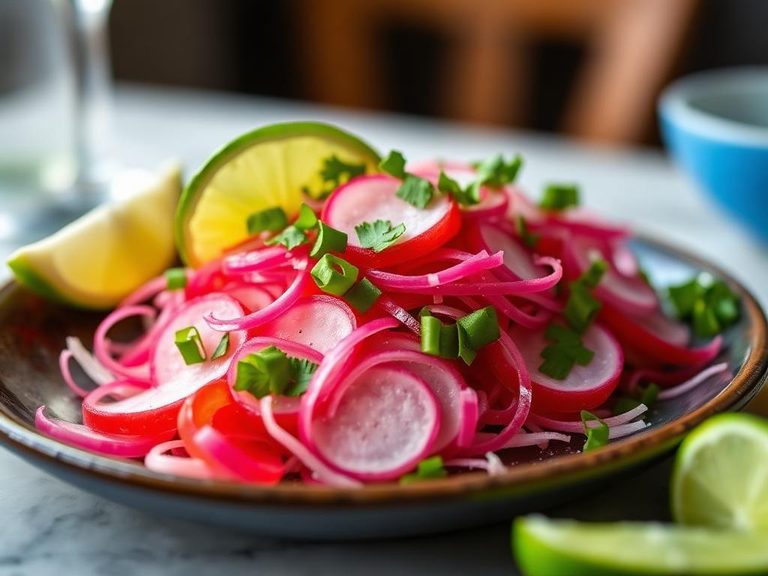
People love the radish for its unmistakable peppery zing and refreshing crunch, which can cut through rich, fatty foods. It's also celebrated for its versatility, enjoyed raw in salads, pickled, or quick-pickled as a condiment across many cuisines.
⚠️ Watch-outs & how to enjoy it better
The strong, peppery flavor can be off-putting to some, especially children. For those with sensitive digestion or IBS, the high fiber and FODMAP content may cause gas or bloating. To counteract this, try roasting or sautéing to mellow the flavor and break down fibers, or start with a small portion to assess tolerance.
Key benefits
- Excellent source of vitamin C for immune support
- High water content aids hydration
- Contains glucosinolates, compounds studied for their antioxidant properties
- Provides dietary fiber for digestive health
- Very low in calories and fat
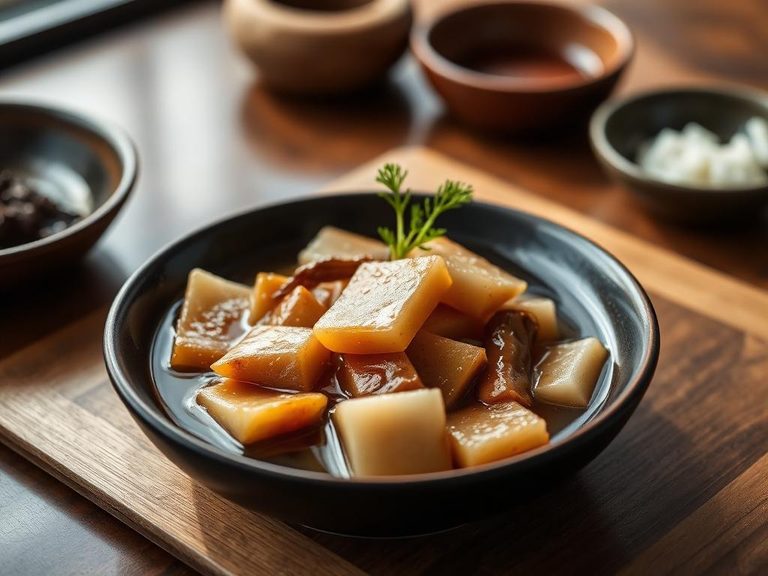
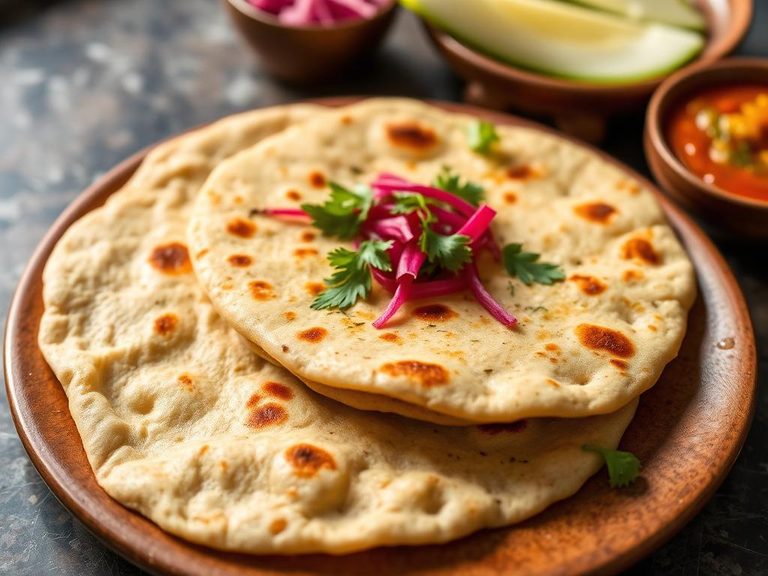
🍽️ Popular dishes
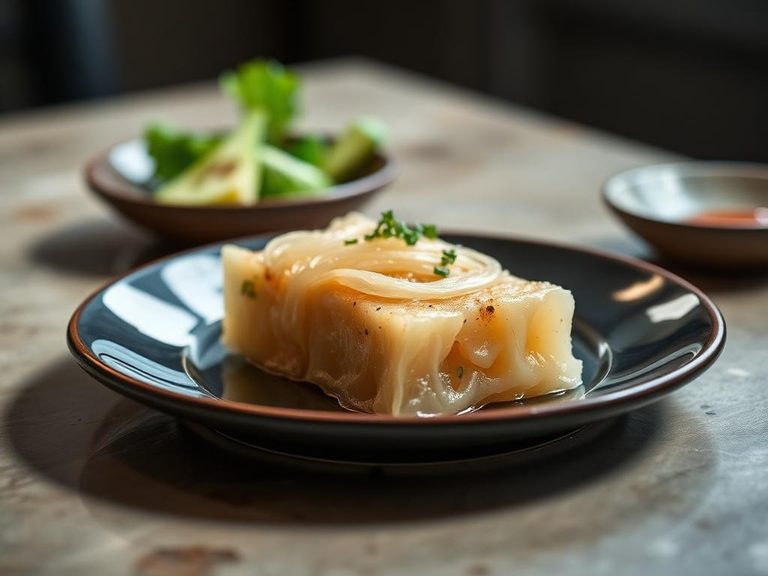
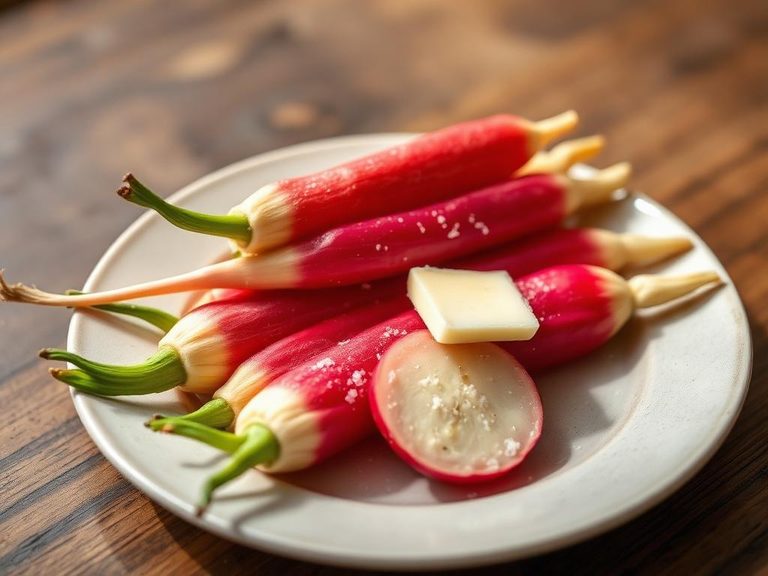
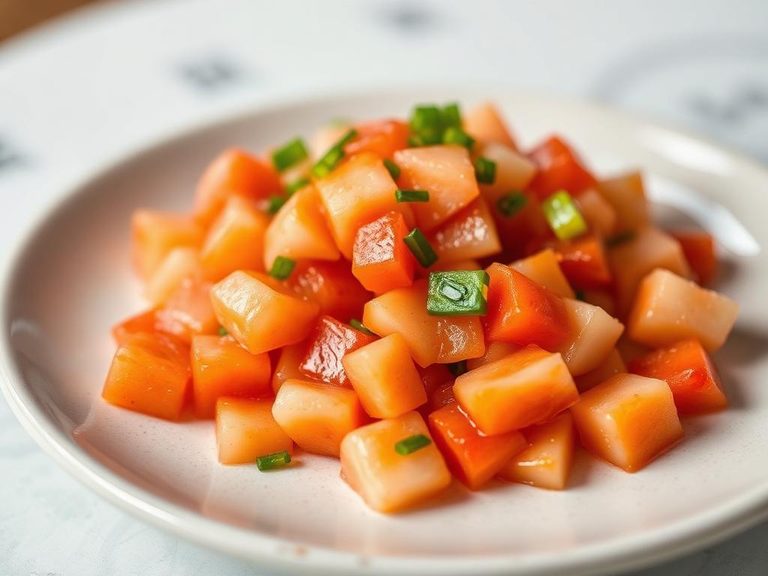
🌍 Where it's eaten
💡 Did you know?
The word 'radish' comes from the Latin 'radix,' meaning root, and ancient Egyptians were so fond of them they reportedly fed them to the workers who built the pyramids.
Full nutrition (USDA data · scales with serving)
| Water | 95.3 g |
| Energy | 16.0 kcal |
| Energy | 66.0 kj |
| Protein | 0.68 g |
| Total lipid (fat) | 0.10 g |
| Ash | 0.55 g |
| Carbohydrate, by difference | 3.4 g |
| Fiber, total dietary | 1.6 g |
| Total Sugars | 1.9 g |
| Sucrose | 0.10 g |
| Glucose | 1.1 g |
| Fructose | 0.71 g |
| Lactose | 0.00 g |
| Maltose | 0.00 g |
| Galactose | 0.00 g |
| Starch | 0.00 g |
| Calcium, Ca | 25.0 mg |
| Iron, Fe | 0.34 mg |
| Magnesium, Mg | 10.0 mg |
| Phosphorus, P | 20.0 mg |
| Potassium, K | 233 mg |
| Sodium, Na | 39.0 mg |
| Zinc, Zn | 0.28 mg |
| Copper, Cu | 0.05 mg |
| Manganese, Mn | 0.07 mg |
| Selenium, Se | 0.60 ug |
| Fluoride, F | 6.0 ug |
| Vitamin C, total ascorbic acid | 14.8 mg |
| Thiamin | 0.01 mg |
| Riboflavin | 0.04 mg |
| Niacin | 0.25 mg |
| Pantothenic acid | 0.17 mg |
| Vitamin B-6 | 0.07 mg |
| Folate, total | 25.0 ug |
| Folic acid | 0.00 ug |
| Folate, food | 25.0 ug |
| Folate, DFE | 25.0 ug |
| Choline, total | 6.5 mg |
| Betaine | 0.10 mg |
| Vitamin B-12 | 0.00 ug |
| Vitamin B-12, added | 0.00 ug |
| Vitamin A, RAE | 0.00 ug |
| Retinol | 0.00 ug |
| Carotene, beta | 4.0 ug |
| Carotene, alpha | 0.00 ug |
| Cryptoxanthin, beta | 0.00 ug |
| Vitamin A, IU | 7.0 iu |
| Lycopene | 0.00 ug |
| Lutein + zeaxanthin | 10.0 ug |
| Vitamin E (alpha-tocopherol) | 0.00 mg |
| Vitamin E, added | 0.00 mg |
| Tocopherol, beta | 0.00 mg |
| Tocopherol, gamma | 0.00 mg |
| Tocopherol, delta | 0.00 mg |
| Tocotrienol, alpha | 0.02 mg |
| Tocotrienol, beta | 0.00 mg |
| Tocotrienol, gamma | 0.00 mg |
| Tocotrienol, delta | 0.00 mg |
| Vitamin D (D2 + D3), International Units | 0.00 iu |
| Vitamin D (D2 + D3) | 0.00 ug |
| Vitamin K (phylloquinone) | 1.3 ug |
| Vitamin K (Dihydrophylloquinone) | 0.00 ug |
| Alcohol, ethyl | 0.00 g |
| Caffeine | 0.00 mg |
| Theobromine | 0.00 mg |
Fat & fatty acid profile (per 100g)
| Fatty acids, total saturated | 0.03 g |
| SFA 4:0 | 0.00 g |
| SFA 6:0 | 0.00 g |
| SFA 8:0 | 0.00 g |
| SFA 10:0 | 0.00 g |
| SFA 12:0 | 0.00 g |
| SFA 14:0 | 0.00 g |
| SFA 16:0 | 0.03 g |
| SFA 18:0 | 0.00 g |
| Fatty acids, total monounsaturated | 0.02 g |
| MUFA 16:1 | 0.00 g |
| MUFA 18:1 | 0.02 g |
| MUFA 20:1 | 0.00 g |
| MUFA 22:1 | 0.00 g |
| Fatty acids, total polyunsaturated | 0.05 g |
| PUFA 18:2 | 0.02 g |
| PUFA 18:3 | 0.03 g |
| PUFA 18:4 | 0.00 g |
| PUFA 20:4 | 0.00 g |
| PUFA 20:5 n-3 (EPA) | 0.00 g |
| PUFA 22:5 n-3 (DPA) | 0.00 g |
| PUFA 22:6 n-3 (DHA) | 0.00 g |
| Fatty acids, total trans | 0.00 g |
| Cholesterol | 0.00 mg |
| Phytosterols | 7.0 mg |
Amino acid profile (per 100g)
| Tryptophan | 0.01 g |
| Threonine | 0.02 g |
| Isoleucine | 0.02 g |
| Leucine | 0.03 g |
| Lysine | 0.03 g |
| Methionine | 0.01 g |
| Cystine | 0.01 g |
| Phenylalanine | 0.04 g |
| Tyrosine | 0.01 g |
| Valine | 0.04 g |
| Arginine | 0.04 g |
| Histidine | 0.01 g |
| Alanine | 0.03 g |
| Aspartic acid | 0.06 g |
| Glutamic acid | 0.16 g |
| Glycine | 0.03 g |
| Proline | 0.02 g |
| Serine | 0.03 g |
FAQ
Are the greens of a radish edible?
Yes, radish greens are edible and nutritious. They have a peppery flavor similar to arugula and can be sautéed, added to soups, or blended into pesto.
How can I reduce the spicy bite of a radish?
Soaking sliced radishes in ice water for 10-15 minutes can mellow their pungency. Cooking methods like roasting or sautéing also significantly reduce the sharpness.
What is the difference between a red radish and a daikon radish?
Red radishes are small, round, and typically eaten raw with a sharper bite. Daikon is a large, white, milder Asian radish often used in cooked dishes, pickles, and grated as a condiment.
Nutrient density (calculated · NRF9.3)
Nutrient Rich Foods index: beneficial nutrients (protein, fiber, vitamins, minerals) minus saturated fat, added sugar & sodium, per 100 kcal.
NRF9.3 index — Fulgoni, Keast & Drewnowski, 2009. Computed from USDA nutrients.
Weight-loss friendliness (composite index)
Energy density 0.16 kcal/g · 17% calories from protein · 1.6 g fiber · 1.9 g sugar per 100 g.
Composite of energy density (Rolls et al., 1999), protein & fiber satiety, minus sugar. A calculated heuristic — ranks satiety-per-calorie, not a clinical measure.
Dietary load (calculated from USDA values)
Potential renal acid load. Positive = acid-forming, negative = alkaline-forming.
Sodium-to-potassium ratio: 0.17 (lower is better — aim for ≤ 1)
Sodium:potassium per WHO potassium guidance. Computed from USDA nutrients.