

Japanese oden
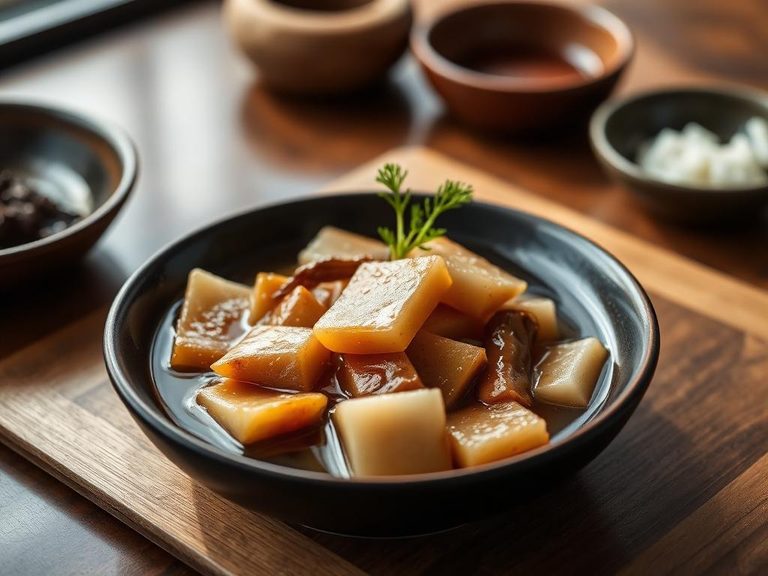
Japanese oden is a classic one-pot winter dish where various ingredients are slowly simmered in a light, savory dashi broth. The star ingredient is often the daikon radish, which becomes incredibly tender and absorbs the broth's flavor, alongside items like boiled eggs, konjac (konnyaku), and various fish cakes. It's a beloved comfort food found everywhere from home kitchens to convenience stores across Japan.
🍳 View the full Japanese oden recipe →
🍽️ Nutrition at a glance
Oden is generally a low-calorie, low-fat dish, with the primary nutrient being carbohydrates from the daikon and other ingredients. It provides a good source of fiber from the radish and protein from the eggs and fish cakes, with a typical serving ranging from 150 to 300 calories depending on the ingredients chosen.
Nutrition breakdown
| Calories | 60 kcal |
| Protein | 5 g |
| Carbs | 8 g |
| Fat | 1 g |
| Fiber | 2 g |
| Sugar | 3 g |
| Sodium | 450 mg |
| Potassium | 350 mg |
| Sodium | 450 mg |
| Vitamin C | 15 mg |
| Vitamin B6 | 0.1 mg |
| Niacin (B3) | 1.5 mg |
| Phosphorus | 80 mg |
| Magnesium | 25 mg |
| Iron | 1.2 mg |
Per 1 cup (240 g) · estimated, varies by recipe
💡 What's interesting
Culturally, oden is a quintessential 'nabe' (hot pot) dish that embodies the Japanese concept of 'umami' through its dashi base. Nutritionally, the slow simmering process allows the daikon to become a flavorful, low-calorie vehicle for the broth's nutrients, making it a uniquely satisfying and light meal for cold weather.
🍽️ Related dishes





AI estimate may be inaccurate · Terms