

Oden
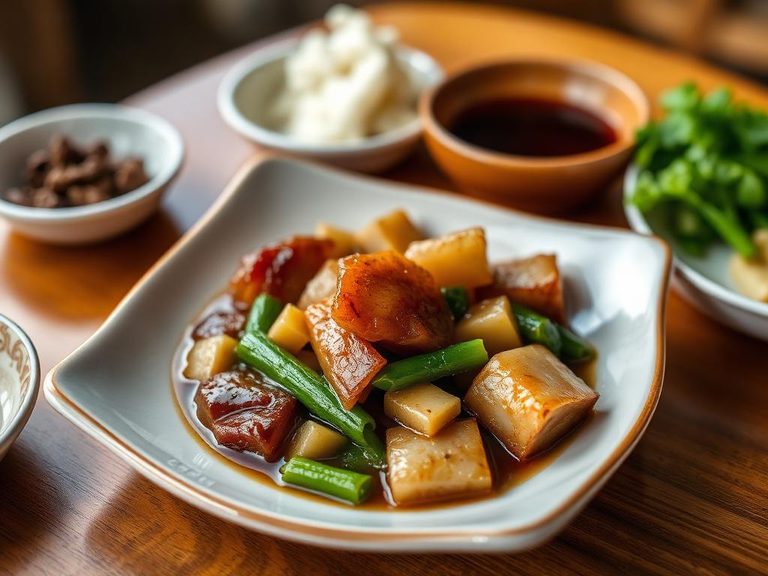
Oden is a classic Japanese one-pot winter dish consisting of various ingredients simmered in a light, savory dashi broth. It typically features items like boiled eggs, daikon radish, konjac (konnyaku), tofu products, and fish cakes, all absorbing the umami-rich flavors of the broth. Originating from the Edo period, it's a beloved comfort food found in homes, izakayas, and convenience stores across Japan.
🍽️ Nutrition at a glance
Oden is generally a low-fat, moderate-protein, and low-carb dish, making it a light yet satisfying meal. It provides key nutrients like potassium from the daikon and eggs, along with some B vitamins and minerals, with a typical serving containing around 150-250 calories depending on the specific ingredients chosen.
Nutrition breakdown
| Calories | 120 kcal |
| Protein | 8 g |
| Carbs | 12 g |
| Fat | 5 g |
| Fiber | 2 g |
| Sugar | 3 g |
| Sodium | 950 mg |
| Potassium | 300 mg |
| Sodium | 950 mg |
| Phosphorus | 120 mg |
| Vitamin B12 | 1.5 mcg |
| Niacin (B3) | 2.5 mg |
| Iron | 1.2 mg |
| Zinc | 1.0 mg |
| Copper | 0.2 mg |
Per 1 cup (240 g) with broth and assorted ingredients (e.g., fish cake, daikon, egg) · estimated, varies by recipe
💡 What's interesting
Culturally, oden is a communal dish often enjoyed from a shared pot, symbolizing warmth and togetherness in the cold months. Nutritionally, its slow-simmering method allows ingredients to absorb the broth's flavors without added fats, making it a naturally hydrating and electrolyte-rich meal, especially when seasoned with soy sauce or miso.
🍽️ Related dishes
AI estimate may be inaccurate · Terms