

Japanese Tempura
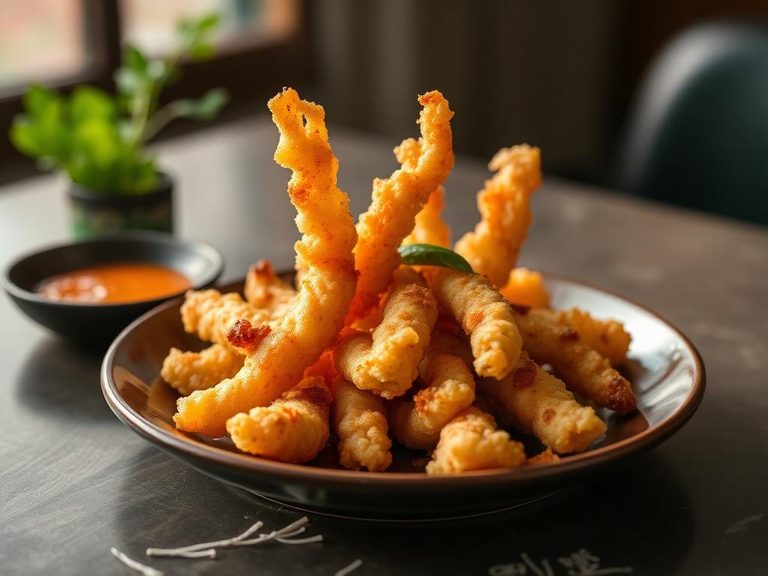
Japanese Tempura is a classic dish of lightly battered and deep-fried seafood and vegetables, known for its incredibly light and crispy texture. It typically features ingredients like shrimp, squid, sweet potato, eggplant, and shiso leaves, all coated in a delicate batter made from cold water, flour, and sometimes egg. Originating from Portugal in the 16th century, it was adopted and refined in Japan, becoming a staple of both home cooking and high-end cuisine.
🍳 View the full Japanese Tempura recipe →
🍽️ Nutrition at a glance
Tempura is high in fat due to the deep-frying process, but its thin batter keeps the carbohydrate content moderate compared to other fried foods. A typical serving provides a good source of protein from the seafood and various vitamins and minerals from the vegetables, with a rough calorie range of 300-500 calories per serving depending on the ingredients and portion size.
Nutrition breakdown
| Calories | 310 kcal |
| Protein | 12 g |
| Carbs | 28 g |
| Fat | 17 g |
| Fiber | 2 g |
| Sugar | 2 g |
| Sodium | 450 mg |
| Potassium | 280 mg |
| Phosphorus | 150 mg |
| Magnesium | 30 mg |
| Vitamin B6 | 0.3 mg |
| Niacin (B3) | 3.5 mg |
| Vitamin E | 2.5 mg |
| Iron | 1.2 mg |
| Zinc | 1.5 mg |
Per 6 pieces (180 g) · estimated, varies by recipe
💡 What's interesting
The secret to tempura's signature crispness lies in using very cold, almost ice-cold water for the batter and minimal mixing to prevent gluten development, resulting in a light, airy coating. It is often served with a light, savory dipping sauce called tentsuyu and grated daikon radish, which helps cut through the richness of the fried food.
🍽️ Related dishes

AI estimate may be inaccurate · Terms