

Tempura batter
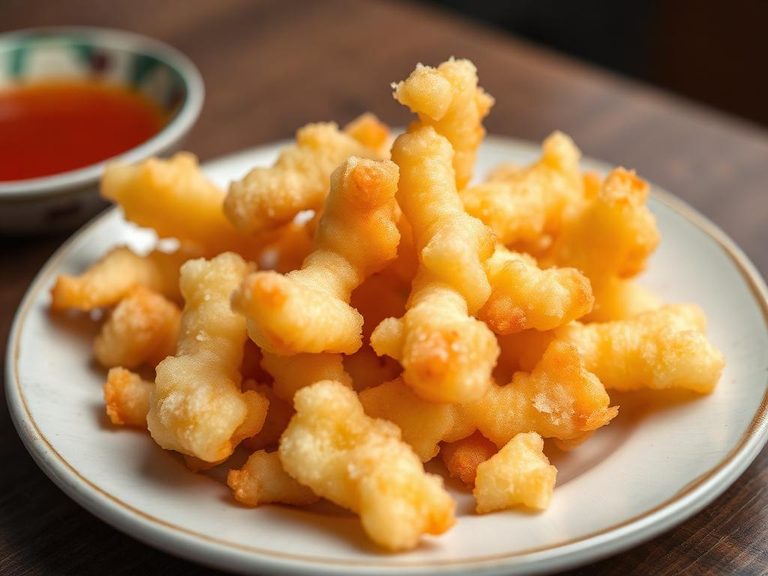
Tempura batter is a light, crispy coating used in Japanese cuisine for deep-frying seafood, vegetables, or other ingredients. It's made from a simple mixture of cold water, flour, and sometimes egg, designed to create a delicate, airy crust. This technique was introduced to Japan by Portuguese missionaries in the 16th century and has since become a staple of Japanese cooking.
🍳 View the full Tempura batter recipe →
🍽️ Nutrition at a glance
Tempura batter is high in carbohydrates from the flour and fat from the deep-frying oil, with minimal protein unless the coated ingredient is protein-rich. A typical serving of tempura (about 100g) can range from 200 to 300 calories, depending on the oil absorption and ingredients used.
Nutrition breakdown
| Calories | 250 kcal |
| Protein | 5 g |
| Carbs | 40 g |
| Fat | 8 g |
| Fiber | 1.5 g |
| Sugar | 1 g |
| Sodium | 450 mg |
| Calcium | 30 mg |
| Iron | 1.5 mg |
| Potassium | 100 mg |
| Magnesium | 15 mg |
| Phosphorus | 60 mg |
| Thiamin (B1) | 0.2 mg |
| Niacin (B3) | 2.0 mg |
| Folate | 40 mcg |
Per 1 cup (125 g) · estimated, varies by recipe
💡 What's interesting
The secret to perfect tempura lies in keeping the batter cold and minimally mixed to avoid gluten development, which ensures a light, non-greasy texture. Nutritionally, while it's a fried food, the quick cooking method at high heat helps retain more of the natural nutrients in the vegetables or seafood compared to longer cooking processes.
🍽️ Related dishes

AI estimate may be inaccurate · Terms