

Japanese Tempura Batter
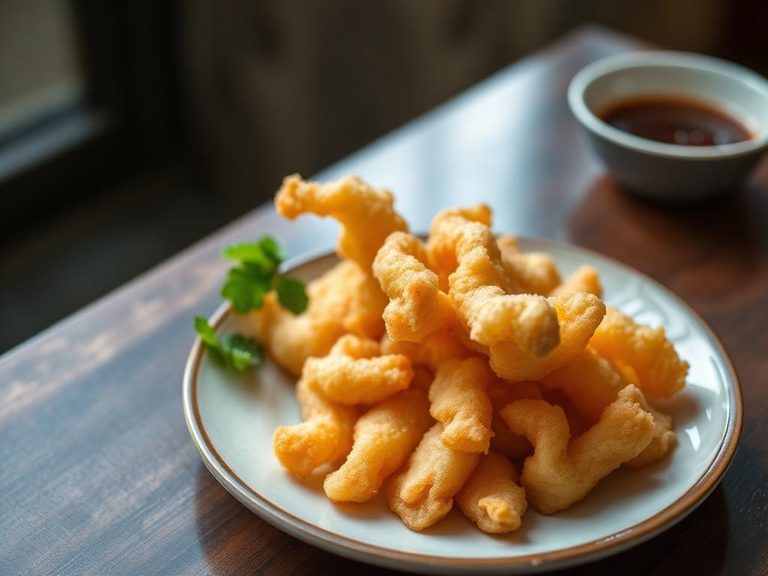
Japanese Tempura Batter is a light, crispy coating used for deep-frying seafood and vegetables, made from a simple mixture of cold water, flour, and sometimes egg. Originating in Japan, it was influenced by Portuguese frying techniques in the 16th century and has since become a staple of Japanese cuisine, known for its delicate, airy texture.
🍳 View the full Japanese Tempura Batter recipe →
🍽️ Nutrition at a glance
Tempura batter is high in carbohydrates from the flour and fat from the frying oil, with minimal protein unless paired with ingredients like shrimp. A typical serving of tempura (e.g., 3-4 pieces) can range from 200 to 400 calories, depending on the size and type of ingredients fried.
Nutrition breakdown
| Calories | 180 kcal |
| Protein | 3.5 g |
| Carbs | 28 g |
| Fat | 6.5 g |
| Fiber | 0.8 g |
| Sugar | 0.5 g |
| Sodium | 350 mg |
| Iron | 1.8 mg |
| Thiamin (B1) | 0.25 mg |
| Niacin (B3) | 2.1 mg |
| Folate | 45 mcg |
| Calcium | 20 mg |
| Magnesium | 15 mg |
| Phosphorus | 45 mg |
| Selenium | 8 mcg |
Per 1/2 cup (120 g) · estimated, varies by recipe
💡 What's interesting
The secret to tempura's crispiness lies in using ice-cold water and minimal mixing to prevent gluten development, resulting in a light, non-greasy texture. Nutritionally, while tempura is fried, the quick cooking method helps retain the nutrients of the vegetables and seafood inside, making it a flavorful way to enjoy a variety of foods.
🍽️ Related dishes

AI estimate may be inaccurate · Terms