

Sweet potato, cooked, boiled, without skin, with salt
Whole food · Vegetables and Vegetable Products
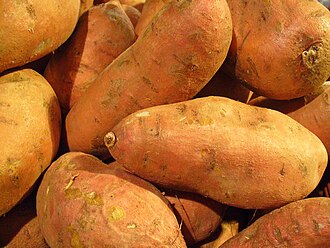
Photo: Wikipedia
A humble, creamy, and subtly sweet root vegetable transformed by boiling into a soft, comforting bite. Its vibrant orange flesh offers a gentle, earthy flavor with a smooth, melt-in-your-mouth texture. Nutritionally, it's a standout for its high fiber and vitamin A content, providing a satisfying, low-fat source of complex carbohydrates.
Calorie split: 7% protein · 91% carbs · 2% fat
↓ Full nutrition💚 Why it's loved
People adore it for its natural, caramel-like sweetness and incredibly versatile, comforting texture that fits seamlessly from a simple side to a gourmet dessert. It's a nostalgic staple in many cultures, often associated with home cooking and harvest festivals.
⚠️ Watch-outs & how to enjoy it better
Its high glycemic index can cause rapid blood sugar spikes, especially when eaten alone, and the added salt in this preparation increases sodium intake. To mitigate, pair it with a source of protein (like Greek yogurt or beans) or healthy fat (like a drizzle of olive oil or avocado) to slow digestion, and be mindful of portion size.
Key benefits
- Excellent source of beta-carotene (vitamin A precursor)
- High in dietary fiber for digestive health
- Naturally low in fat and calories
- Contains potassium for blood pressure regulation
- Provides sustained energy from complex carbs
🍽️ Popular dishes
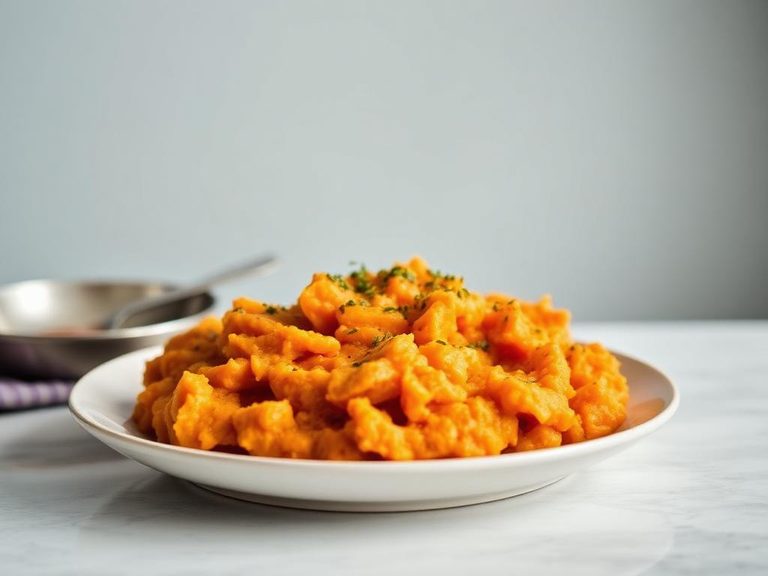
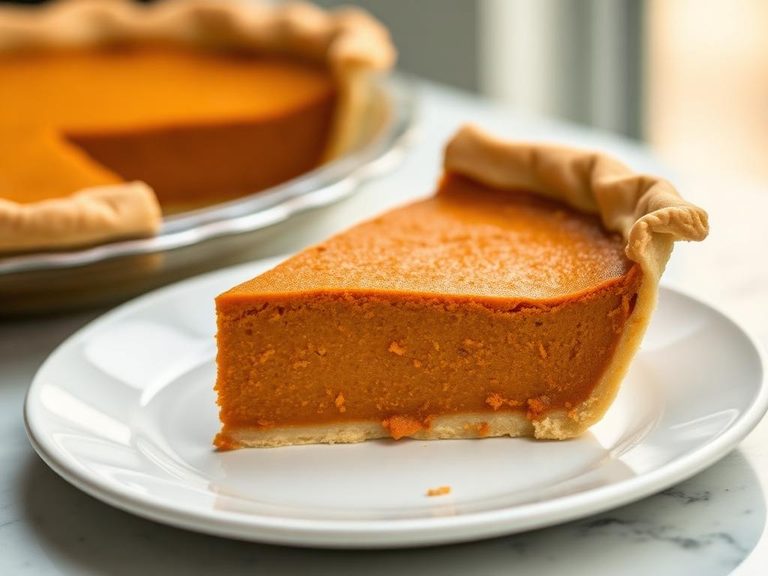
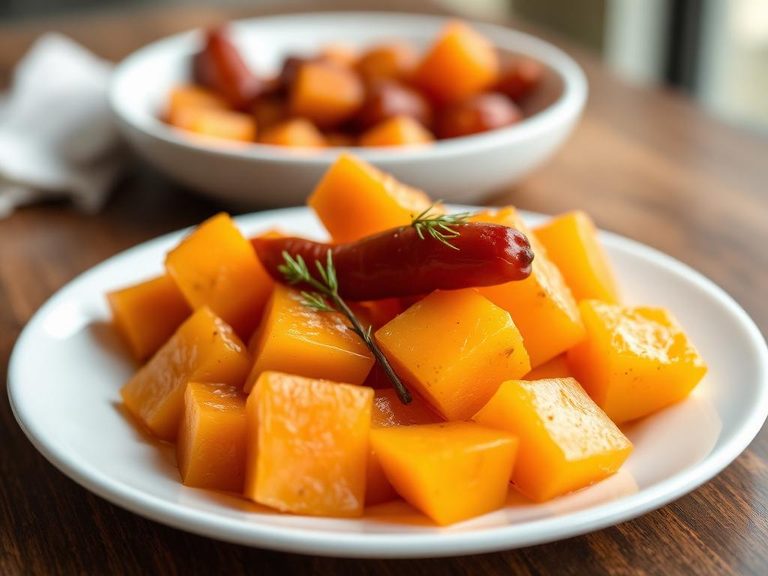
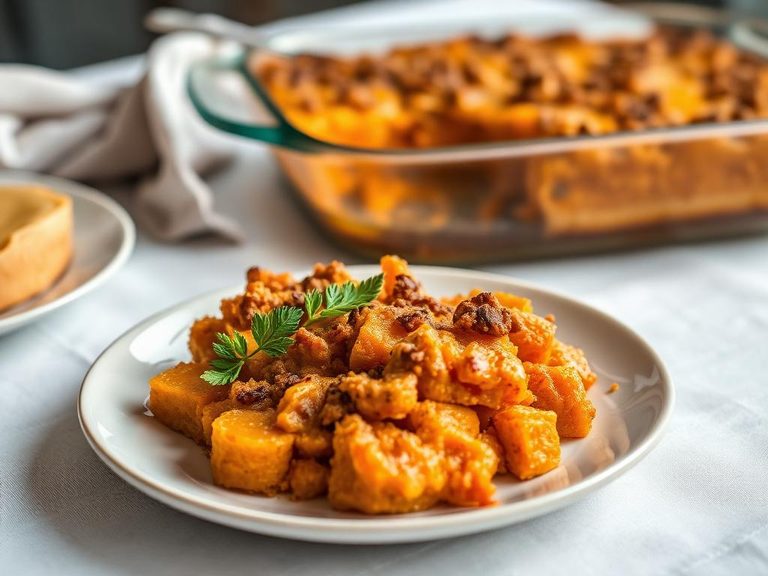
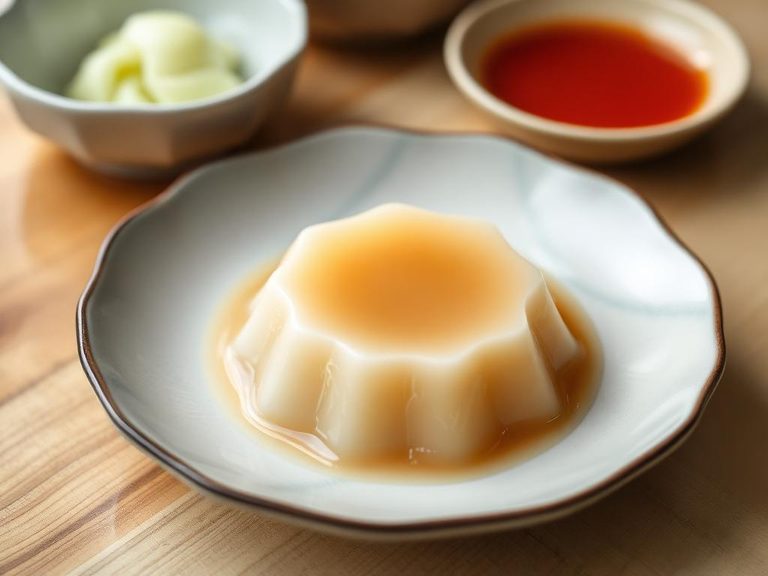
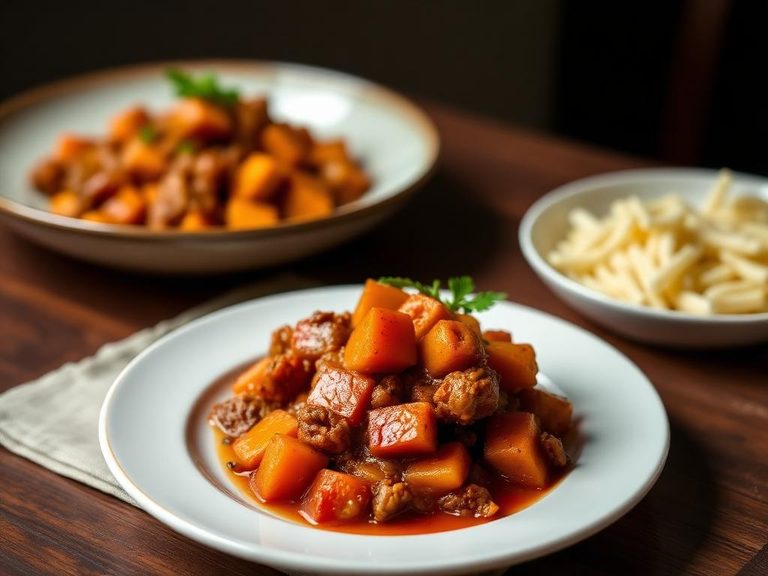
🌍 Where it's eaten
💡 Did you know?
The vibrant orange color comes from beta-carotene, so much so that eating large quantities can temporarily give your skin a yellow-orange tint, a harmless condition called carotenemia.
Full nutrition (USDA data · scales with serving)
| Water | 80.1 g |
| Energy | 76.0 kcal |
| Energy | 320 kj |
| Protein | 1.4 g |
| Total lipid (fat) | 0.14 g |
| Ash | 0.63 g |
| Carbohydrate, by difference | 17.7 g |
| Fiber, total dietary | 2.5 g |
| Total Sugars | 5.7 g |
| Sucrose | 1.4 g |
| Glucose | 0.54 g |
| Fructose | 0.43 g |
| Lactose | 0.00 g |
| Maltose | 3.3 g |
| Galactose | 0.00 g |
| Starch | 5.2 g |
| Calcium, Ca | 27.0 mg |
| Iron, Fe | 0.72 mg |
| Magnesium, Mg | 18.0 mg |
| Phosphorus, P | 32.0 mg |
| Potassium, K | 230 mg |
| Sodium, Na | 263 mg |
| Zinc, Zn | 0.20 mg |
| Copper, Cu | 0.09 mg |
| Manganese, Mn | 0.27 mg |
| Selenium, Se | 0.20 ug |
| Vitamin C, total ascorbic acid | 12.8 mg |
| Thiamin | 0.06 mg |
| Riboflavin | 0.05 mg |
| Niacin | 0.54 mg |
| Pantothenic acid | 0.58 mg |
| Vitamin B-6 | 0.17 mg |
| Folate, total | 6.0 ug |
| Folic acid | 0.00 ug |
| Folate, food | 6.0 ug |
| Folate, DFE | 6.0 ug |
| Choline, total | 10.8 mg |
| Vitamin B-12 | 0.00 ug |
| Vitamin A, RAE | 787 ug |
| Retinol | 0.00 ug |
| Carotene, beta | 9444 ug |
| Carotene, alpha | 0.00 ug |
| Cryptoxanthin, beta | 0.00 ug |
| Vitamin A, IU | 15740 iu |
| Lycopene | 0.00 ug |
| Lutein + zeaxanthin | 0.00 ug |
| Vitamin E (alpha-tocopherol) | 0.94 mg |
| Tocopherol, beta | 0.01 mg |
| Tocopherol, gamma | 0.00 mg |
| Tocopherol, delta | 0.00 mg |
| Tocotrienol, alpha | 0.00 mg |
| Tocotrienol, beta | 0.00 mg |
| Tocotrienol, gamma | 0.00 mg |
| Tocotrienol, delta | 0.00 mg |
| Vitamin D (D2 + D3), International Units | 0.00 iu |
| Vitamin D (D2 + D3) | 0.00 ug |
| Vitamin K (phylloquinone) | 2.1 ug |
| Vitamin K (Dihydrophylloquinone) | 0.00 ug |
| Alcohol, ethyl | 0.00 g |
| Caffeine | 0.00 mg |
| Theobromine | 0.00 mg |
Fat & fatty acid profile (per 100g)
| Fatty acids, total saturated | 0.04 g |
| SFA 4:0 | 0.00 g |
| SFA 6:0 | 0.00 g |
| SFA 8:0 | 0.00 g |
| SFA 10:0 | 0.00 g |
| SFA 12:0 | 0.00 g |
| SFA 14:0 | 0.00 g |
| SFA 15:0 | 0.00 g |
| SFA 16:0 | 0.04 g |
| SFA 17:0 | 0.00 g |
| SFA 18:0 | 0.00 g |
| SFA 20:0 | 0.00 g |
| SFA 22:0 | 0.00 g |
| SFA 24:0 | 0.00 g |
| Fatty acids, total monounsaturated | 0.00 g |
| MUFA 14:1 | 0.00 g |
| MUFA 15:1 | 0.00 g |
| MUFA 16:1 | 0.00 g |
| MUFA 17:1 | 0.00 g |
| MUFA 18:1 | 0.00 g |
| MUFA 20:1 | 0.00 g |
| MUFA 22:1 | 0.00 g |
| Fatty acids, total polyunsaturated | 0.08 g |
| PUFA 18:2 | 0.08 g |
| PUFA 18:3 | 0.00 g |
| PUFA 18:4 | 0.00 g |
| PUFA 20:2 n-6 c,c | 0.00 g |
| PUFA 20:3 | 0.00 g |
| PUFA 20:4 | 0.00 g |
| PUFA 20:5 n-3 (EPA) | 0.00 g |
| PUFA 22:5 n-3 (DPA) | 0.00 g |
| PUFA 22:6 n-3 (DHA) | 0.00 g |
| Fatty acids, total trans | 0.00 g |
| Cholesterol | 0.00 mg |
Amino acid profile (per 100g)
| Tryptophan | 0.02 g |
| Threonine | 0.08 g |
| Isoleucine | 0.08 g |
| Leucine | 0.12 g |
| Lysine | 0.08 g |
| Methionine | 0.04 g |
| Cystine | 0.01 g |
| Phenylalanine | 0.10 g |
| Tyrosine | 0.07 g |
| Valine | 0.11 g |
| Arginine | 0.08 g |
| Histidine | 0.03 g |
| Alanine | 0.09 g |
| Aspartic acid | 0.28 g |
| Glutamic acid | 0.16 g |
| Glycine | 0.07 g |
| Proline | 0.07 g |
| Serine | 0.09 g |
FAQ
Is boiled sweet potato healthier than baked?
Both are healthy. Boiling can cause some water-soluble nutrients (like vitamin C) to leach into the water, but it preserves more of the beta-carotene than some other methods. Baking concentrates the natural sugars and flavor without added fat.
Why is it called a 'yam' in some recipes?
In the U.S., the terms 'sweet potato' and 'yam' are often used interchangeably in stores, but true yams are a different, starchier tuber from Africa and Asia. Most orange-fleshed 'yams' in American supermarkets are actually a variety of sweet potato.
Can I eat the skin?
Yes, the skin of a sweet potato is edible and nutritious, containing fiber and potassium. For this specific preparation ('without skin'), it has been peeled, but leaving it on when boiling or baking is a great way to boost nutrition and reduce waste.
Nutrient density (calculated · NRF9.3)
Nutrient Rich Foods index: beneficial nutrients (protein, fiber, vitamins, minerals) minus saturated fat, added sugar & sodium, per 100 kcal.
NRF9.3 index — Fulgoni, Keast & Drewnowski, 2009. Computed from USDA nutrients.
Weight-loss friendliness (composite index)
Energy density 0.76 kcal/g · 7% calories from protein · 2.5 g fiber · 5.7 g sugar per 100 g.
Composite of energy density (Rolls et al., 1999), protein & fiber satiety, minus sugar. A calculated heuristic — ranks satiety-per-calorie, not a clinical measure.
Dietary load (calculated from USDA values)
Potential renal acid load. Positive = acid-forming, negative = alkaline-forming.
Sodium-to-potassium ratio: 1.14 (lower is better — aim for ≤ 1)
Sodium:potassium per WHO potassium guidance. Computed from USDA nutrients.