

Japanese Kare Raisu with Fish
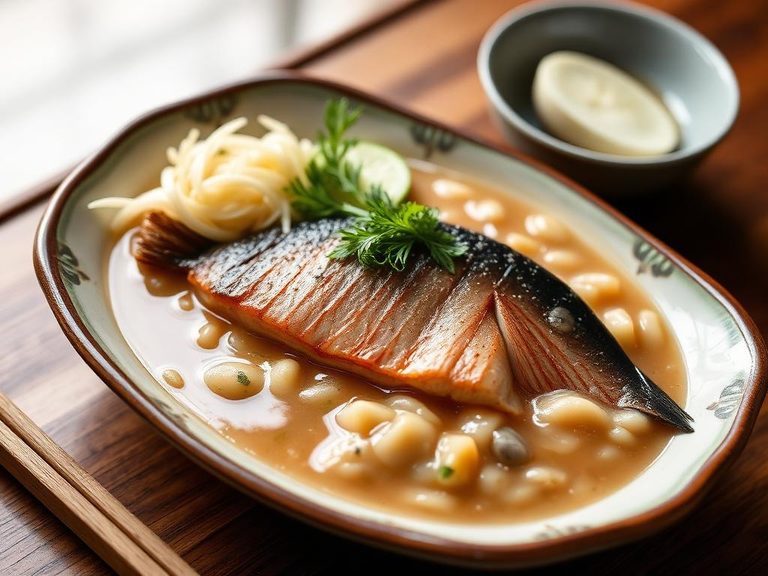
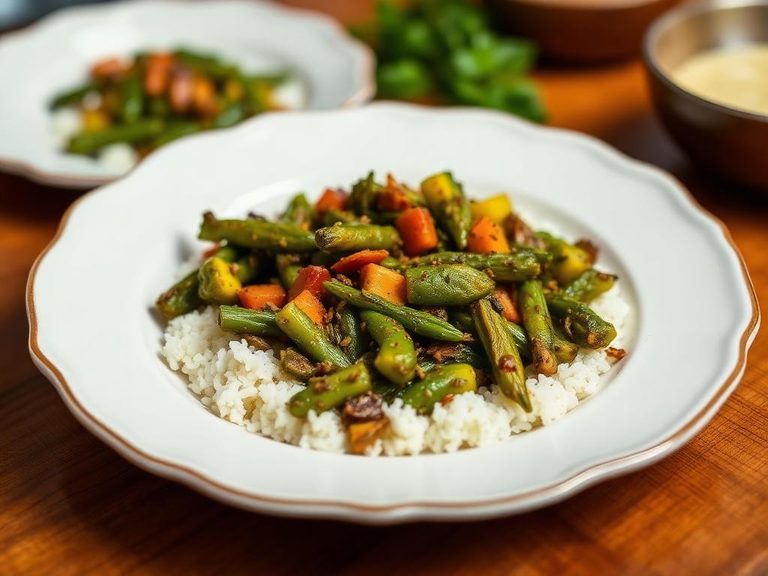
Japanese Kare Raisu with Fish is a comforting dish consisting of a rich, savory curry sauce served over steamed rice, featuring fish as the primary protein. Unlike Indian curries, Japanese curry is typically thickened with a roux and flavored with a blend of sweet and savory spices, often including onions, carrots, and potatoes. It is a staple of Japanese home cooking and casual dining, known for its mild, approachable flavor profile.
🍳 View the full Japanese Kare Raisu with Fish recipe →
🍽️ Nutrition at a glance
This dish is generally high in carbohydrates from the rice and moderate in protein from the fish, with a significant fat content depending on the curry roux and cooking method. It provides a good source of energy, along with essential nutrients like vitamin C and fiber from the vegetables, and typically ranges from 600 to 800 calories per serving.
Nutrition breakdown
| Calories | 550 kcal |
| Protein | 25 g |
| Carbs | 65 g |
| Fat | 22 g |
| Fiber | 4 g |
| Sugar | 8 g |
| Sodium | 1200 mg |
| Potassium | 450 mg |
| Iron | 3.5 mg |
| Calcium | 80 mg |
| Vitamin A | 150 mcg RAE |
| Vitamin C | 15 mg |
| Vitamin B6 | 0.4 mg |
| Niacin (B3) | 5 mg |
| Phosphorus | 300 mg |
Per 1 typical serving (350 g) · estimated, varies by recipe
💡 What's interesting
Japanese curry, or 'kare,' was introduced to Japan via the British during the Meiji era and has since evolved into a uniquely Japanese comfort food, distinct from its Indian origins. Nutritionally, the combination of fish and vegetables in a thick sauce makes it a balanced meal, often enjoyed with pickled ginger or fukujinzuke to add a tangy contrast.
🍽️ Related dishes


AI estimate may be inaccurate · Terms