

Kare-kare
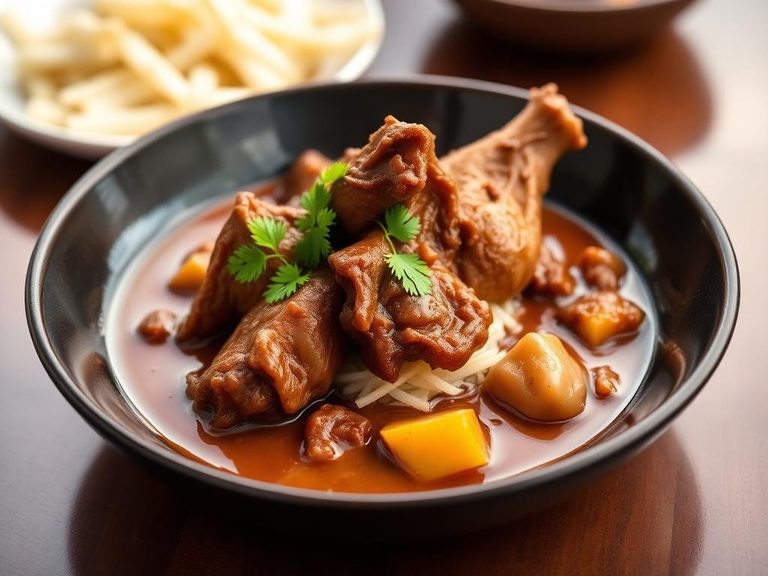
Kare-kare is a rich and savory Filipino stew, traditionally made with oxtail, tripe, and a variety of vegetables like eggplant, string beans, and banana blossoms, all simmered in a thick, creamy peanut sauce. It hails from the Philippines and is a beloved classic, often served at family gatherings and special occasions.
🍳 View the full Kare-kare recipe →
🍽️ Nutrition at a glance
This dish is high in protein and fat, primarily from the oxtail and peanut sauce, while being relatively low in carbohydrates. A typical serving provides a good source of iron, zinc, and B vitamins, with a calorie count that can range from 400 to 600 per serving depending on the cut of meat and portion size.
Nutrition breakdown
| Calories | 450 kcal |
| Protein | 30 g |
| Carbs | 15 g |
| Fat | 30 g |
| Fiber | 4 g |
| Sugar | 3 g |
| Sodium | 800 mg |
| Potassium | 500 mg |
| Iron | 4 mg |
| Vitamin A | 300 µg |
| Vitamin C | 15 mg |
| Calcium | 100 mg |
| Phosphorus | 350 mg |
| Zinc | 6 mg |
| Niacin (B3) | 8 mg |
Per 1 cup (240 g) · estimated, varies by recipe
💡 What's interesting
Kare-kare is unique for its vibrant, naturally golden-orange color, which comes from annatto seeds rather than artificial coloring, and its thick, nutty sauce is a hallmark of Filipino culinary creativity. Nutritionally, the combination of slow-cooked collagen-rich oxtail and peanuts offers a satisfying blend of protein and healthy fats.
🍽️ Related dishes
AI estimate may be inaccurate · Terms