

Stew, chicken
Common food
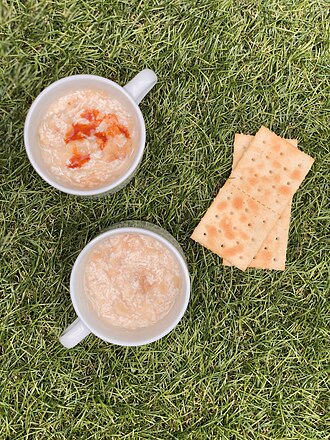
Photo: Wikipedia
Chicken stew is a hearty, slow-simmered dish where tender chunks of chicken meld with vegetables and herbs in a rich, savory broth. The texture is typically soft and comforting, with the chicken becoming fall-apart tender and the broth absorbing the flavors of all its components. Nutritionally, it's a high-protein, low-fat meal option that provides a satisfying balance of macronutrients.
Calorie split: 44% protein · 30% carbs · 25% fat
↓ Full nutrition💚 Why it's loved
People love chicken stew for its deep, comforting flavors that develop from slow cooking, making it a universal symbol of home cooking. Its versatility allows it to be adapted to countless regional cuisines and personal tastes, often served as a one-pot meal that brings families together.
⚠️ Watch-outs & how to enjoy it better
The sodium content can be high depending on the broth and seasoning used, which may concern those monitoring salt intake. To counteract this, use low-sodium broth, season with herbs and spices instead of salt, and ensure the stew is paired with unsalted sides like steamed vegetables or plain rice.
Key benefits
- Excellent source of lean protein for muscle maintenance
- Low in fat, especially saturated fat
- Rich in satiating fiber from included vegetables
- Provides a balanced mix of protein and complex carbohydrates
- Hydrating due to its high broth content
🍽️ Popular dishes
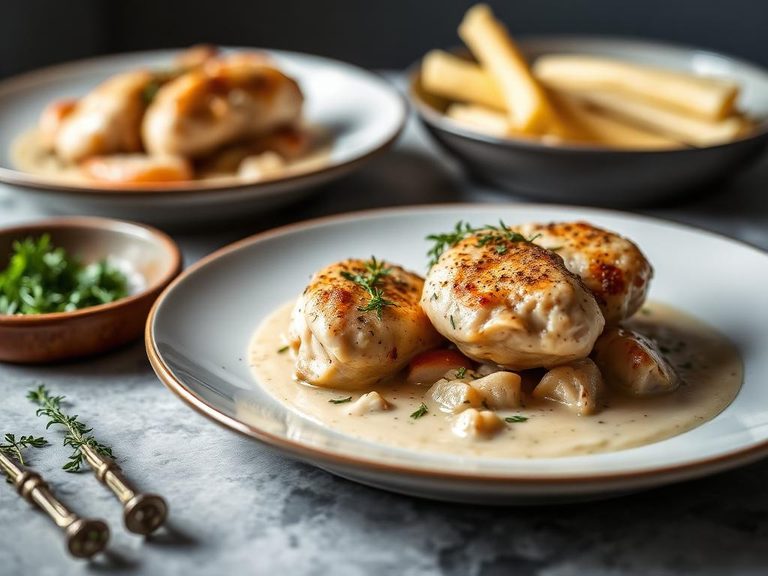
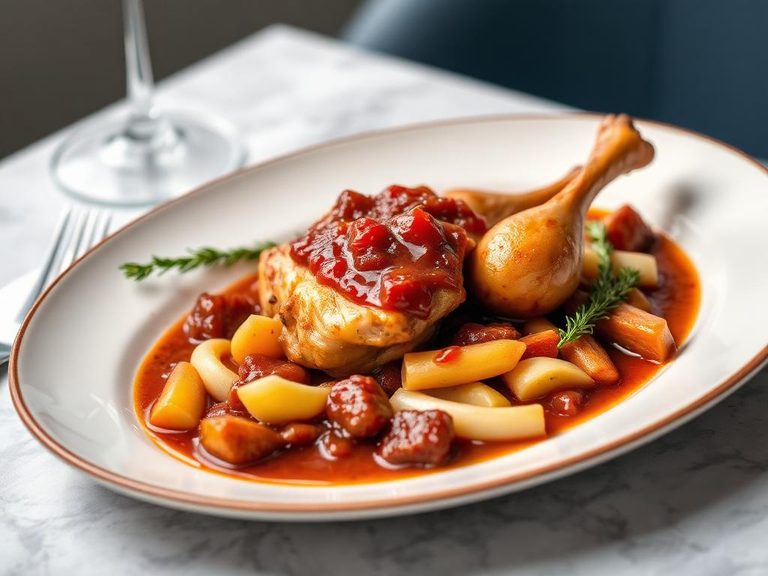
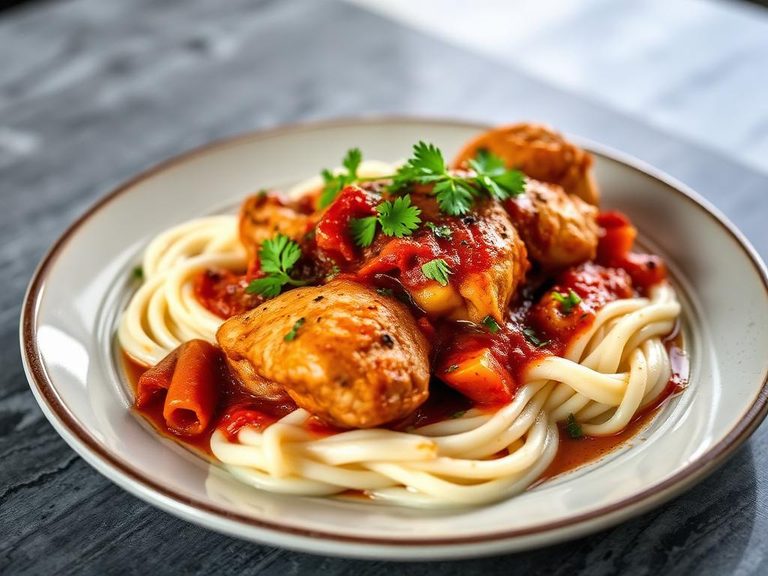
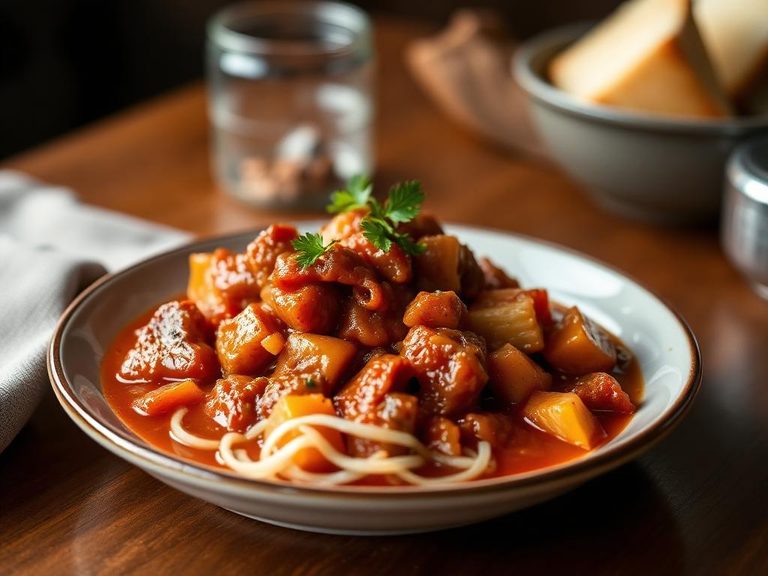
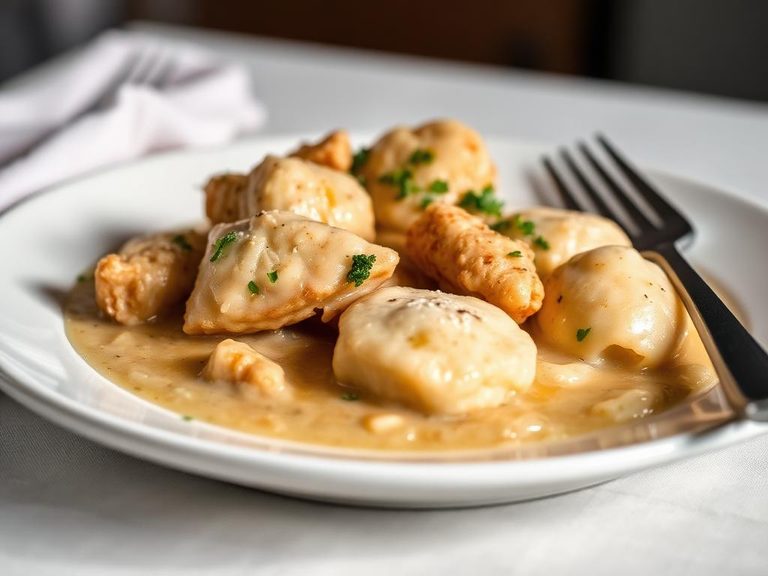

🌍 Where it's eaten
💡 Did you know?
The slow-cooking process in stews helps break down collagen in chicken connective tissue into gelatin, which gives the broth a silky, rich mouthfeel without added thickeners.
Full nutrition (USDA data · scales with serving)
| Water | 81.1 g |
| Energy | 84.0 kcal |
| Protein | 9.2 g |
| Total lipid (fat) | 2.3 g |
| Carbohydrate, by difference | 6.3 g |
| Fiber, total dietary | 1.3 g |
| Total Sugars | 1.6 g |
| Calcium, Ca | 14.0 mg |
| Iron, Fe | 0.46 mg |
| Magnesium, Mg | 18.0 mg |
| Phosphorus, P | 93.0 mg |
| Potassium, K | 251 mg |
| Sodium, Na | 309 mg |
| Zinc, Zn | 0.59 mg |
| Copper, Cu | 0.06 mg |
| Selenium, Se | 8.8 ug |
| Vitamin C, total ascorbic acid | 7.0 mg |
| Thiamin | 0.06 mg |
| Riboflavin | 0.09 mg |
| Niacin | 2.9 mg |
| Vitamin B-6 | 0.27 mg |
| Folate, total | 14.0 ug |
| Folic acid | 0.00 ug |
| Folate, food | 14.0 ug |
| Folate, DFE | 14.0 ug |
| Choline, total | 34.0 mg |
| Vitamin B-12 | 0.09 ug |
| Vitamin B-12, added | 0.00 ug |
| Vitamin A, RAE | 132 ug |
| Retinol | 3.0 ug |
| Carotene, beta | 1285 ug |
| Carotene, alpha | 517 ug |
| Cryptoxanthin, beta | 3.0 ug |
| Lycopene | 540 ug |
| Lutein + zeaxanthin | 157 ug |
| Vitamin E (alpha-tocopherol) | 0.26 mg |
| Vitamin E, added | 0.00 mg |
| Vitamin D (D2 + D3) | 0.00 ug |
| Vitamin K (phylloquinone) | 6.6 ug |
| Alcohol, ethyl | 0.00 g |
| Caffeine | 0.00 mg |
| Theobromine | 0.00 mg |
Fat & fatty acid profile (per 100g)
| Fatty acids, total saturated | 0.65 g |
| SFA 4:0 | 0.00 g |
| SFA 6:0 | 0.00 g |
| SFA 8:0 | 0.00 g |
| SFA 10:0 | 0.00 g |
| SFA 12:0 | 0.00 g |
| SFA 14:0 | 0.01 g |
| SFA 16:0 | 0.49 g |
| SFA 18:0 | 0.13 g |
| Fatty acids, total monounsaturated | 0.91 g |
| MUFA 16:1 | 0.13 g |
| MUFA 18:1 | 0.77 g |
| MUFA 20:1 | 0.01 g |
| MUFA 22:1 | 0.00 g |
| Fatty acids, total polyunsaturated | 0.51 g |
| PUFA 18:2 | 0.43 g |
| PUFA 18:3 | 0.03 g |
| PUFA 18:4 | 0.00 g |
| PUFA 20:4 | 0.03 g |
| PUFA 20:5 n-3 (EPA) | 0.00 g |
| PUFA 22:5 n-3 (DPA) | 0.00 g |
| PUFA 22:6 n-3 (DHA) | 0.00 g |
| Cholesterol | 37.0 mg |
Amino acid profile (per 100g)
Estimated from Stew, hominy with mutton (Navajo) — USDA does not publish this profile for Stew.
| Tryptophan | 0.04 g |
| Threonine | 0.24 g |
| Isoleucine | 0.25 g |
| Leucine | 0.54 g |
| Lysine | 0.43 g |
| Methionine | 0.16 g |
| Cystine | 0.07 g |
| Phenylalanine | 0.26 g |
| Tyrosine | 0.18 g |
| Valine | 0.29 g |
| Arginine | 0.39 g |
| Histidine | 0.16 g |
| Alanine | 0.42 g |
| Aspartic acid | 0.53 g |
| Glutamic acid | 0.99 g |
| Glycine | 0.45 g |
| Proline | 0.39 g |
| Serine | 0.25 g |
FAQ
Is chicken stew a good meal for weight management?
Yes, it can be. Its high protein and fiber content promote fullness, and the low fat content (especially if skinless chicken is used) makes it a nutrient-dense, lower-calorie option compared to many other hearty dishes.
How can I make chicken stew thicker without adding flour or cream?
You can naturally thicken the stew by mashing some of the cooked potatoes or beans from the stew itself against the side of the pot, or by using a small amount of pureed cooked vegetables like carrots or onions.
What's the best way to store and reheat leftover chicken stew?
Store it in an airtight container in the refrigerator for up to 3-4 days. Reheat gently on the stovetop over medium-low heat until steaming hot throughout, adding a splash of water or broth if it has thickened too much.
Nutrient density (calculated · NRF9.3)
Nutrient Rich Foods index: beneficial nutrients (protein, fiber, vitamins, minerals) minus saturated fat, added sugar & sodium, per 100 kcal.
NRF9.3 index — Fulgoni, Keast & Drewnowski, 2009. Computed from USDA nutrients.
Weight-loss friendliness (composite index)
Energy density 0.84 kcal/g · 44% calories from protein · 1.3 g fiber · 1.6 g sugar per 100 g.
Composite of energy density (Rolls et al., 1999), protein & fiber satiety, minus sugar. A calculated heuristic — ranks satiety-per-calorie, not a clinical measure.
Dietary load (calculated from USDA values)
Potential renal acid load. Positive = acid-forming, negative = alkaline-forming.
Sodium-to-potassium ratio: 1.23 (lower is better — aim for ≤ 1)
Sodium:potassium per WHO potassium guidance. Computed from USDA nutrients.