

Banana, raw
Common food
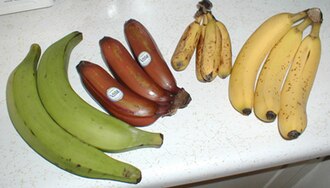
Photo: Wikipedia
The raw banana is a vibrant, curved fruit with a creamy, soft flesh encased in a thick, protective peel. Its flavor is a harmonious blend of sweet and subtly tangy, with a smooth, starchy texture when underripe that becomes luxuriously creamy as it matures. Nutritionally, it's a powerhouse of quick-release natural sugars and dietary fiber, making it an excellent source of energy.
Calorie split: 3% protein · 94% carbs · 3% fat
↓ Full nutrition💚 Why it's loved
People adore bananas for their perfectly balanced, comforting sweetness and incredibly versatile nature—they're equally at home in a morning smoothie, a decadent dessert, or as a simple, satisfying snack. Their cultural significance spans the globe, from a staple food in many tropical regions to a beloved symbol of health and convenience in Western diets.
⚠️ Watch-outs & how to enjoy it better
The high natural sugar content can cause blood-sugar spikes, particularly for those with insulin sensitivity or diabetes. To counteract this, always pair a banana with a source of protein (like nuts, yogurt, or nut butter) or healthy fat to slow sugar absorption. The ripeness level matters; a greener, less ripe banana has more resistant starch and less sugar, making it a better choice for blood-sugar management.
Key benefits
- Excellent source of potassium for heart and muscle function
- Provides quick, sustained energy from natural carbohydrates
- Contains prebiotic fiber to support digestive health
- Rich in vitamin B6 for brain health and metabolism
- Convenient, portable, and naturally packaged
🍽️ Popular dishes
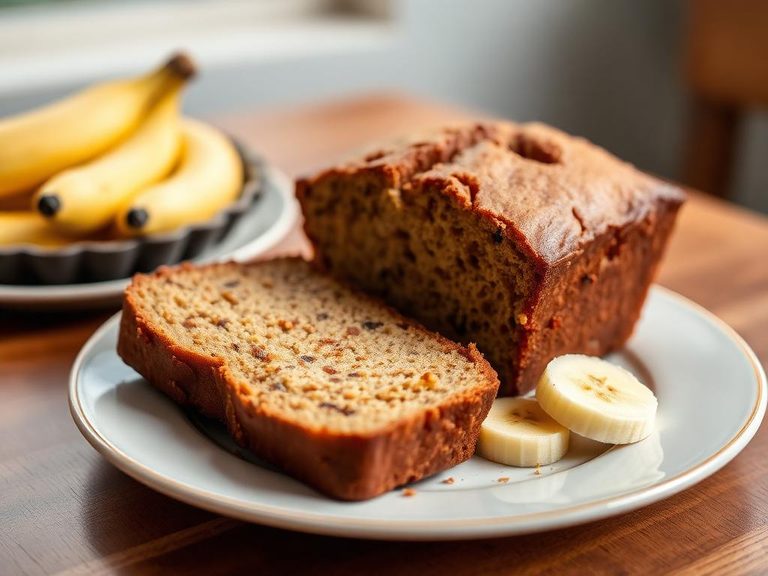
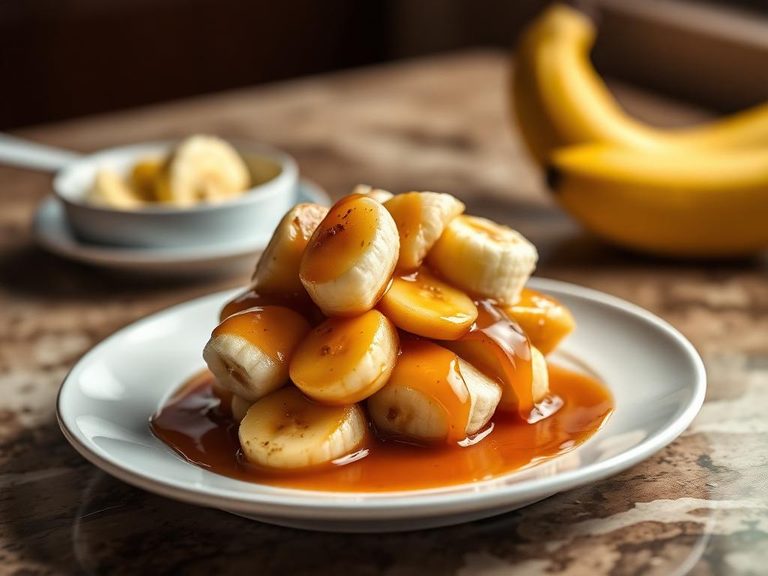
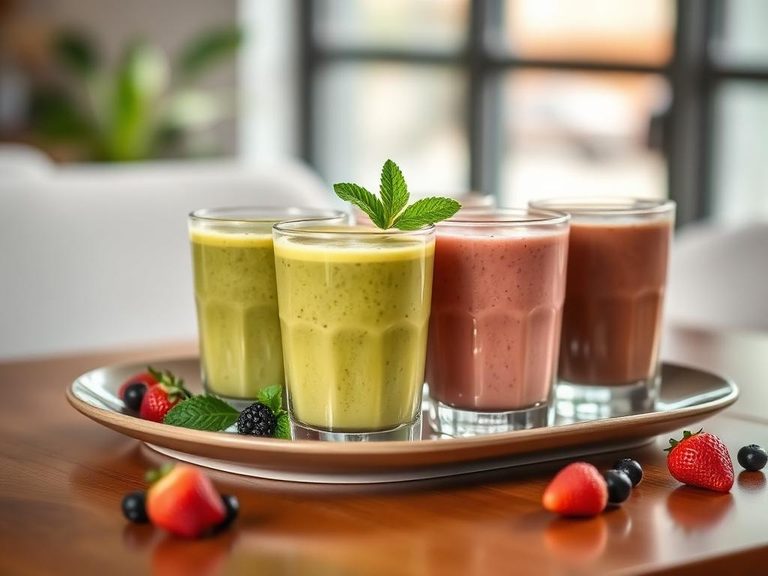
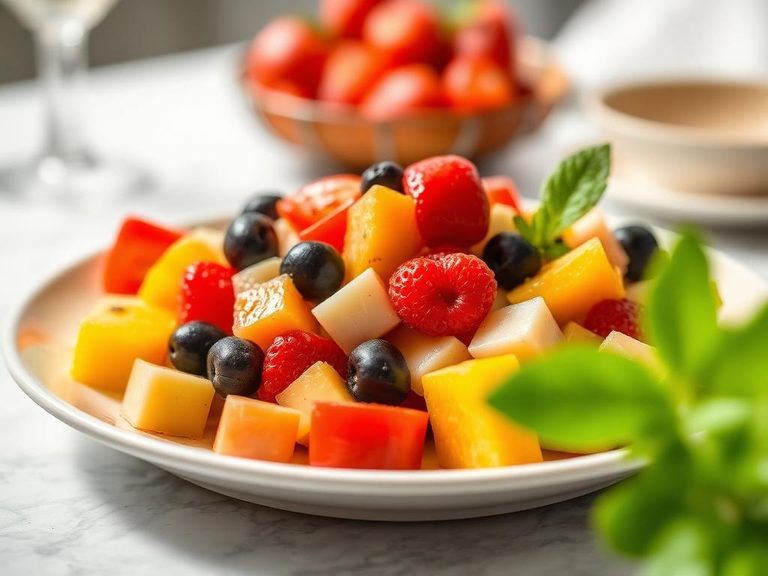
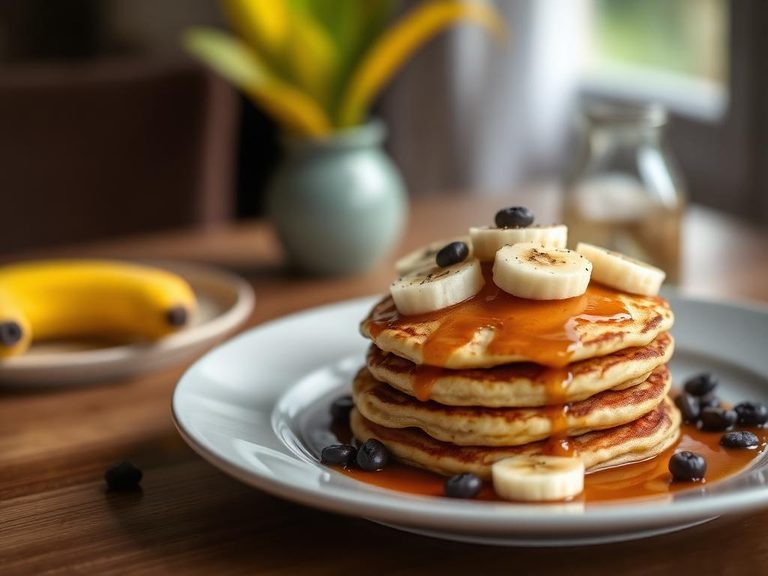
🌍 Where it's eaten
💡 Did you know?
The banana is technically a berry, while strawberries, raspberries, and blackberries are not.
Full nutrition (USDA data · scales with serving)
| Water | 75.6 g |
| Energy | 97.0 kcal |
| Protein | 0.74 g |
| Total lipid (fat) | 0.28 g |
| Carbohydrate, by difference | 22.7 g |
| Fiber, total dietary | 1.7 g |
| Total Sugars | 15.8 g |
| Calcium, Ca | 5.0 mg |
| Iron, Fe | 0.00 mg |
| Magnesium, Mg | 28.0 mg |
| Phosphorus, P | 22.0 mg |
| Potassium, K | 326 mg |
| Sodium, Na | 0.00 mg |
| Zinc, Zn | 0.16 mg |
| Copper, Cu | 0.10 mg |
| Selenium, Se | 0.00 ug |
| Vitamin C, total ascorbic acid | 12.0 mg |
| Thiamin | 0.05 mg |
| Riboflavin | 0.00 mg |
| Niacin | 0.65 mg |
| Vitamin B-6 | 0.21 mg |
| Folate, total | 15.0 ug |
| Folic acid | 0.00 ug |
| Folate, food | 15.0 ug |
| Folate, DFE | 15.0 ug |
| Choline, total | 9.8 mg |
| Vitamin B-12 | 0.00 ug |
| Vitamin B-12, added | 0.00 ug |
| Vitamin A, RAE | 1.0 ug |
| Retinol | 0.00 ug |
| Carotene, beta | 8.0 ug |
| Carotene, alpha | 7.0 ug |
| Cryptoxanthin, beta | 0.00 ug |
| Lycopene | 0.00 ug |
| Lutein + zeaxanthin | 22.0 ug |
| Vitamin E (alpha-tocopherol) | 0.10 mg |
| Vitamin E, added | 0.00 mg |
| Vitamin D (D2 + D3) | 0.00 ug |
| Vitamin K (phylloquinone) | 0.10 ug |
| Alcohol, ethyl | 0.00 g |
| Caffeine | 0.00 mg |
| Theobromine | 0.00 mg |
Fat & fatty acid profile (per 100g)
| Fatty acids, total saturated | 0.11 g |
| SFA 4:0 | 0.00 g |
| SFA 6:0 | 0.00 g |
| SFA 8:0 | 0.00 g |
| SFA 10:0 | 0.00 g |
| SFA 12:0 | 0.00 g |
| SFA 14:0 | 0.00 g |
| SFA 16:0 | 0.10 g |
| SFA 18:0 | 0.01 g |
| Fatty acids, total monounsaturated | 0.03 g |
| MUFA 16:1 | 0.01 g |
| MUFA 18:1 | 0.02 g |
| MUFA 20:1 | 0.00 g |
| MUFA 22:1 | 0.00 g |
| Fatty acids, total polyunsaturated | 0.07 g |
| PUFA 18:2 | 0.05 g |
| PUFA 18:3 | 0.03 g |
| PUFA 18:4 | 0.00 g |
| PUFA 20:4 | 0.00 g |
| PUFA 20:5 n-3 (EPA) | 0.00 g |
| PUFA 22:5 n-3 (DPA) | 0.00 g |
| PUFA 22:6 n-3 (DHA) | 0.00 g |
| Cholesterol | 0.00 mg |
Amino acid profile (per 100g)
Estimated from Babyfood, cereal, oatmeal, with bananas, prepared with whole milk — USDA does not publish this profile for Banana.
| Tryptophan | 0.08 g |
| Threonine | 0.16 g |
| Isoleucine | 0.19 g |
| Leucine | 0.31 g |
| Lysine | 0.31 g |
| Methionine | 0.09 g |
| Cystine | 0.04 g |
| Phenylalanine | 0.18 g |
| Tyrosine | 0.21 g |
| Valine | 0.23 g |
| Arginine | 0.12 g |
| Histidine | 0.10 g |
| Alanine | 0.13 g |
| Aspartic acid | 0.29 g |
| Glutamic acid | 0.78 g |
| Glycine | 0.11 g |
| Proline | 0.37 g |
| Serine | 0.14 g |
FAQ
Are bananas good for weight loss?
Yes, they can be. Bananas are relatively low in calories for their volume and high in fiber, which promotes feelings of fullness. However, they are calorie-dense compared to many other fruits, so portion control is key.
Why do bananas turn brown?
This is due to an enzymatic reaction called oxidation. When the peel is damaged or the fruit ages, enzymes react with oxygen, producing brown pigments. Refrigeration slows this process for the flesh but will cause the peel to darken.
Is the stringy stuff on a banana edible?
Yes, the fibrous strands (phloem bundles) are completely edible. They are rich in fiber, potassium, and other nutrients, though many people peel them off for textural preference.
Nutrient density (calculated · NRF9.3)
Nutrient Rich Foods index: beneficial nutrients (protein, fiber, vitamins, minerals) minus saturated fat, added sugar & sodium, per 100 kcal.
NRF9.3 index — Fulgoni, Keast & Drewnowski, 2009. Computed from USDA nutrients.
Weight-loss friendliness (composite index)
Energy density 0.97 kcal/g · 3% calories from protein · 1.7 g fiber · 15.8 g sugar per 100 g.
Composite of energy density (Rolls et al., 1999), protein & fiber satiety, minus sugar. A calculated heuristic — ranks satiety-per-calorie, not a clinical measure.
Dietary load (calculated from USDA values)
Potential renal acid load. Positive = acid-forming, negative = alkaline-forming.
Sodium-to-potassium ratio: 0.00 (lower is better — aim for ≤ 1)
Sodium:potassium per WHO potassium guidance. Computed from USDA nutrients.