

Filipino Kare-Kare
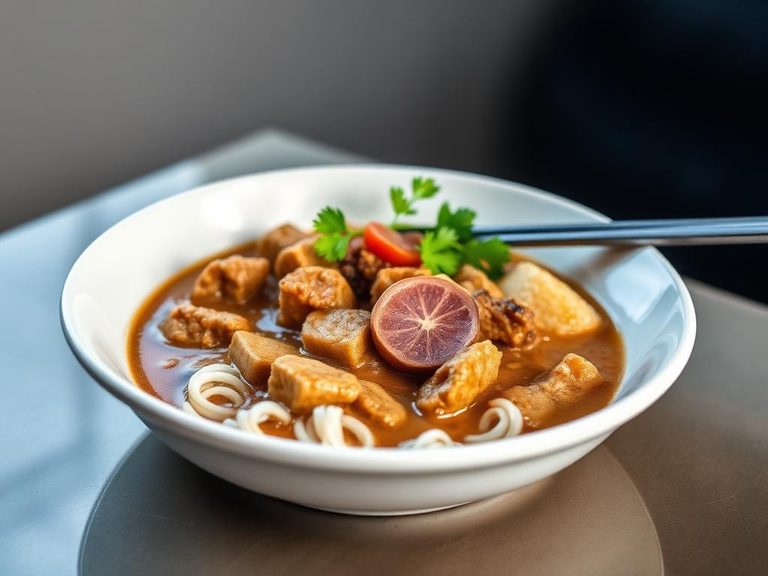
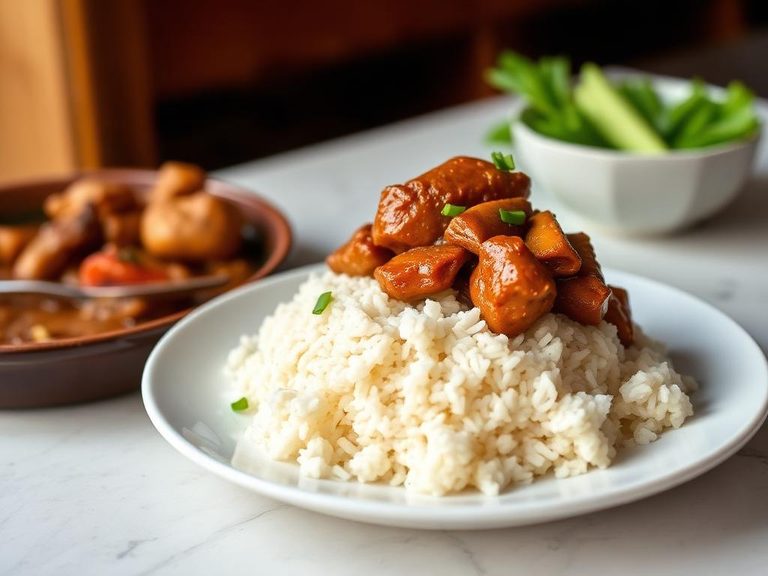
Kare-Kare is a rich and savory Filipino stew, typically made with oxtail, tripe, and vegetables like eggplant, string beans, and banana blossom, all simmered in a thick, nutty peanut sauce. It is a celebratory dish often served at fiestas and family gatherings, originating from the Pampanga region of the Philippines. The stew is traditionally accompanied by a side of bagoong (fermented shrimp paste) to add a salty, umami contrast to its creamy base.
🍽️ Nutrition at a glance
Kare-Kare is a high-protein and high-fat dish due to its oxtail and peanut sauce content, with a moderate amount of carbohydrates from the vegetables and thickeners. It is a good source of iron, zinc, and B vitamins from the meat, and provides healthy fats and some fiber from the peanuts and vegetables. A typical serving can range from 400 to 600 calories, depending on the cut of meat and portion size.
Nutrition breakdown
| Calories | 520 kcal |
| Protein | 35 g |
| Carbs | 18 g |
| Fat | 36 g |
| Fiber | 5 g |
| Sugar | 4 g |
| Sodium | 680 mg |
| Iron | 4.5 mg |
| Zinc | 7.2 mg |
| Potassium | 520 mg |
| Magnesium | 65 mg |
| Phosphorus | 280 mg |
| Vitamin B12 | 2.8 mcg |
| Niacin (B3) | 8.5 mg |
| Vitamin A | 150 mcg |
Per 1 cup (240 g) · estimated, varies by recipe
💡 What's interesting
Culturally, Kare-Kare is unique because its peanut-based sauce is believed to have been influenced by Indian or Malay traders, showcasing the Philippines' historical trade connections. Nutritionally, the combination of slow-cooked collagen-rich oxtail and peanuts creates a dish that is both hearty and rich in minerals like magnesium and phosphorus.
🍽️ Related dishes
AI estimate may be inaccurate · Terms