

Carrots, cooked, boiled, drained, with salt
Whole food · Vegetables and Vegetable Products
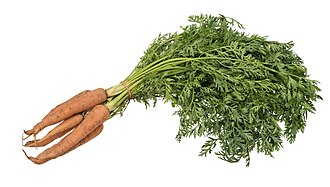
Photo: Wikipedia
Boiled, salted carrots are a soft, sweet, and savory staple, their natural sugars caramelizing slightly during cooking to create a tender, melt-in-your-mouth texture. With only 35 calories per 100g and a notable 3g of fiber, they are a light yet satisfying side dish. The addition of salt enhances their inherent sweetness, making them a comforting and familiar vegetable preparation.
Calorie split: 8% protein · 88% carbs · 4% fat
↓ Full nutrition💚 Why it's loved
People love boiled carrots for their gentle, sweet flavor and comforting, soft texture that appeals to both children and adults. Their versatility allows them to be a simple side dish, a base for soups, or a component in stews across many cultures.
⚠️ Watch-outs & how to enjoy it better
The added salt can be a concern for those monitoring sodium intake, and the natural sugars, while healthy, can contribute to blood sugar spikes if consumed in large quantities without balancing nutrients. To counteract this, pair boiled carrots with a source of protein or healthy fat (like a dollop of Greek yogurt or a sprinkle of nuts) to slow sugar absorption and enhance satiety. Opt for minimal salt or use herbs like dill or parsley for flavor instead.
Key benefits
- Excellent source of beta-carotene, which the body converts to vitamin A.
- High in dietary fiber, supporting digestive health.
- Low in calories and fat, aiding in weight management.
- Provides potassium, which helps regulate blood pressure.
🍽️ Popular dishes
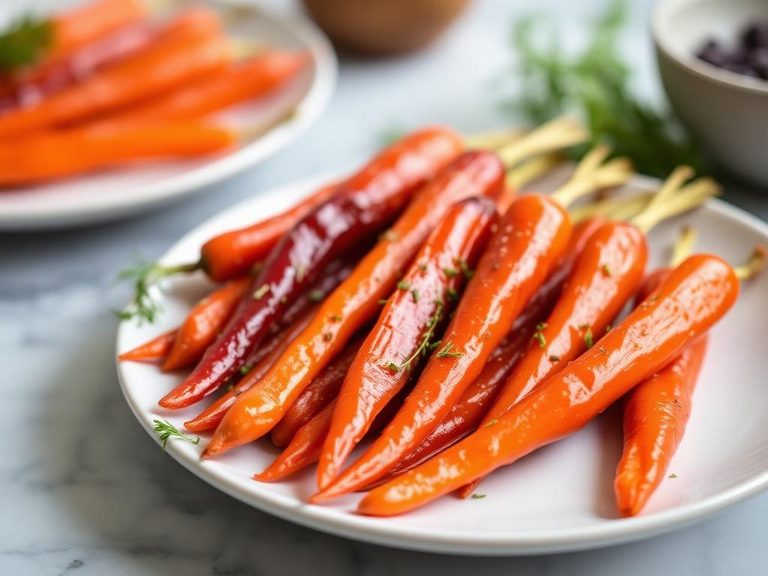
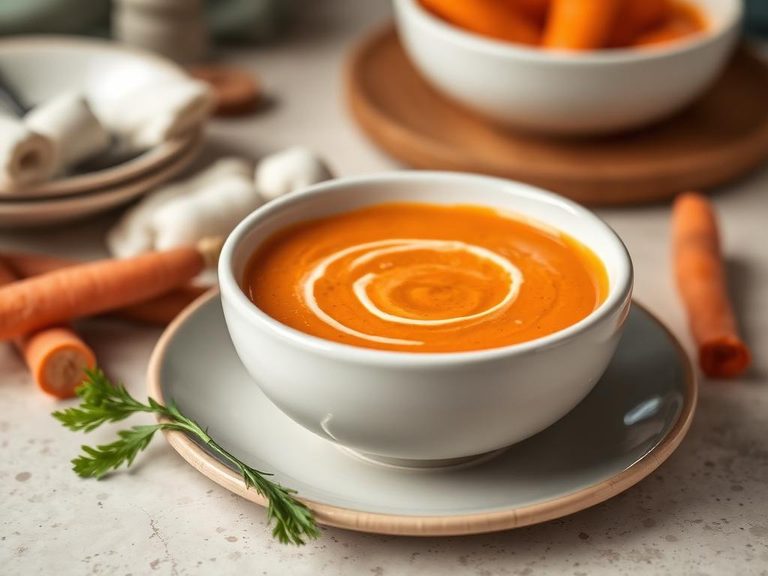
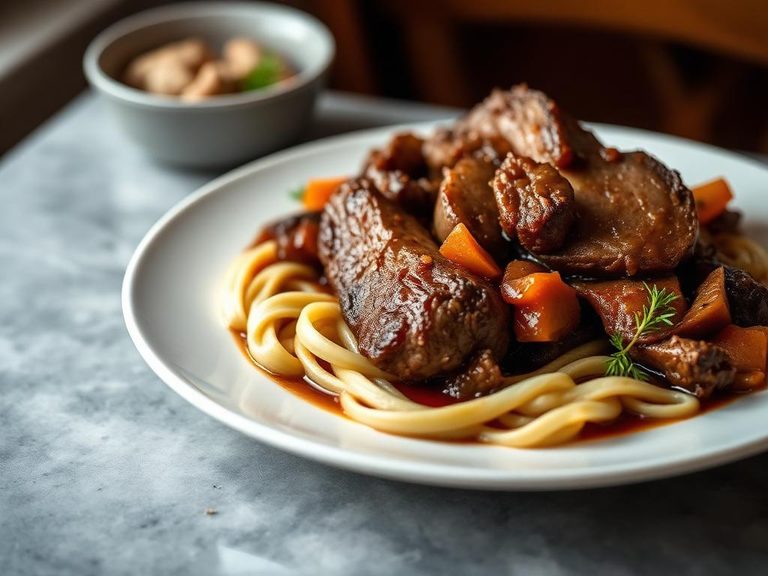

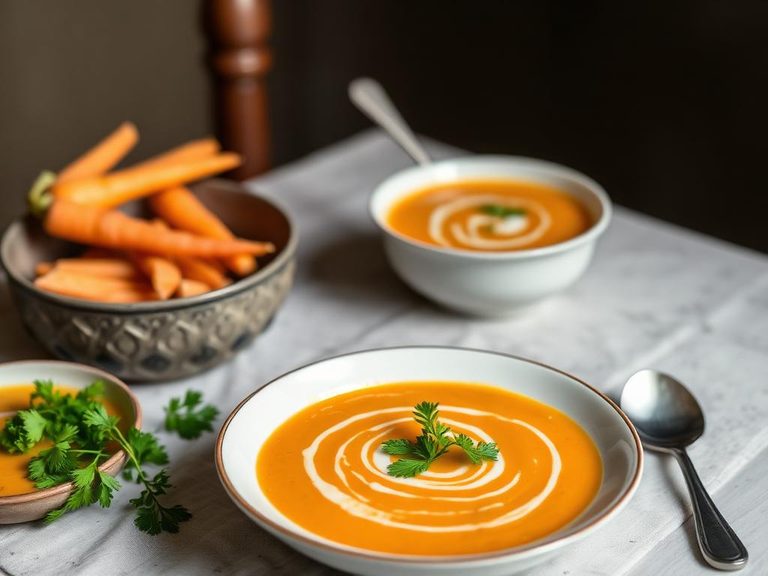

🌍 Where it's eaten
💡 Did you know?
Carrots were originally purple, not orange; the familiar orange variety was developed in the Netherlands in the 17th century as a tribute to William of Orange.
Full nutrition (USDA data · scales with serving)
| Water | 90.2 g |
| Energy | 35.0 kcal |
| Energy | 147 kj |
| Protein | 0.76 g |
| Total lipid (fat) | 0.18 g |
| Ash | 0.67 g |
| Carbohydrate, by difference | 8.2 g |
| Fiber, total dietary | 3.0 g |
| Total Sugars | 3.5 g |
| Sucrose | 2.7 g |
| Glucose | 0.40 g |
| Fructose | 0.36 g |
| Lactose | 0.00 g |
| Maltose | 0.00 g |
| Galactose | 0.00 g |
| Starch | 0.17 g |
| Calcium, Ca | 30.0 mg |
| Iron, Fe | 0.34 mg |
| Magnesium, Mg | 10.0 mg |
| Phosphorus, P | 30.0 mg |
| Potassium, K | 235 mg |
| Sodium, Na | 302 mg |
| Zinc, Zn | 0.20 mg |
| Copper, Cu | 0.02 mg |
| Manganese, Mn | 0.15 mg |
| Selenium, Se | 0.70 ug |
| Fluoride, F | 47.5 ug |
| Vitamin C, total ascorbic acid | 3.6 mg |
| Thiamin | 0.07 mg |
| Riboflavin | 0.04 mg |
| Niacin | 0.65 mg |
| Pantothenic acid | 0.23 mg |
| Vitamin B-6 | 0.15 mg |
| Folate, total | 2.0 ug |
| Folic acid | 0.00 ug |
| Folate, food | 2.0 ug |
| Folate, DFE | 2.0 ug |
| Choline, total | 8.8 mg |
| Betaine | 0.10 mg |
| Vitamin B-12 | 0.00 ug |
| Vitamin B-12, added | 0.00 ug |
| Vitamin A, RAE | 852 ug |
| Retinol | 0.00 ug |
| Carotene, beta | 8332 ug |
| Carotene, alpha | 3776 ug |
| Cryptoxanthin, beta | 0.00 ug |
| Vitamin A, IU | 17033 iu |
| Lycopene | 0.00 ug |
| Lutein + zeaxanthin | 194 ug |
| Vitamin E (alpha-tocopherol) | 1.0 mg |
| Vitamin E, added | 0.00 mg |
| Tocopherol, beta | 0.02 mg |
| Tocopherol, gamma | 0.01 mg |
| Tocopherol, delta | 0.00 mg |
| Tocotrienol, alpha | 0.05 mg |
| Tocotrienol, beta | 0.00 mg |
| Tocotrienol, gamma | 0.00 mg |
| Tocotrienol, delta | 0.00 mg |
| Vitamin D (D2 + D3), International Units | 0.00 iu |
| Vitamin D (D2 + D3) | 0.00 ug |
| Vitamin K (phylloquinone) | 13.7 ug |
| Vitamin K (Dihydrophylloquinone) | 0.00 ug |
| Alcohol, ethyl | 0.00 g |
| Caffeine | 0.00 mg |
| Theobromine | 0.00 mg |
Fat & fatty acid profile (per 100g)
| Fatty acids, total saturated | 0.04 g |
| SFA 4:0 | 0.00 g |
| SFA 6:0 | 0.00 g |
| SFA 8:0 | 0.00 g |
| SFA 10:0 | 0.00 g |
| SFA 12:0 | 0.00 g |
| SFA 14:0 | 0.00 g |
| SFA 15:0 | 0.00 g |
| SFA 16:0 | 0.04 g |
| SFA 17:0 | 0.00 g |
| SFA 18:0 | 0.00 g |
| SFA 20:0 | 0.00 g |
| SFA 22:0 | 0.00 g |
| SFA 24:0 | 0.00 g |
| Fatty acids, total monounsaturated | 0.01 g |
| MUFA 14:1 | 0.00 g |
| MUFA 15:1 | 0.00 g |
| MUFA 16:1 | 0.00 g |
| MUFA 17:1 | 0.00 g |
| MUFA 18:1 | 0.01 g |
| MUFA 20:1 | 0.00 g |
| MUFA 22:1 | 0.00 g |
| Fatty acids, total polyunsaturated | 0.11 g |
| PUFA 18:2 | 0.10 g |
| PUFA 18:3 | 0.00 g |
| PUFA 18:4 | 0.00 g |
| PUFA 20:2 n-6 c,c | 0.00 g |
| PUFA 20:3 | 0.00 g |
| PUFA 20:4 | 0.00 g |
| PUFA 20:5 n-3 (EPA) | 0.00 g |
| PUFA 22:5 n-3 (DPA) | 0.00 g |
| PUFA 22:6 n-3 (DHA) | 0.00 g |
| Fatty acids, total trans | 0.00 g |
| Cholesterol | 0.00 mg |
Amino acid profile (per 100g)
| Tryptophan | 0.01 g |
| Threonine | 0.16 g |
| Isoleucine | 0.06 g |
| Leucine | 0.08 g |
| Lysine | 0.08 g |
| Methionine | 0.02 g |
| Cystine | 0.07 g |
| Phenylalanine | 0.05 g |
| Tyrosine | 0.04 g |
| Valine | 0.06 g |
| Arginine | 0.07 g |
| Histidine | 0.03 g |
| Alanine | 0.09 g |
| Aspartic acid | 0.16 g |
| Glutamic acid | 0.30 g |
| Glycine | 0.04 g |
| Proline | 0.04 g |
| Serine | 0.04 g |
FAQ
Are boiled carrots healthier than raw carrots?
Cooking carrots actually increases the bioavailability of beta-carotene (a precursor to vitamin A) because the heat breaks down the plant's cell walls. However, boiling can cause some loss of water-soluble vitamins like vitamin C compared to raw carrots.
How much sodium is in boiled carrots with salt?
The sodium content depends on how much salt is added during cooking. A typical preparation might add 1/4 teaspoon of salt per 100g of carrots, contributing about 575mg of sodium. Using less salt or herbs can significantly reduce this.
Can boiled carrots be part of a low-carb diet?
While carrots contain carbohydrates (8.22g per 100g), they are relatively low-carb compared to starchy vegetables like potatoes. Their high fiber content (3g per 100g) also helps moderate blood sugar response, making them a reasonable choice in moderation for low-carb diets.
Nutrient density (calculated · NRF9.3)
Nutrient Rich Foods index: beneficial nutrients (protein, fiber, vitamins, minerals) minus saturated fat, added sugar & sodium, per 100 kcal.
NRF9.3 index — Fulgoni, Keast & Drewnowski, 2009. Computed from USDA nutrients.
Weight-loss friendliness (composite index)
Energy density 0.35 kcal/g · 9% calories from protein · 3.0 g fiber · 3.5 g sugar per 100 g.
Composite of energy density (Rolls et al., 1999), protein & fiber satiety, minus sugar. A calculated heuristic — ranks satiety-per-calorie, not a clinical measure.
Dietary load (calculated from USDA values)
Potential renal acid load. Positive = acid-forming, negative = alkaline-forming.
Sodium-to-potassium ratio: 1.29 (lower is better — aim for ≤ 1)
Sodium:potassium per WHO potassium guidance. Computed from USDA nutrients.