

Kimchi
Common food

Photo: Wikipedia
Kimchi is a vibrant, fermented staple of Korean cuisine, typically made from napa cabbage and Korean radish seasoned with chili powder, garlic, ginger, and fish sauce. It boasts a complex, tangy, spicy, and deeply umami flavor profile with a satisfying crunch from the vegetables. Nutritionally, it is remarkably low in calories (15 kcal per 100g) while being a good source of dietary fiber (1.6g) and containing beneficial probiotics from fermentation.
Calorie split: 24% protein · 52% carbs · 24% fat
↓ Full nutrition💚 Why it's loved
People adore kimchi for its explosive, addictive flavor that perfectly balances spicy, sour, salty, and savory notes. Its incredible versatility allows it to be enjoyed as a side dish, a cooking ingredient, or a topping for everything from rice to pizza.
⚠️ Watch-outs & how to enjoy it better
Kimchi is very high in sodium due to its salting and fermentation process, which can be a concern for those managing blood pressure. Its strong, pungent flavor and smell can also be an acquired taste. To mitigate sodium, rinse slices briefly before eating or pair it with low-sodium foods like plain rice or unsalted proteins.
Key benefits
- Rich in probiotics from natural lacto-fermentation, supporting gut microbiome health.
- Excellent source of dietary fiber, promoting digestive regularity.
- Contains antioxidants like vitamin C and beta-carotene from its vegetable base.
- Low in calories and fat, making it a flavorful, nutrient-dense condiment.
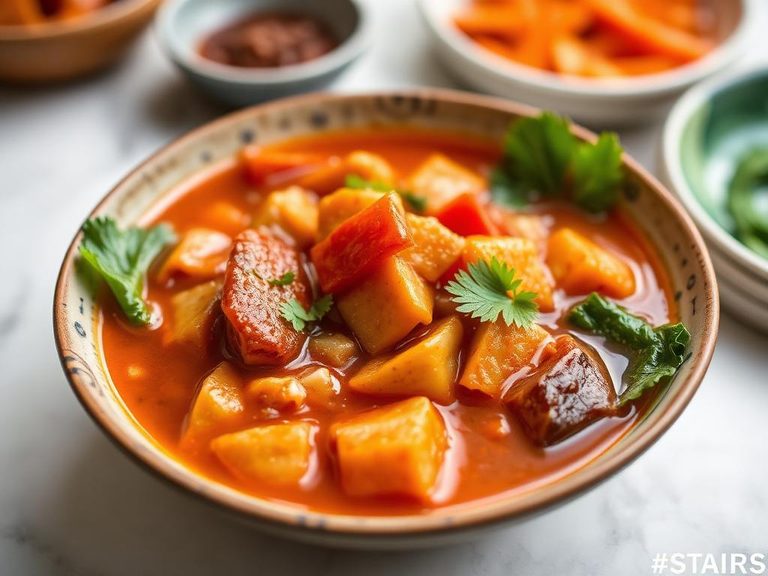
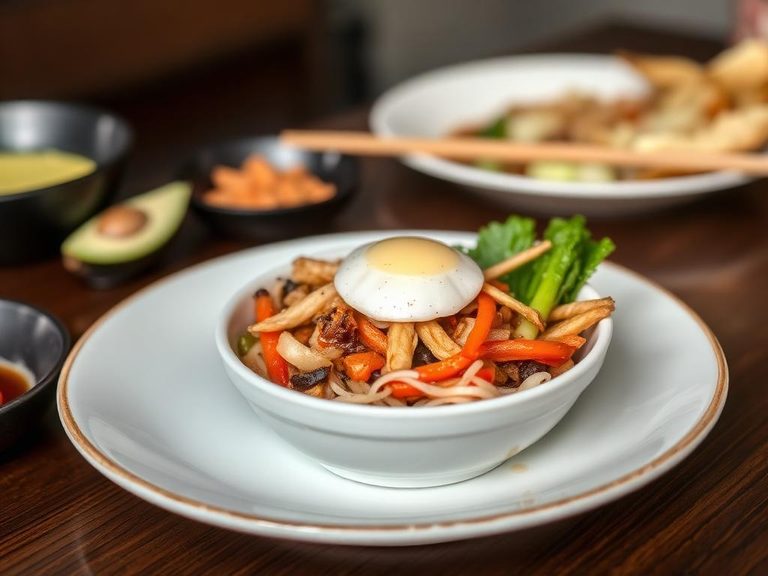
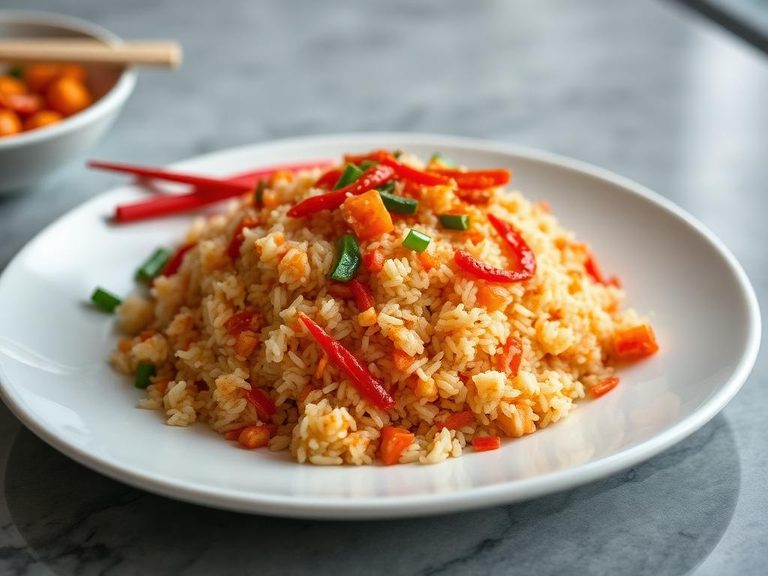
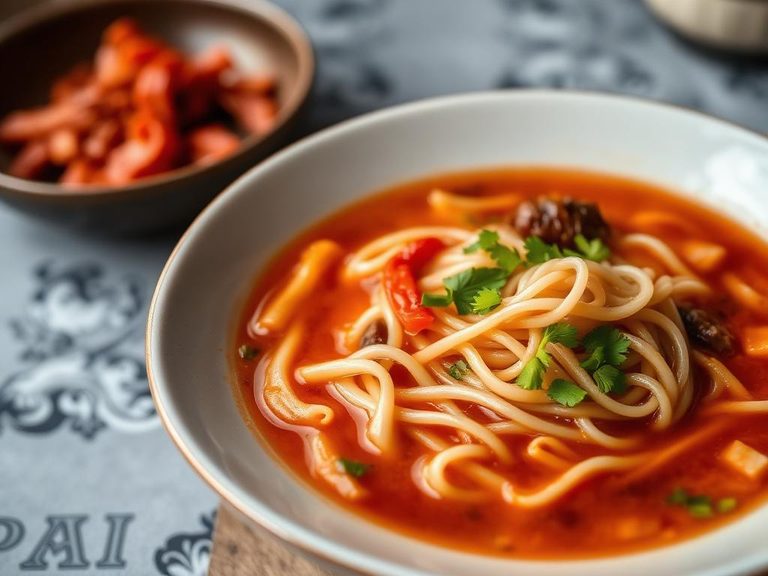
🍽️ Popular dishes

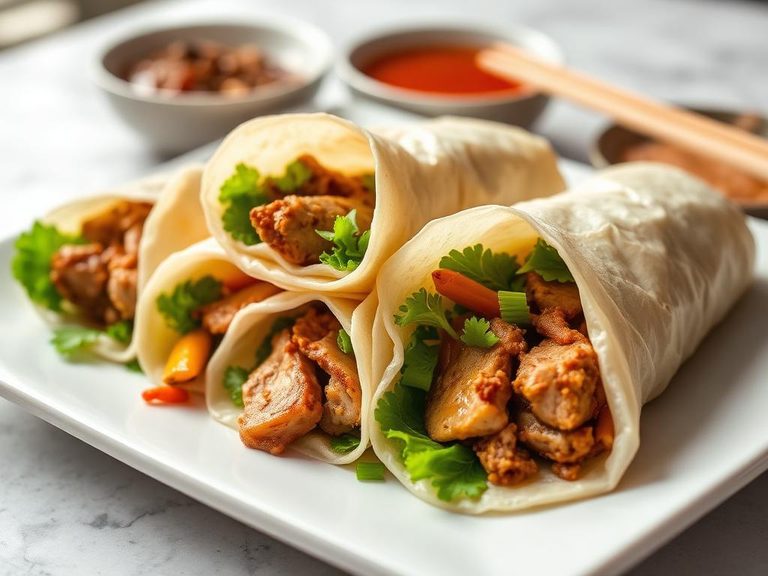
🌍 Where it's eaten
💡 Did you know?
The fermentation process for traditional kimchi was historically managed in large onggi earthenware pots buried underground to maintain a constant cool temperature through winter.
Full nutrition (USDA data · scales with serving)
| Water | 94.3 g |
| Energy | 15.0 kcal |
| Protein | 1.1 g |
| Total lipid (fat) | 0.50 g |
| Carbohydrate, by difference | 2.4 g |
| Fiber, total dietary | 1.6 g |
| Total Sugars | 1.1 g |
| Calcium, Ca | 33.0 mg |
| Iron, Fe | 2.5 mg |
| Magnesium, Mg | 14.0 mg |
| Phosphorus, P | 24.0 mg |
| Potassium, K | 151 mg |
| Sodium, Na | 498 mg |
| Zinc, Zn | 0.22 mg |
| Copper, Cu | 0.02 mg |
| Selenium, Se | 0.50 ug |
| Vitamin C, total ascorbic acid | 0.00 mg |
| Thiamin | 0.01 mg |
| Riboflavin | 0.21 mg |
| Niacin | 1.1 mg |
| Vitamin B-6 | 0.21 mg |
| Folate, total | 52.0 ug |
| Folic acid | 0.00 ug |
| Folate, food | 52.0 ug |
| Folate, DFE | 52.0 ug |
| Choline, total | 15.5 mg |
| Vitamin B-12 | 0.00 ug |
| Vitamin B-12, added | 0.00 ug |
| Vitamin A, RAE | 5.0 ug |
| Retinol | 0.00 ug |
| Carotene, beta | 55.0 ug |
| Carotene, alpha | 1.0 ug |
| Cryptoxanthin, beta | 0.00 ug |
| Lycopene | 0.00 ug |
| Lutein + zeaxanthin | 49.0 ug |
| Vitamin E (alpha-tocopherol) | 0.11 mg |
| Vitamin E, added | 0.00 mg |
| Vitamin D (D2 + D3) | 0.00 ug |
| Vitamin K (phylloquinone) | 43.6 ug |
| Alcohol, ethyl | 0.00 g |
| Caffeine | 0.00 mg |
| Theobromine | 0.00 mg |
Fat & fatty acid profile (per 100g)
| Fatty acids, total saturated | 0.07 g |
| SFA 4:0 | 0.00 g |
| SFA 6:0 | 0.00 g |
| SFA 8:0 | 0.00 g |
| SFA 10:0 | 0.00 g |
| SFA 12:0 | 0.00 g |
| SFA 14:0 | 0.00 g |
| SFA 16:0 | 0.06 g |
| SFA 18:0 | 0.00 g |
| Fatty acids, total monounsaturated | 0.04 g |
| MUFA 16:1 | 0.00 g |
| MUFA 18:1 | 0.04 g |
| MUFA 20:1 | 0.00 g |
| MUFA 22:1 | 0.00 g |
| Fatty acids, total polyunsaturated | 0.24 g |
| PUFA 18:2 | 0.10 g |
| PUFA 18:3 | 0.14 g |
| PUFA 18:4 | 0.00 g |
| PUFA 20:4 | 0.00 g |
| PUFA 20:5 n-3 (EPA) | 0.00 g |
| PUFA 22:5 n-3 (DPA) | 0.00 g |
| PUFA 22:6 n-3 (DHA) | 0.00 g |
| Cholesterol | 0.00 mg |
FAQ
Is kimchi a good source of probiotics?
Yes, traditionally fermented kimchi is a living food teeming with beneficial Lactobacillus bacteria, which can support gut health. Look for unpasteurized, refrigerated kimchi for the best probiotic content.
Can I eat kimchi every day?
For most people, a daily serving of kimchi (about 1/2 cup) is a healthy, flavorful addition to a balanced diet. However, due to its high sodium content, those with hypertension or on a sodium-restricted diet should consume it in moderation.
What does kimchi taste like?
Kimchi has a complex flavor profile: it's primarily tangy and sour from fermentation, spicy from chili, savory/umami from garlic and fish sauce, and often slightly sweet. The texture is typically crisp and crunchy.
Nutrient density (calculated · NRF9.3)
Nutrient Rich Foods index: beneficial nutrients (protein, fiber, vitamins, minerals) minus saturated fat, added sugar & sodium, per 100 kcal.
NRF9.3 index — Fulgoni, Keast & Drewnowski, 2009. Computed from USDA nutrients.
Weight-loss friendliness (composite index)
Energy density 0.15 kcal/g · 29% calories from protein · 1.6 g fiber · 1.1 g sugar per 100 g.
Composite of energy density (Rolls et al., 1999), protein & fiber satiety, minus sugar. A calculated heuristic — ranks satiety-per-calorie, not a clinical measure.
Dietary load (calculated from USDA values)
Potential renal acid load. Positive = acid-forming, negative = alkaline-forming.
Sodium-to-potassium ratio: 3.30 (lower is better — aim for ≤ 1)
Sodium:potassium per WHO potassium guidance. Computed from USDA nutrients.