Kimchi jjigae
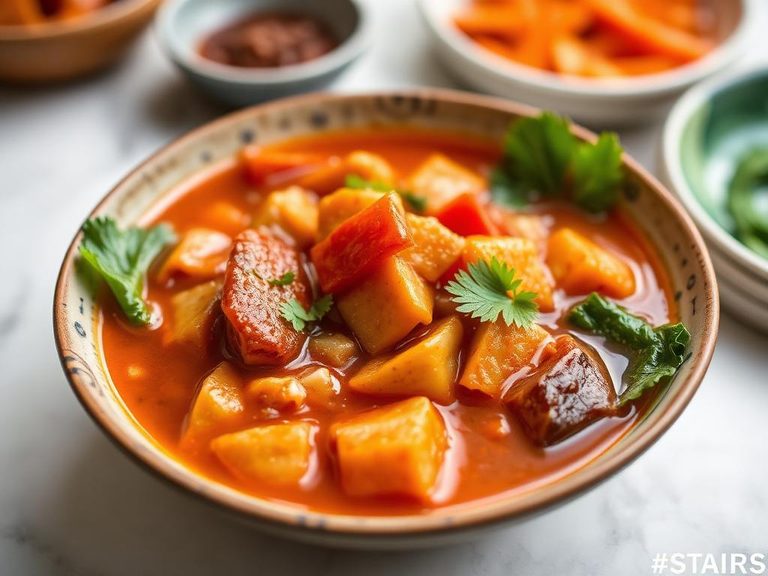
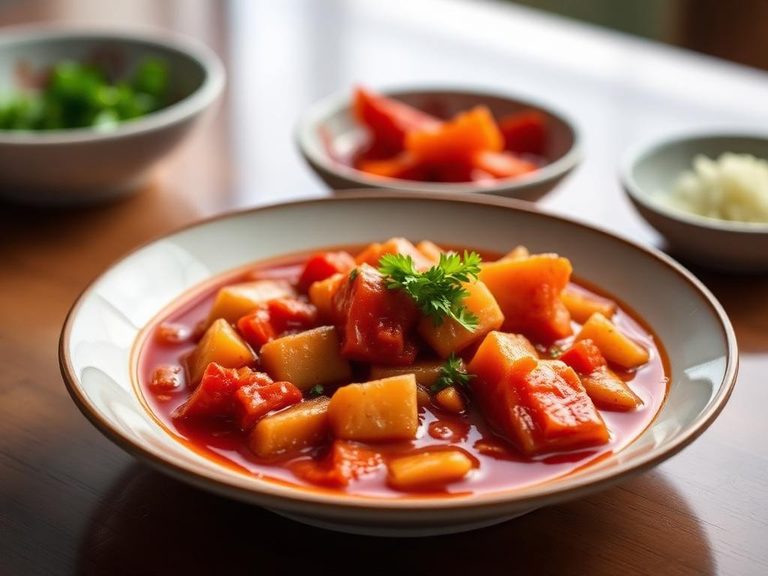
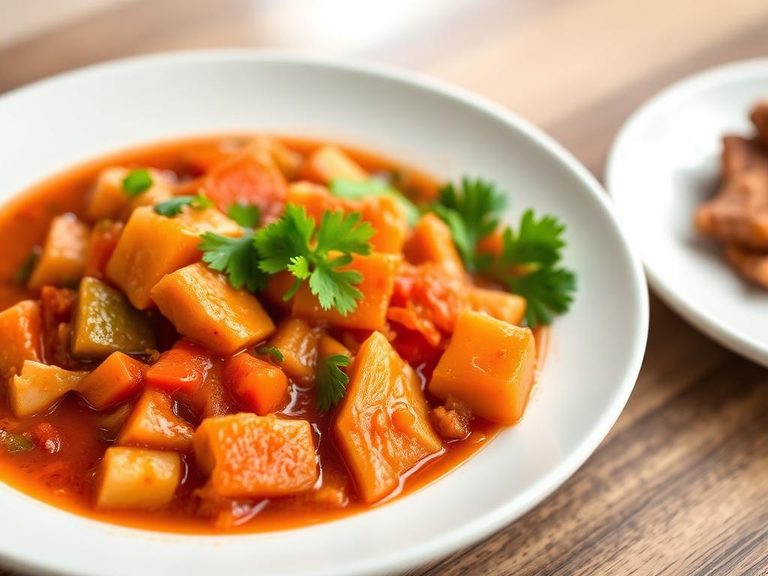
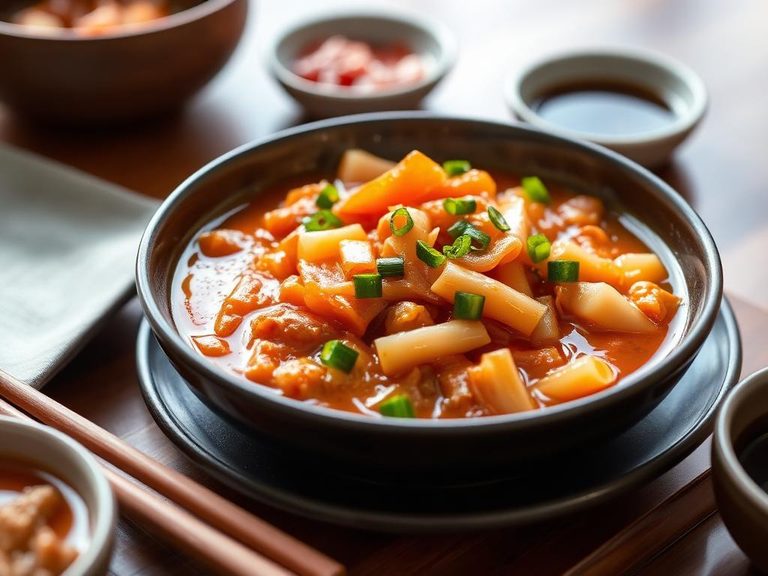
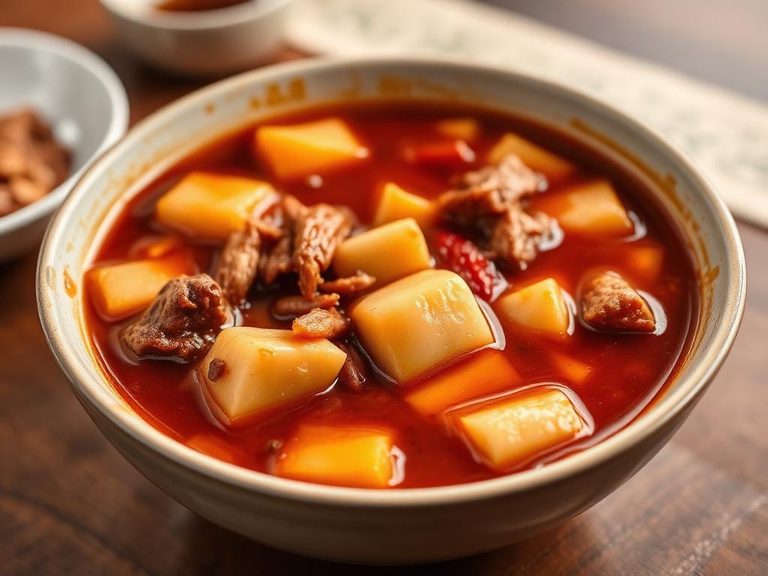
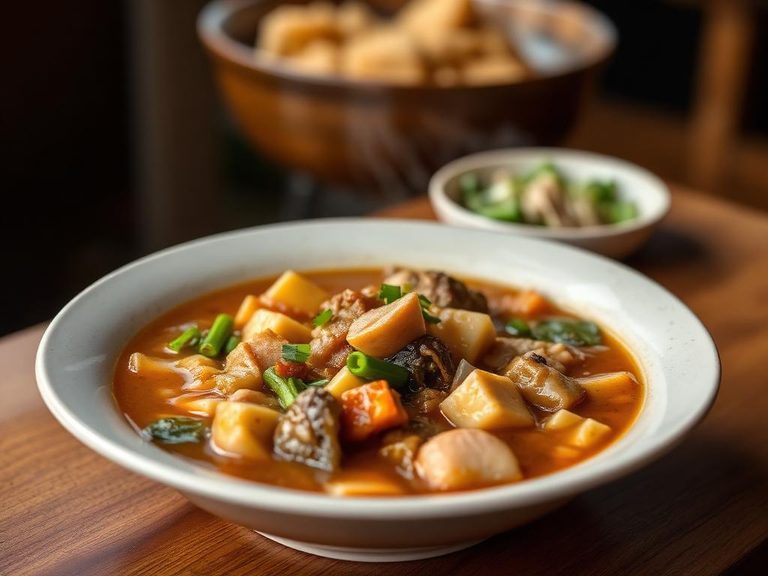
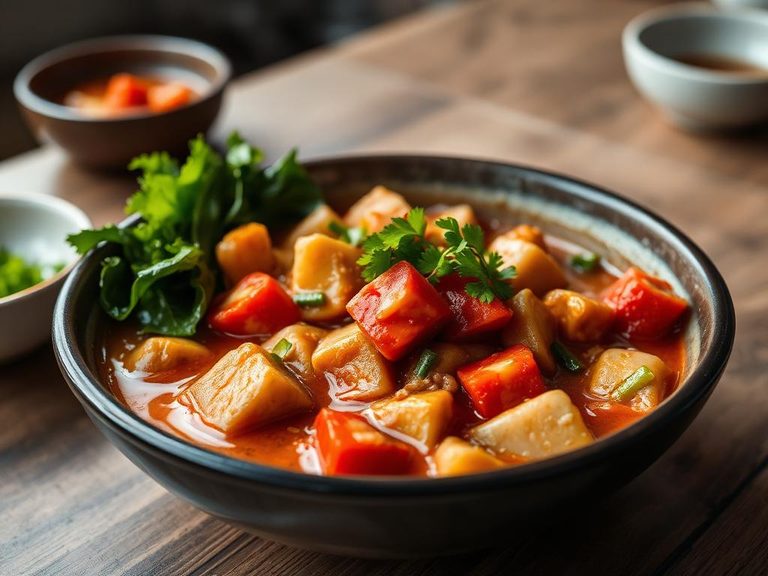
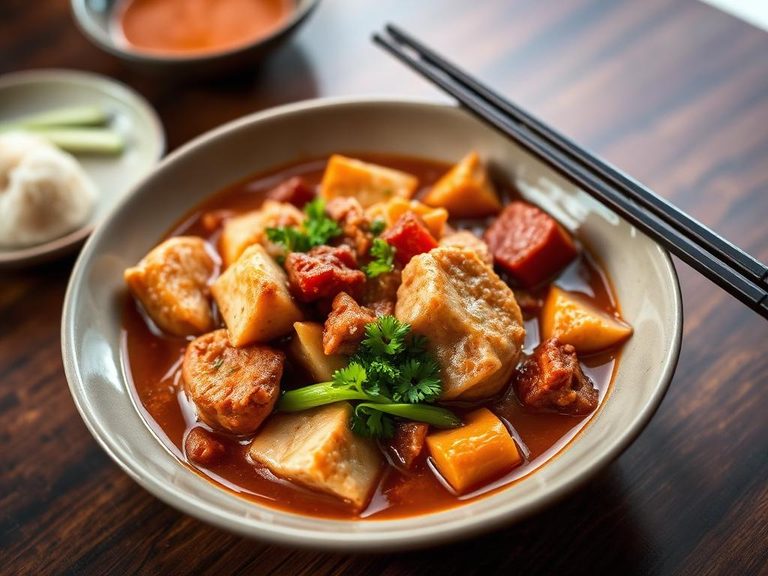
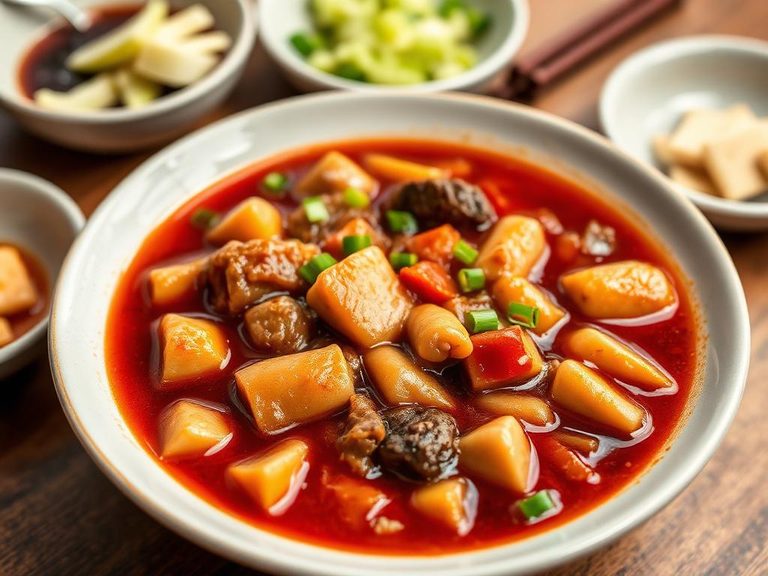
Kimchi jjigae is a beloved, hearty Korean stew built on a foundation of well-fermented, sour kimchi, typically made with napa cabbage. It's a staple home-cooked dish, often featuring pork or tofu for protein, and is known for its deeply savory, spicy, and tangy flavor profile that warms the soul. This comforting stew is a quintessential part of everyday Korean cuisine, representing a perfect way to use aged kimchi.
🍽️ Nutrition at a glance
This stew is generally balanced, offering protein from ingredients like pork or tofu, while its carbohydrate content comes primarily from the kimchi itself. It is a good source of vitamins A and C from the cabbage, beneficial probiotics from fermentation, and provides a moderate calorie range, typically between 300-500 calories per serving depending on the specific recipe and portion size.
Nutrition breakdown
| Calories | 120 kcal |
| Protein | 6 g |
| Carbs | 12 g |
| Fat | 5 g |
| Fiber | 3 g |
| Sugar | 4 g |
| Sodium | 850 mg |
| Vitamin A | 150 mcg RAE |
| Vitamin C | 15 mg |
| Vitamin K | 30 mcg |
| Folate | 40 mcg |
| Iron | 1.5 mg |
| Calcium | 50 mg |
| Potassium | 350 mg |
| Manganese | 0.4 mg |
Per 1 cup (240 g) · estimated, varies by recipe
💡 What's interesting
Culturally, kimchi jjigae is a prime example of the Korean culinary philosophy of 'jeong'—a deep, affectionate bond—often shared communally from a single pot at the center of the table. Nutritionally, its use of aged, fermented kimchi introduces gut-friendly probiotics, making it a dish that is both deeply comforting and functionally beneficial for digestive health.