

Bossam
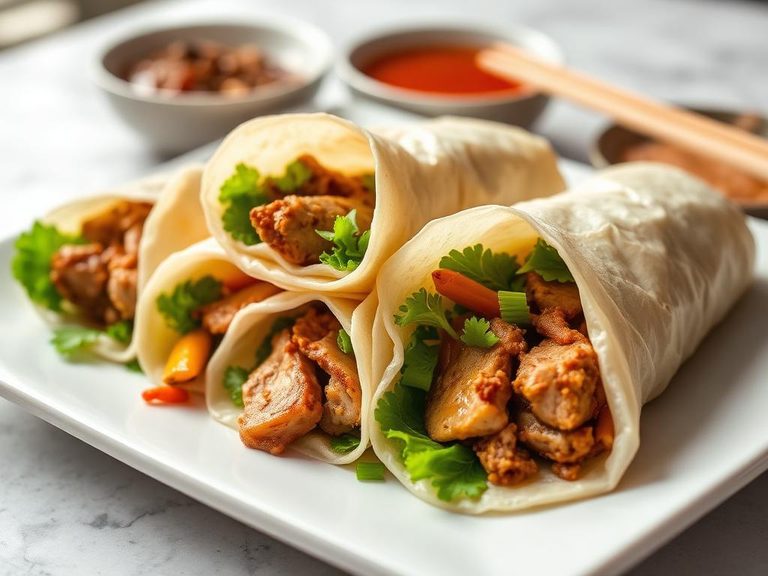
Bossam is a beloved Korean dish featuring tender, juicy slices of boiled pork belly or shoulder, traditionally served with a variety of fresh accompaniments for wrapping. Diners typically assemble their own bites by placing the warm pork, along with sides like kimchi, pickled radish, ssamjang (a spicy dipping paste), and fresh vegetables, into a leaf of lettuce or perilla. It hails from Korea and is especially popular as a communal, social meal.
🍳 View the full Bossam recipe →
🍽️ Nutrition at a glance
Bossam is a high-protein dish due to its generous portion of pork, but it can also be relatively high in fat depending on the cut used. It provides key nutrients like B vitamins, zinc, and iron from the meat, with a rough calorie ballpark of 500-700 calories per serving, which varies significantly based on portion size and the amount of fatty pork and condiments consumed.
Nutrition breakdown
| Calories | 450 kcal |
| Protein | 25 g |
| Carbs | 35 g |
| Fat | 22 g |
| Fiber | 4 g |
| Sugar | 6 g |
| Sodium | 900 mg |
| Potassium | 450 mg |
| Iron | 3 mg |
| Zinc | 4 mg |
| Vitamin B1 (Thiamine) | 0.8 mg |
| Vitamin B6 | 0.5 mg |
| Niacin (B3) | 8 mg |
| Phosphorus | 250 mg |
| Selenium | 30 mcg |
Per 1 serving (approx. 250 g, including pork, wrap, and condiments) · estimated, varies by recipe
💡 What's interesting
Culturally, bossam is a quintessential communal dish in Korea, often enjoyed during gatherings or as a popular drinking snack (anju), emphasizing shared preparation and customization at the table. Nutritionally, the wrap format allows for a balanced bite, combining protein-rich pork with fiber and vitamins from the fresh vegetable accompaniments.
🍽️ Related dishes
AI estimate may be inaccurate · Terms