

Cabbage, kimchi
Whole food · Vegetables and Vegetable Products

Photo: Wikipedia
Kimchi is a vibrant, fermented Korean staple made from salted cabbage and a spicy blend of chili, garlic, ginger, and fish sauce. It boasts a complex, tangy, and umami-rich flavor with a satisfying crunch, offering a low-calorie punch of probiotics and fiber. Each 100g serving delivers just 15 calories and 1.6g of fiber, making it a nutrient-dense, gut-friendly side dish.
Calorie split: 24% protein · 52% carbs · 24% fat
↓ Full nutrition💚 Why it's loved
People adore kimchi for its addictive, layered flavor that balances heat, sourness, and umami, making it a versatile condiment that elevates everything from rice to tacos. It is deeply rooted in Korean culture, symbolizing community and tradition, and is celebrated for its ability to transform simple meals into flavorful experiences.
⚠️ Watch-outs & how to enjoy it better
Kimchi is high in sodium, which can be a concern for those managing blood pressure or fluid retention. To counteract this, pair it with low-sodium foods, rinse it lightly if needed, or choose reduced-sodium varieties. Its spicy nature may also irritate sensitive stomachs, so starting with small portions and consuming it with a cooling food like yogurt or rice can help.
Key benefits
- Rich in probiotics from natural lacto-fermentation
- High in fiber (1.6g per 100g) to support digestion
- Low in calories (15 kcal per 100g) for weight management
- Contains antioxidants like vitamin C and beta-carotene
- Provides a source of vitamin K and B vitamins
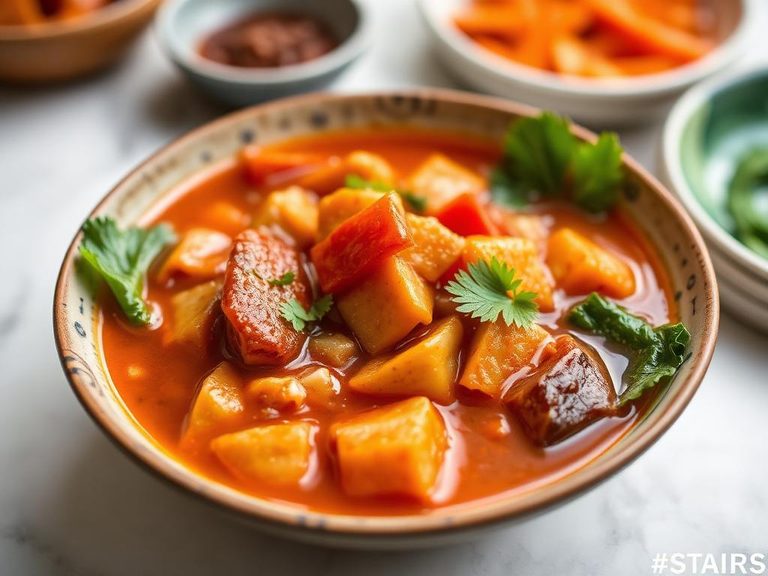
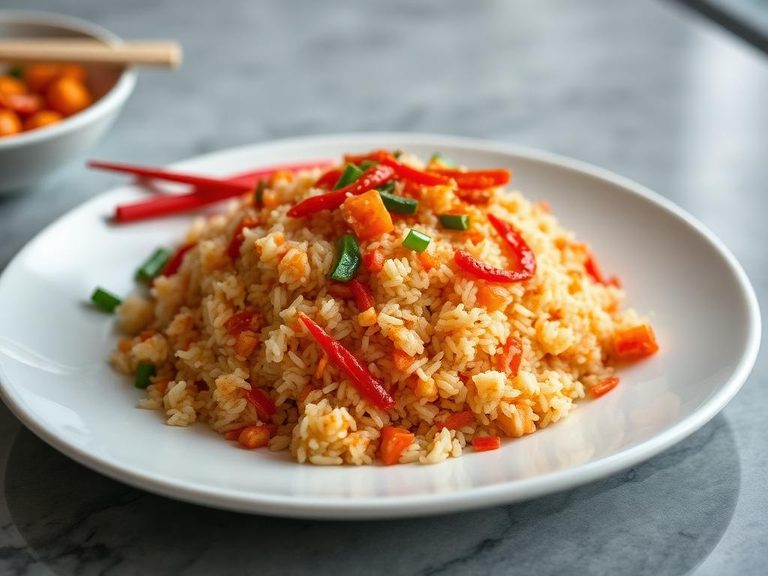
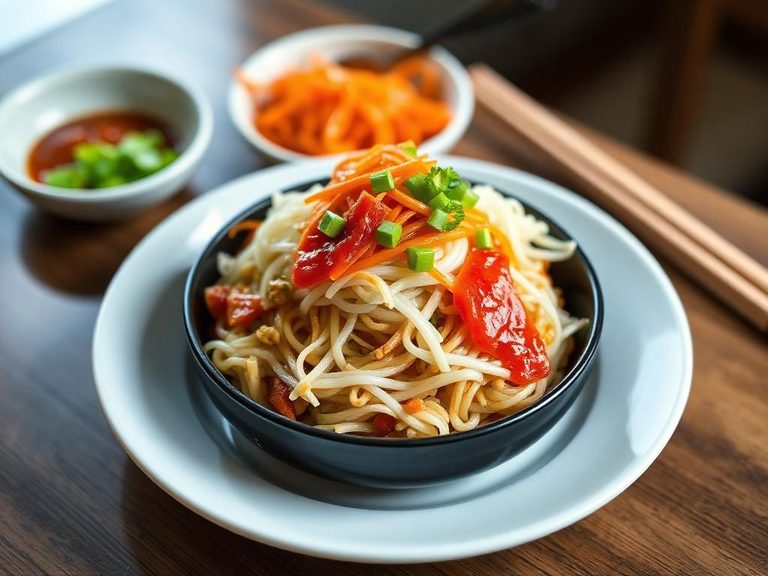
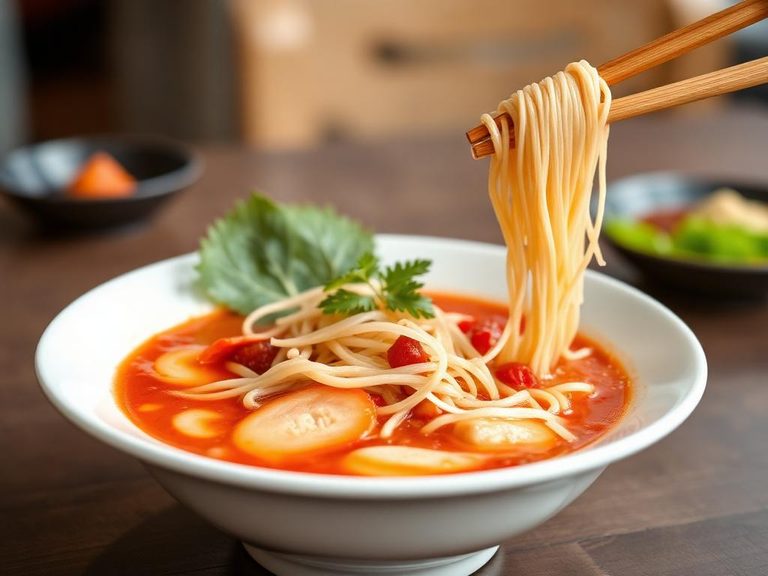
🍽️ Popular dishes

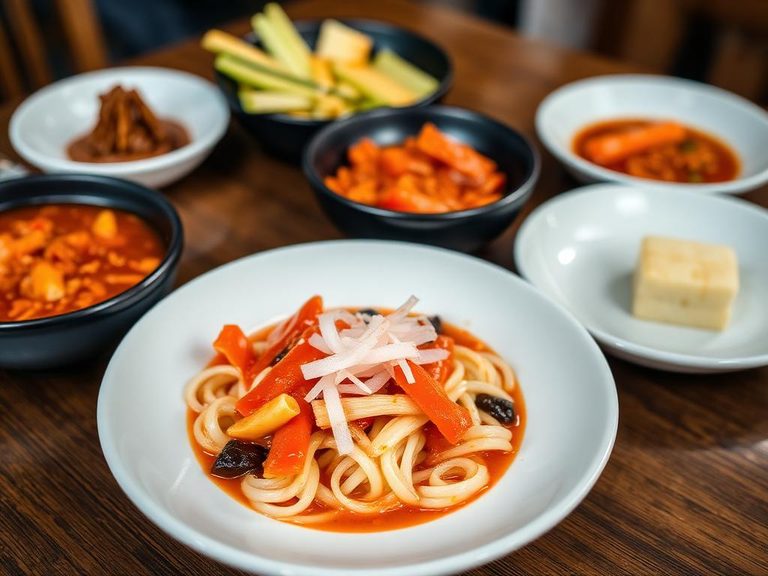
🌍 Where it's eaten
💡 Did you know?
The fermentation process of kimchi can produce a slight fizz due to carbon dioxide, similar to a natural sparkling effect, which is a sign of active probiotic cultures.
Full nutrition (USDA data · scales with serving)
| Water | 94.3 g |
| Energy | 15.0 kcal |
| Energy | 65.0 kj |
| Protein | 1.1 g |
| Total lipid (fat) | 0.50 g |
| Ash | 1.7 g |
| Carbohydrate, by difference | 2.4 g |
| Fiber, total dietary | 1.6 g |
| Total Sugars | 1.1 g |
| Calcium, Ca | 33.0 mg |
| Iron, Fe | 2.5 mg |
| Magnesium, Mg | 14.0 mg |
| Phosphorus, P | 24.0 mg |
| Potassium, K | 151 mg |
| Sodium, Na | 498 mg |
| Zinc, Zn | 0.22 mg |
| Copper, Cu | 0.02 mg |
| Selenium, Se | 0.50 ug |
| Vitamin C, total ascorbic acid | 0.00 mg |
| Thiamin | 0.01 mg |
| Riboflavin | 0.21 mg |
| Niacin | 1.1 mg |
| Vitamin B-6 | 0.21 mg |
| Folate, total | 52.0 ug |
| Folic acid | 0.00 ug |
| Folate, food | 52.0 ug |
| Folate, DFE | 52.0 ug |
| Choline, total | 15.5 mg |
| Vitamin B-12 | 0.00 ug |
| Vitamin B-12, added | 0.00 ug |
| Vitamin A, RAE | 5.0 ug |
| Retinol | 0.00 ug |
| Carotene, beta | 55.0 ug |
| Carotene, alpha | 1.0 ug |
| Cryptoxanthin, beta | 0.00 ug |
| Vitamin A, IU | 93.0 iu |
| Lycopene | 0.00 ug |
| Lutein + zeaxanthin | 49.0 ug |
| Vitamin E (alpha-tocopherol) | 0.11 mg |
| Vitamin E, added | 0.00 mg |
| Vitamin D (D2 + D3), International Units | 0.00 iu |
| Vitamin D (D2 + D3) | 0.00 ug |
| Vitamin K (phylloquinone) | 43.6 ug |
| Alcohol, ethyl | 0.00 g |
| Caffeine | 0.00 mg |
| Theobromine | 0.00 mg |
Fat & fatty acid profile (per 100g)
| Fatty acids, total saturated | 0.07 g |
| SFA 4:0 | 0.00 g |
| SFA 6:0 | 0.00 g |
| SFA 8:0 | 0.00 g |
| SFA 10:0 | 0.00 g |
| SFA 12:0 | 0.00 g |
| SFA 14:0 | 0.00 g |
| SFA 16:0 | 0.06 g |
| SFA 18:0 | 0.00 g |
| Fatty acids, total monounsaturated | 0.04 g |
| MUFA 16:1 | 0.00 g |
| MUFA 18:1 | 0.04 g |
| MUFA 20:1 | 0.00 g |
| MUFA 22:1 | 0.00 g |
| Fatty acids, total polyunsaturated | 0.24 g |
| PUFA 18:2 | 0.10 g |
| PUFA 18:3 | 0.14 g |
| PUFA 18:4 | 0.00 g |
| PUFA 20:4 | 0.00 g |
| PUFA 20:5 n-3 (EPA) | 0.00 g |
| PUFA 22:5 n-3 (DPA) | 0.00 g |
| PUFA 22:6 n-3 (DHA) | 0.00 g |
| Cholesterol | 0.00 mg |
Amino acid profile (per 100g)
Estimated from Cabbage, raw — USDA does not publish this profile for Cabbage.
| Tryptophan | 0.01 g |
| Threonine | 0.04 g |
| Isoleucine | 0.03 g |
| Leucine | 0.04 g |
| Lysine | 0.04 g |
| Methionine | 0.01 g |
| Cystine | 0.01 g |
| Phenylalanine | 0.03 g |
| Tyrosine | 0.02 g |
| Valine | 0.04 g |
| Arginine | 0.07 g |
| Histidine | 0.02 g |
| Alanine | 0.04 g |
| Aspartic acid | 0.12 g |
| Glutamic acid | 0.29 g |
| Glycine | 0.03 g |
| Proline | 0.05 g |
| Serine | 0.05 g |
FAQ
Is kimchi gluten-free?
Traditional kimchi is typically gluten-free, but some recipes may include soy sauce or other additives that contain gluten. Always check labels or make your own to ensure it's gluten-free.
How long does kimchi last once opened?
Opened kimchi can last for several months in the refrigerator if stored properly in an airtight container. Its flavor will continue to ferment and become more sour over time.
Can kimchi be eaten raw?
Yes, kimchi is traditionally eaten raw as a side dish or condiment. It is also commonly cooked in stews, fried rice, and pancakes for added flavor.
Nutrient density (calculated · NRF9.3)
Nutrient Rich Foods index: beneficial nutrients (protein, fiber, vitamins, minerals) minus saturated fat, added sugar & sodium, per 100 kcal.
NRF9.3 index — Fulgoni, Keast & Drewnowski, 2009. Computed from USDA nutrients.
Weight-loss friendliness (composite index)
Energy density 0.15 kcal/g · 29% calories from protein · 1.6 g fiber · 1.1 g sugar per 100 g.
Composite of energy density (Rolls et al., 1999), protein & fiber satiety, minus sugar. A calculated heuristic — ranks satiety-per-calorie, not a clinical measure.
Dietary load (calculated from USDA values)
Potential renal acid load. Positive = acid-forming, negative = alkaline-forming.
Sodium-to-potassium ratio: 3.30 (lower is better — aim for ≤ 1)
Sodium:potassium per WHO potassium guidance. Computed from USDA nutrients.