Bibimbap with Kimchi
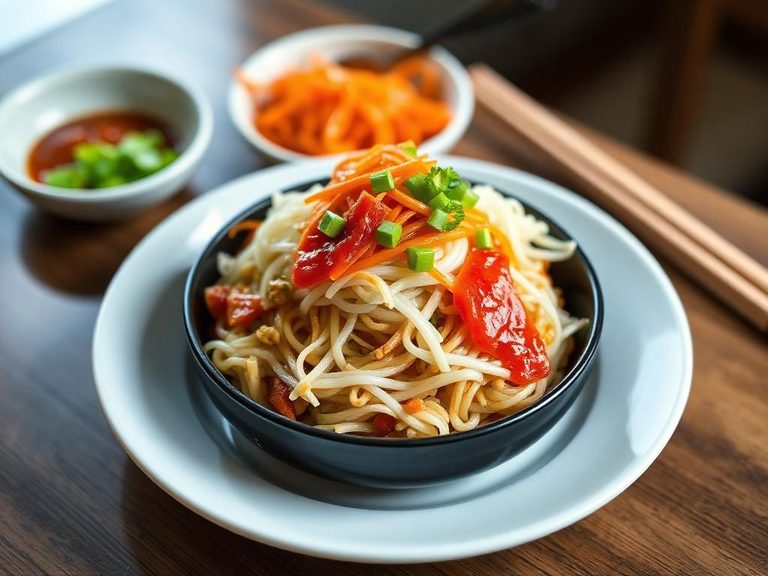
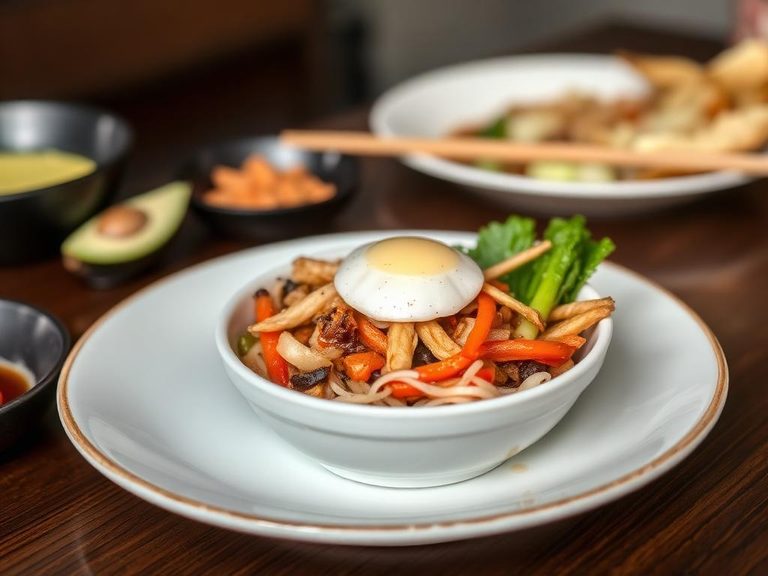
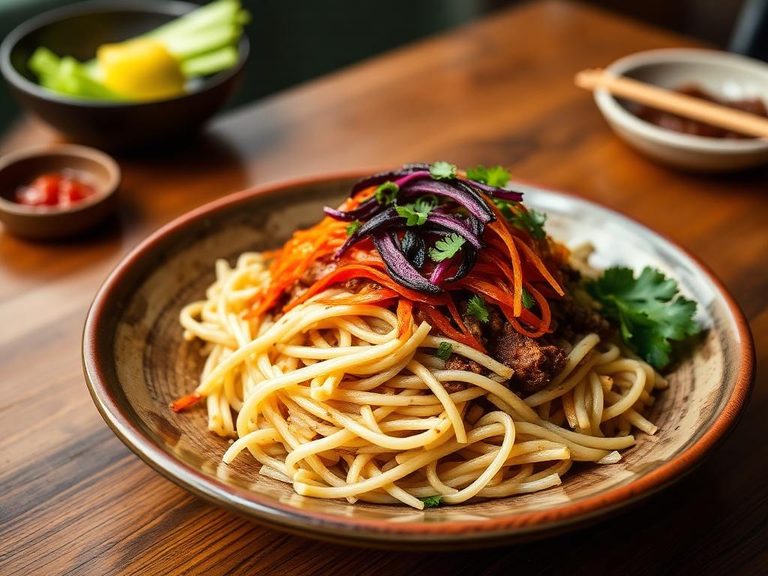
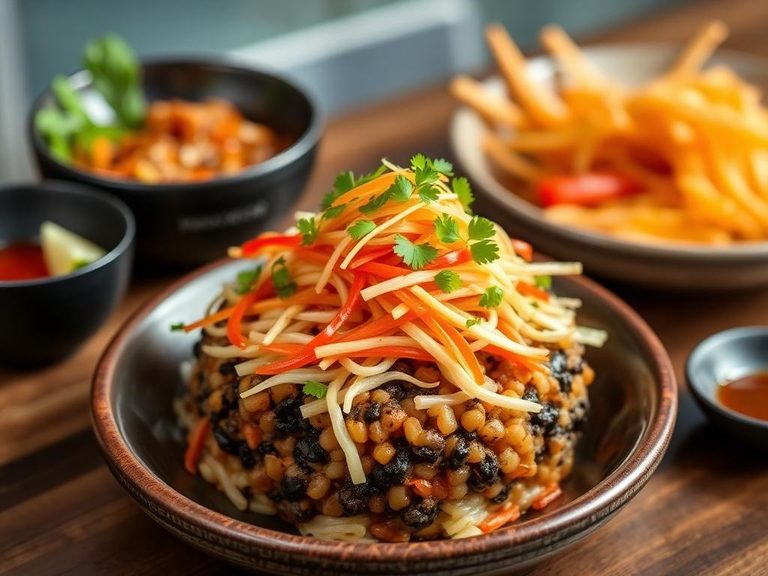
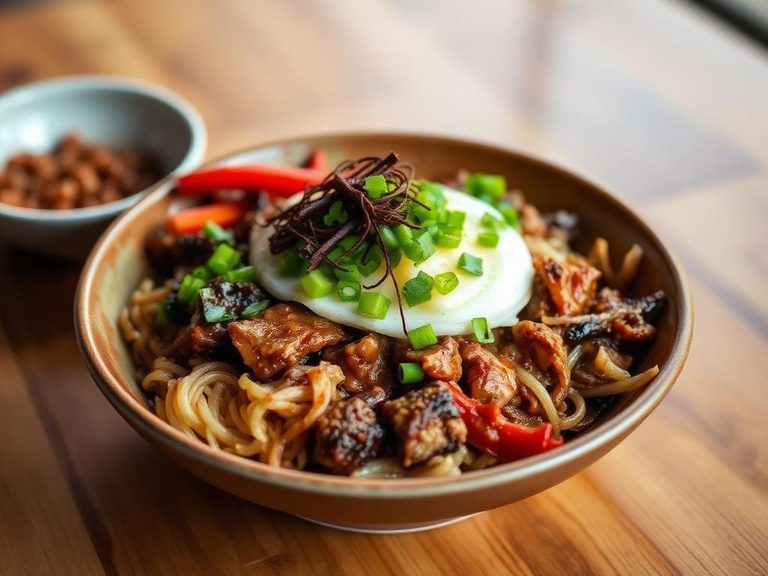
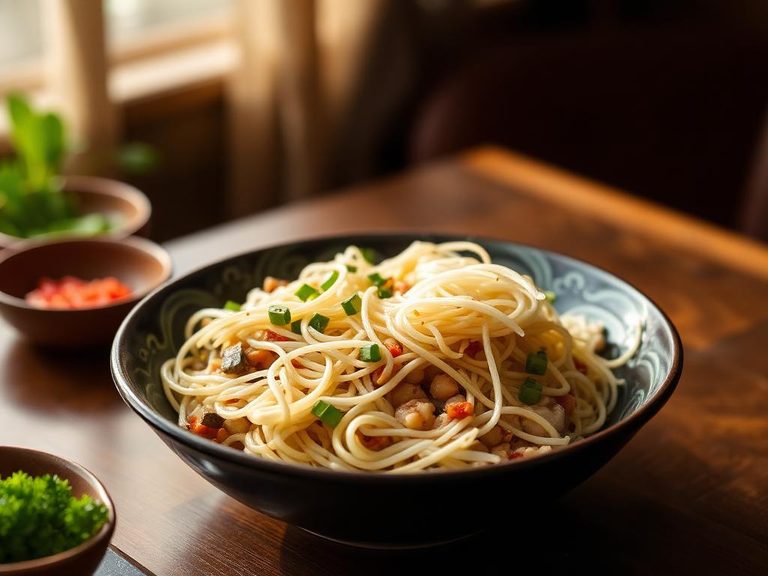
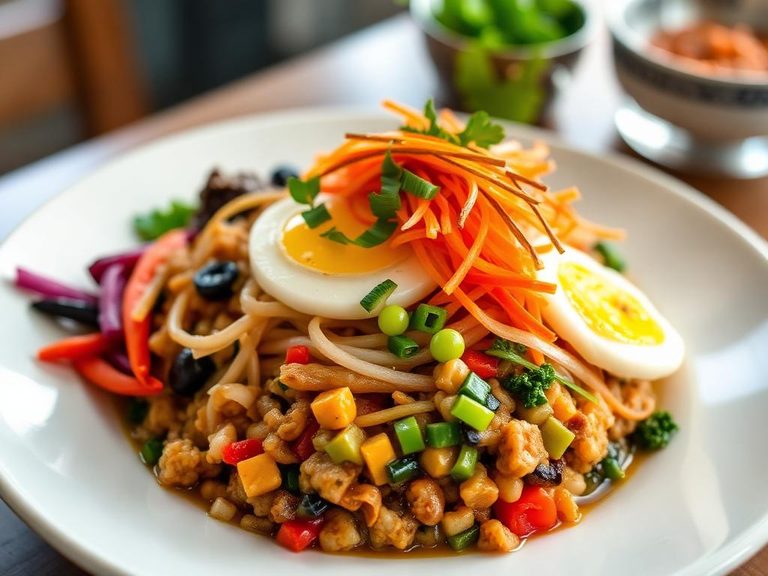
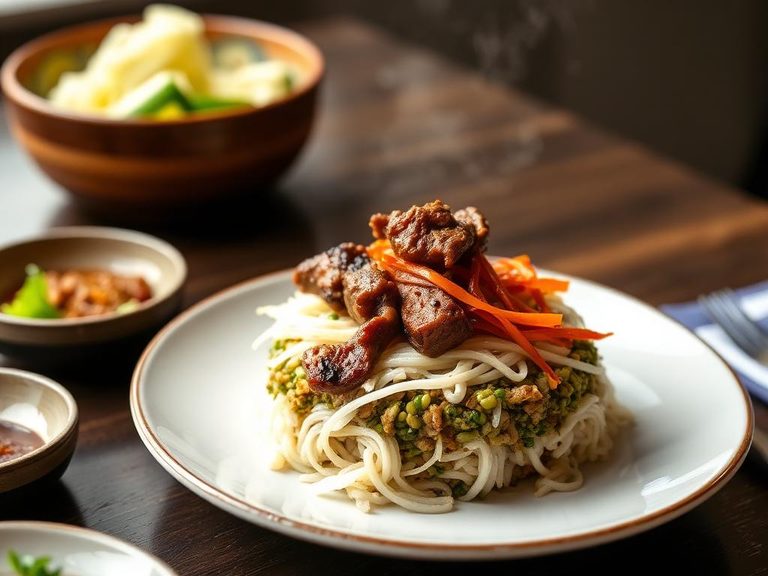
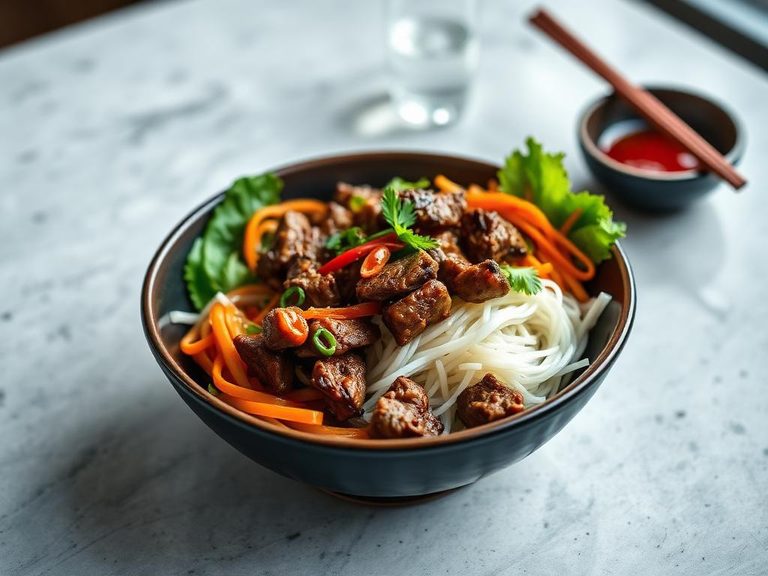
Bibimbap with Kimchi is a vibrant and beloved Korean mixed rice dish, typically featuring a warm bowl of steamed white rice topped with an array of sautéed and seasoned vegetables, a protein like beef or tofu, a fried egg, and a generous dollop of spicy gochujang chili paste. The addition of kimchi, Korea's iconic fermented cabbage, adds a tangy, crunchy, and deeply flavorful element that cuts through the richness. This colorful medley is meant to be vigorously mixed together just before eating, creating a harmonious blend of flavors and textures in every bite.
🍽️ Nutrition at a glance
Bibimbap with Kimchi offers a relatively balanced macronutrient profile, with carbohydrates from the rice, protein from the egg and meat/tofu, and healthy fats from the cooking oils and egg yolk. It is a good source of dietary fiber, vitamins A and C from the vegetables, and provides probiotics from the fermented kimchi. A typical serving generally falls within the 500-700 calorie range, depending on portion sizes and specific ingredients used.
Nutrition breakdown
| Calories | 550 kcal |
| Protein | 18 g |
| Carbs | 85 g |
| Fat | 15 g |
| Fiber | 8 g |
| Sugar | 12 g |
| Sodium | 1200 mg |
| Potassium | 450 mg |
| Iron | 4 mg |
| Calcium | 120 mg |
| Vitamin A | 300 mcg RAE |
| Vitamin C | 25 mg |
| Vitamin K | 60 mcg |
| Folate | 100 mcg |
| Magnesium | 60 mg |
Per 1 bowl (450 g) · estimated, varies by recipe
💡 What's interesting
Culturally, bibimbap is often considered a 'clean-out-the-fridge' dish, embodying the Korean value of not wasting food by combining various leftover side dishes (banchan) into one satisfying meal. Nutritionally, the inclusion of kimchi is a standout feature, as its fermentation process not only adds complex flavor but also introduces beneficial gut-healthy probiotics, making the dish as functional as it is delicious.