

Bibimbap
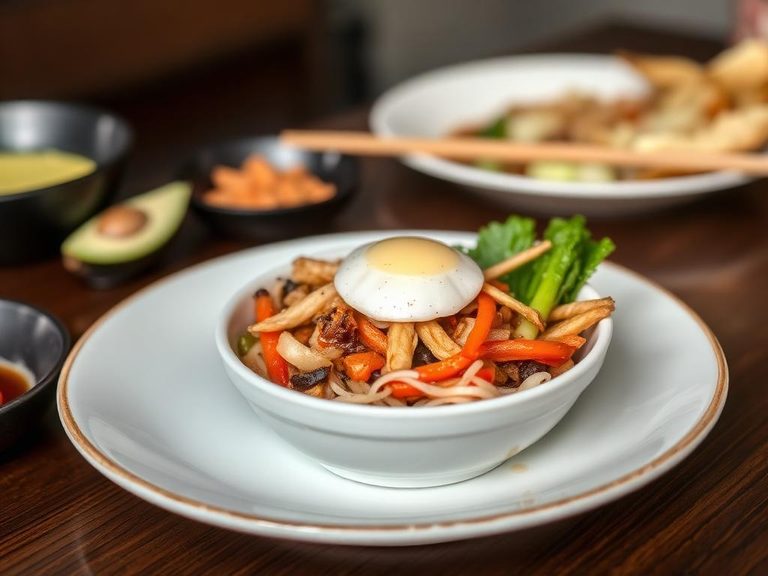
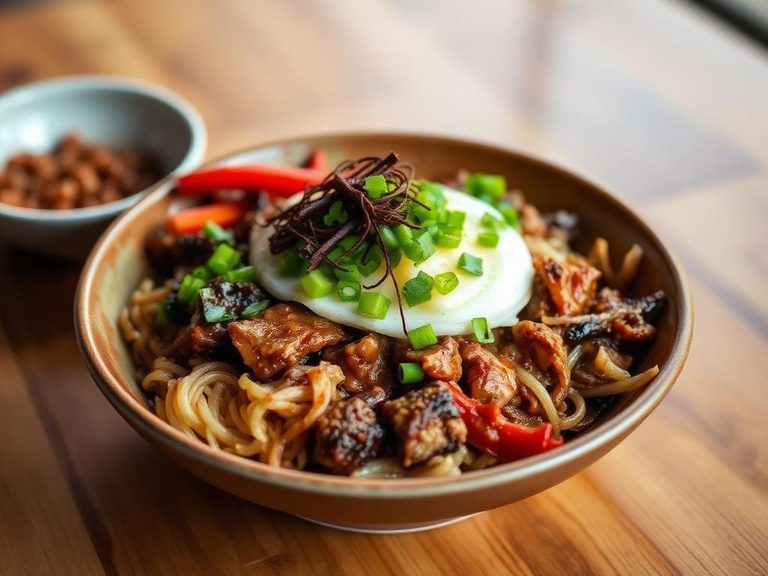
Bibimbap is a vibrant and beloved Korean dish that translates to 'mixed rice.' It consists of a bowl of warm white rice topped with an array of sautéed and seasoned vegetables (namul), a protein such as beef, chicken, or tofu, a fried egg, and a dollop of spicy gochujang (chili paste). The dish is famous for its colorful presentation and the satisfying ritual of mixing all the ingredients together before eating.
🍳 View the full Bibimbap recipe →
🍽️ Nutrition at a glance
Bibimbap is a nutritionally balanced meal, providing a good mix of carbohydrates from rice, protein from the egg and meat/tofu, and healthy fats from the cooking oils and egg yolk. It is rich in fiber, vitamins (like A and C), and minerals from the variety of vegetables, with a typical serving ranging from 500 to 800 calories depending on the portion size and specific ingredients used.
Nutrition breakdown
| Calories | 490 kcal |
| Protein | 18 g |
| Carbs | 65 g |
| Fat | 18 g |
| Fiber | 7 g |
| Sugar | 8 g |
| Sodium | 980 mg |
| Vitamin A | 180 µg RAE |
| Vitamin C | 15 mg |
| Vitamin K | 45 µg |
| Iron | 4.5 mg |
| Calcium | 120 mg |
| Potassium | 650 mg |
| Magnesium | 70 mg |
| Zinc | 3.2 mg |
Per 1 bowl (approx. 450 g) · estimated, varies by recipe
💡 What's interesting
Culturally, bibimbap is a symbol of harmony and balance in Korean cuisine, with its ingredients representing the five cardinal colors (obangsaek) and flavors. Nutritionally, it's unique for its 'mix-it-yourself' approach, which not only makes eating interactive but also allows for a customizable and well-rounded meal in a single bowl.
🍽️ Related dishes
AI estimate may be inaccurate · Terms