Soybean Sprout Bibimbap
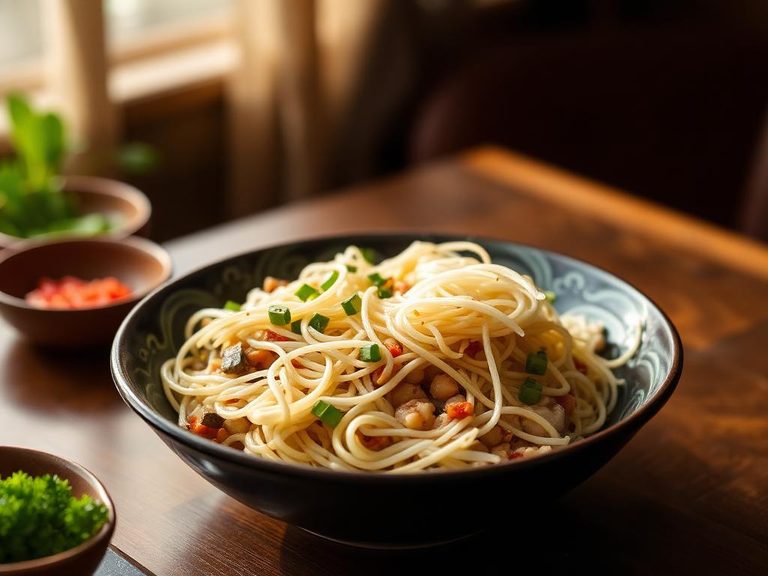
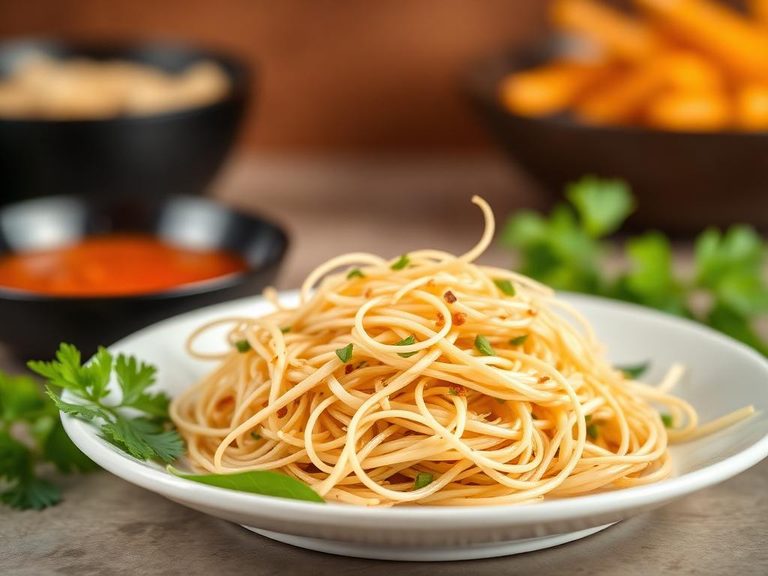
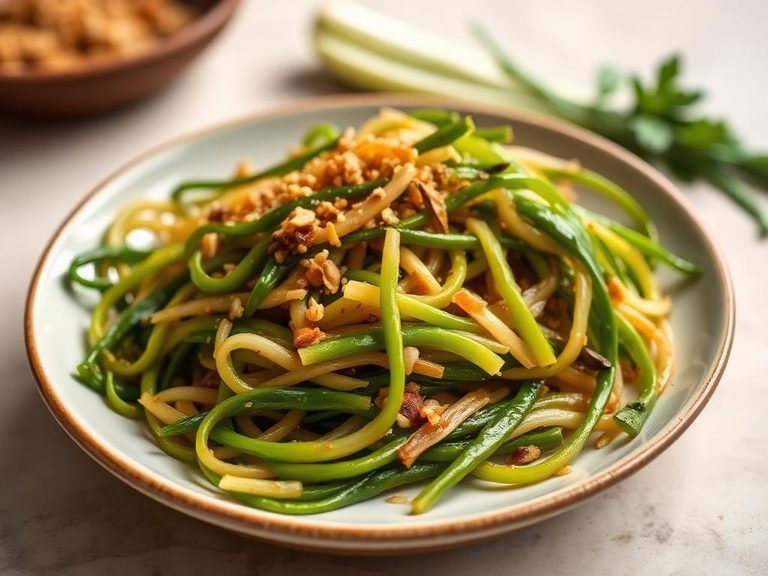
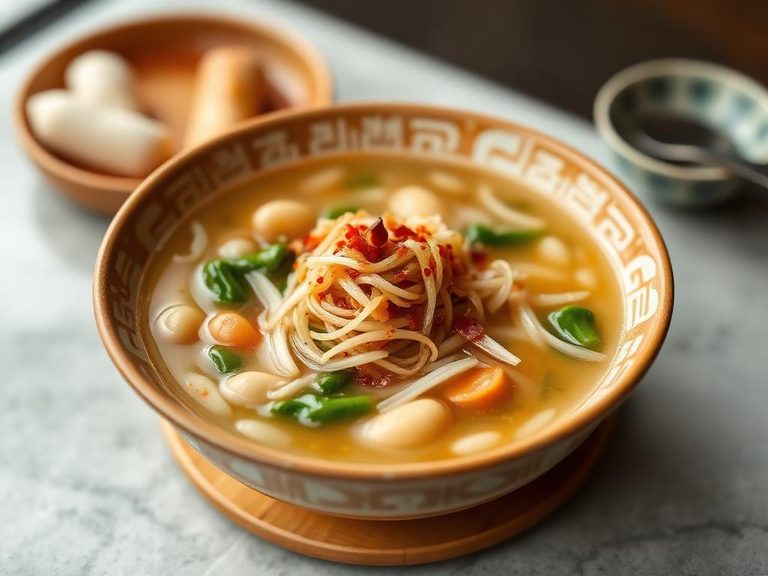
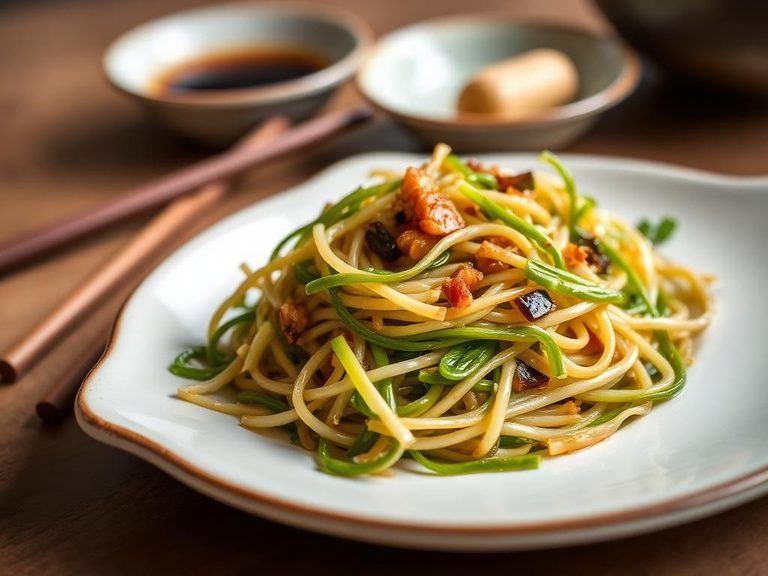
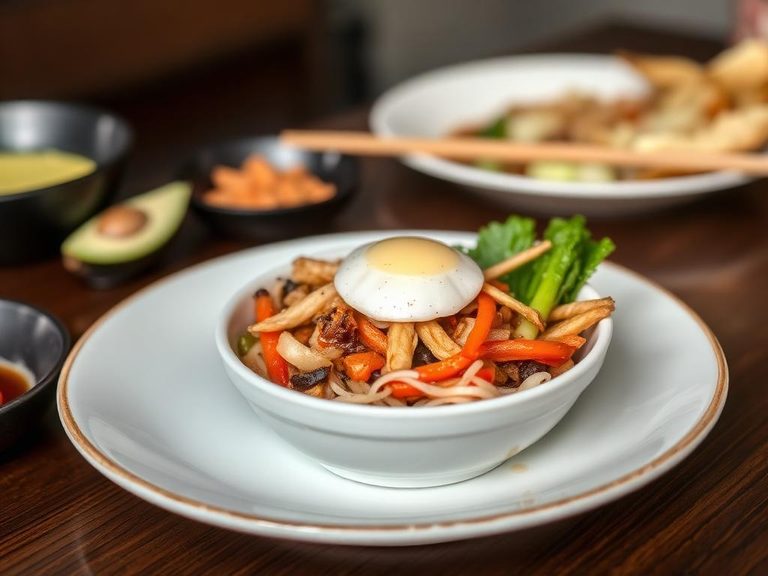
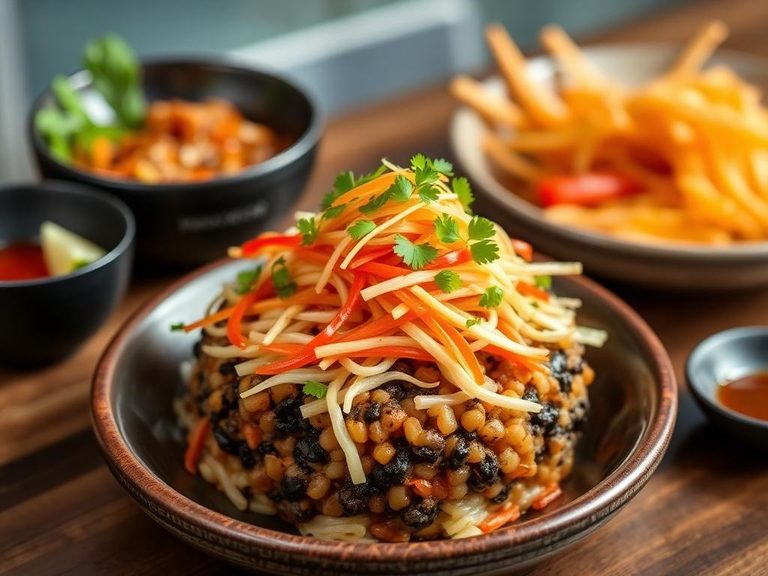
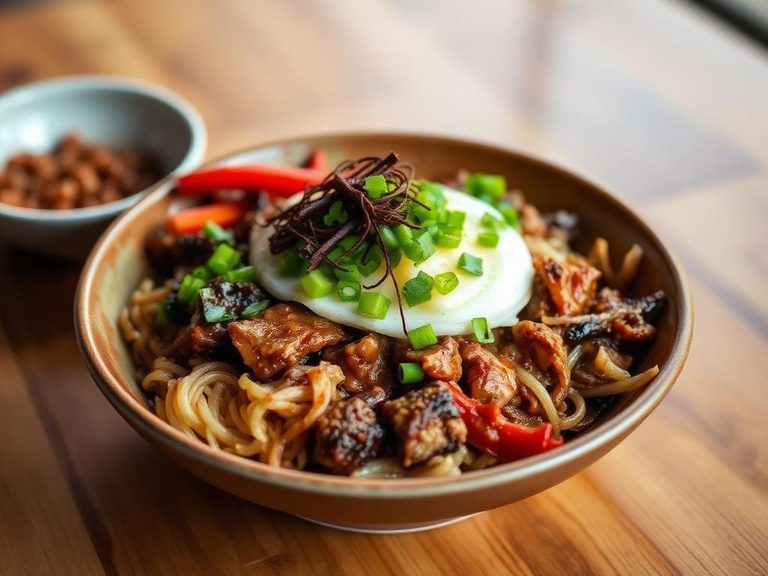
Soybean Sprout Bibimbap is a vibrant Korean mixed rice bowl where the star ingredient is seasoned soybean sprouts (kongnamul). It typically features a base of steamed rice topped with the sprouts, along with various sautéed or fresh vegetables like spinach, carrots, and mushrooms, often crowned with a fried egg and a dollop of spicy gochujang paste. This dish is a beloved staple in Korean home cooking and casual restaurants.
🍽️ Nutrition at a glance
This dish is generally well-balanced, offering a good mix of complex carbohydrates from rice, plant-based protein from the soybean sprouts, and healthy fats from sesame oil and the egg. It is a good source of dietary fiber, vitamin C, vitamin K, and folate, with a typical serving containing approximately 500-650 calories.
Nutrition breakdown
| Calories | 550 kcal |
| Protein | 18 g |
| Carbs | 85 g |
| Fat | 14 g |
| Fiber | 6 g |
| Sugar | 7 g |
| Sodium | 950 mg |
| Potassium | 450 mg |
| Iron | 4.5 mg |
| Calcium | 120 mg |
| Vitamin A | 350 µg RAE |
| Vitamin C | 15 mg |
| Vitamin K | 85 µg |
| Folate | 180 µg |
| Magnesium | 80 mg |
Per 1 bowl (450 g) · estimated, varies by recipe
💡 What's interesting
Culturally, bibimbap translates to 'mixed rice,' and the act of stirring all the components together before eating is considered essential to blend the flavors and textures. Nutritionally, soybean sprouts are a standout ingredient, known for being rich in the amino acid lysine and for providing a satisfying crunch even when cooked.