Bulgogi Bibimbap
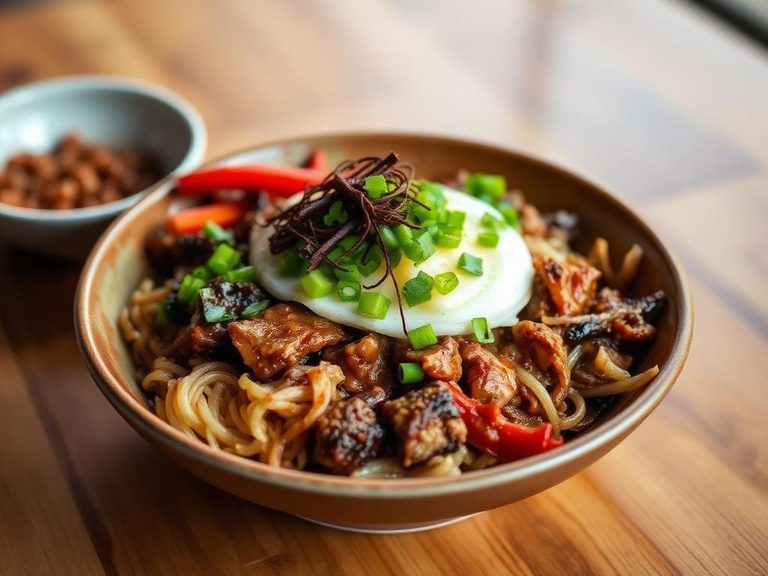
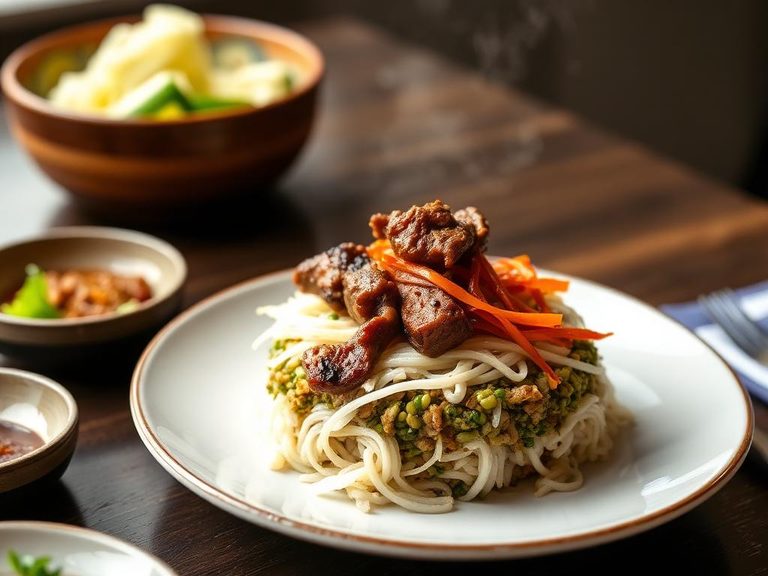
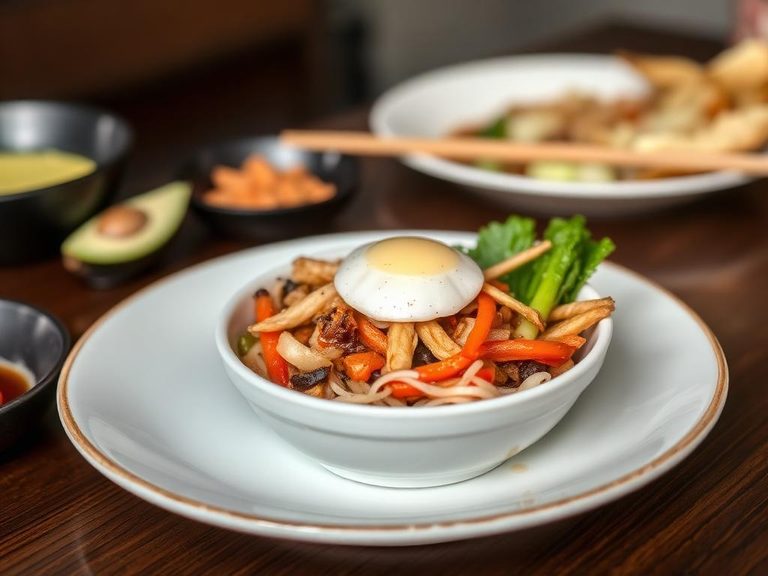
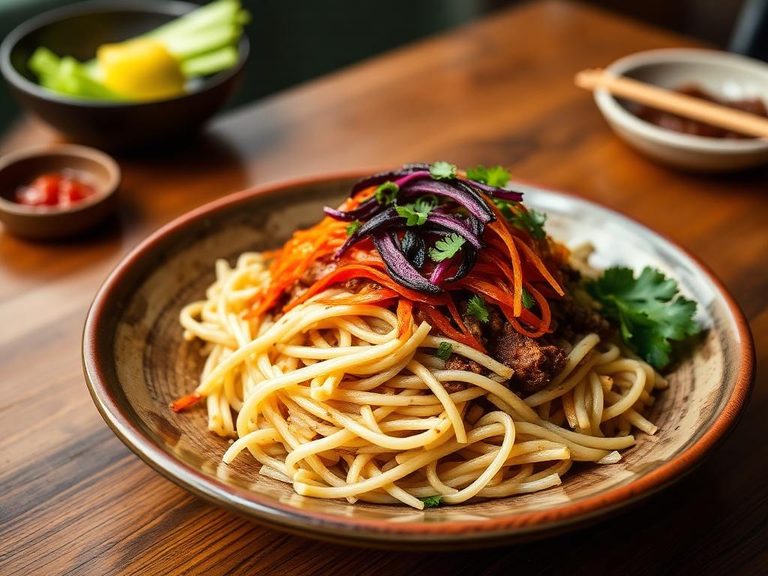
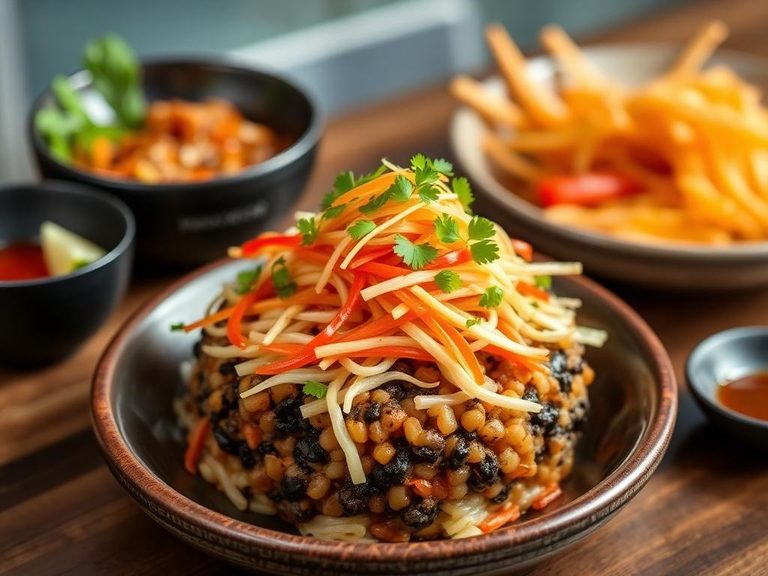
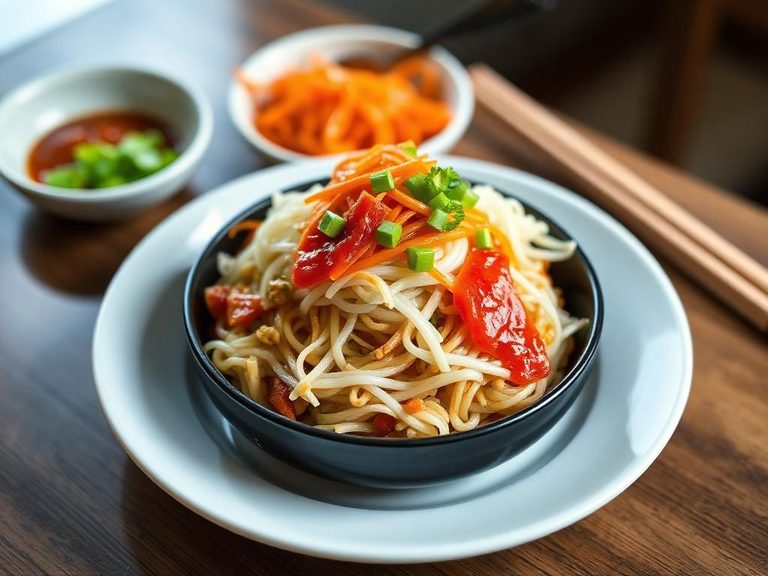
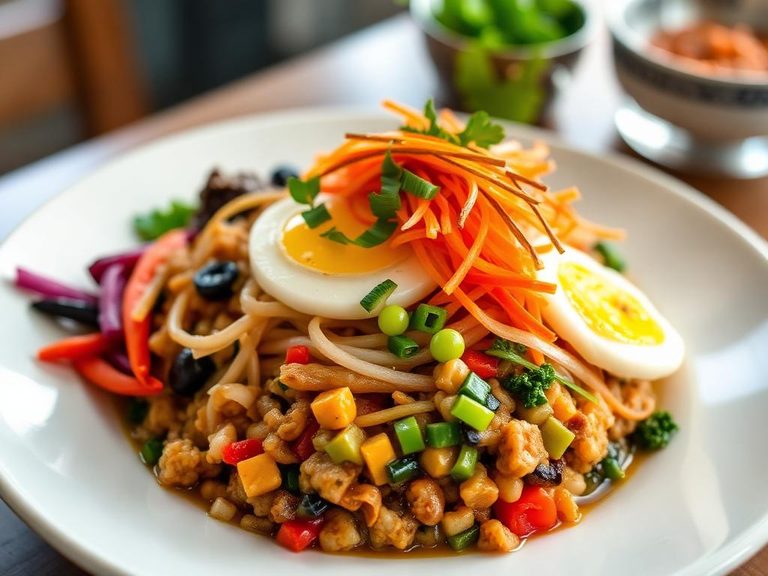
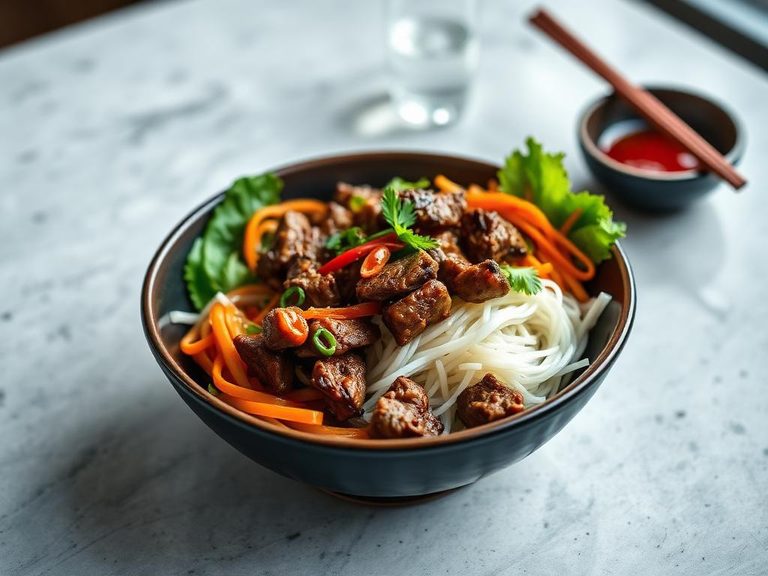
Bulgogi Bibimbap is a popular Korean rice bowl that combines tender, marinated beef bulgogi with a colorful array of sautéed vegetables, a fried egg, and spicy gochujang sauce, all served over a bed of steamed rice. It typically includes ingredients like spinach, carrots, zucchini, bean sprouts, and mushrooms, creating a harmonious blend of flavors and textures. This dish originates from South Korea and is celebrated for its balanced composition and vibrant presentation.
🍽️ Nutrition at a glance
Bulgogi Bibimbap offers a well-rounded nutritional profile, with a moderate amount of carbohydrates from rice, protein from beef and egg, and healthy fats from the cooking oils and sesame. It is rich in vitamins and minerals, such as iron, vitamin A, and fiber from the vegetables, and a typical serving ranges from 500 to 700 calories depending on portion sizes and ingredients.
Nutrition breakdown
| Calories | 550 kcal |
| Protein | 28 g |
| Carbs | 65 g |
| Fat | 18 g |
| Fiber | 6 g |
| Sugar | 12 g |
| Sodium | 1200 mg |
| Iron | 4.5 mg |
| Potassium | 650 mg |
| Vitamin A | 300 µg |
| Vitamin C | 25 mg |
| Calcium | 120 mg |
| Vitamin B6 | 0.6 mg |
| Niacin (B3) | 8 mg |
| Zinc | 3.5 mg |
Per 1 bowl (350 g) · estimated, varies by recipe
💡 What's interesting
Culturally, Bibimbap is often associated with the Korean concept of harmony and balance, as it combines diverse ingredients into a single, cohesive dish. Nutritionally, its variety of vegetables provides a wide spectrum of antioxidants and nutrients, making it a colorful and health-conscious choice that reflects traditional Korean culinary wisdom.