

Korean Beef Bibimbap
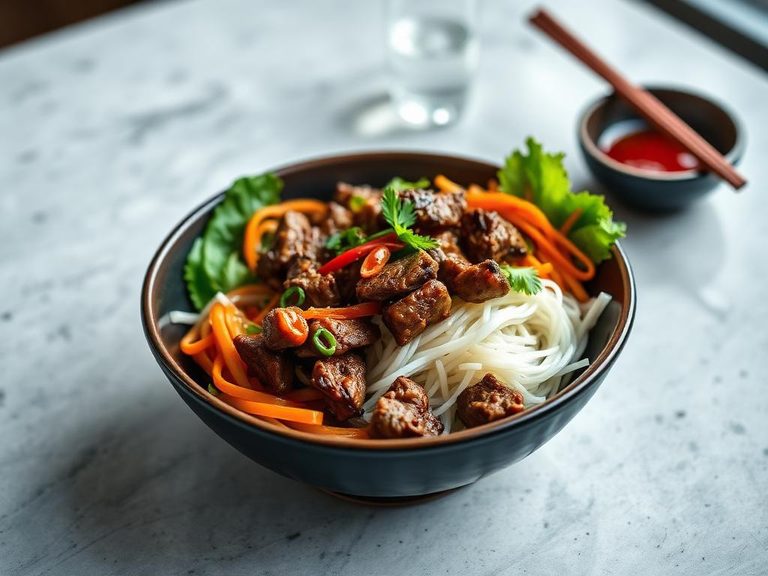
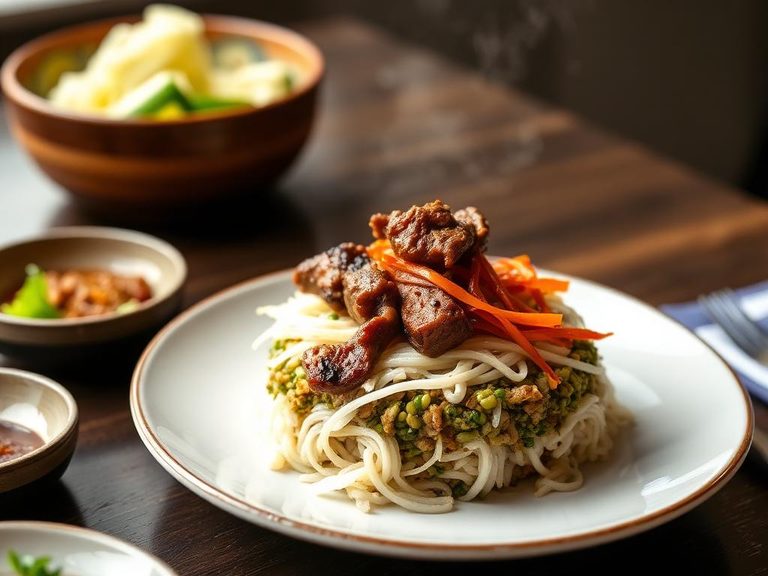
Bibimbap is a beloved Korean mixed rice dish, typically served in a hot stone bowl, featuring a base of steamed rice topped with an array of sautéed or fresh vegetables (namul), spicy gochujang sauce, a fried egg, and often sliced beef (bulgogi). It originates from Korea, where it's a staple comfort food enjoyed across the country and has gained global popularity.
🍳 View the full Korean Beef Bibimbap recipe →
🍽️ Nutrition at a glance
Bibimbap is a balanced meal, offering a good mix of carbohydrates from rice, protein from beef and egg, and healthy fats, along with fiber and vitamins from the assorted vegetables. A typical serving can range from 500 to 700 calories, depending on portion sizes and ingredients like the amount of oil or meat used.
Nutrition breakdown
| Calories | 650 kcal |
| Protein | 28 g |
| Carbs | 85 g |
| Fat | 22 g |
| Fiber | 6 g |
| Sugar | 8 g |
| Sodium | 1200 mg |
| Iron | 5 mg |
| Vitamin A | 300 mcg RAE |
| Vitamin C | 15 mg |
| Calcium | 120 mg |
| Potassium | 450 mg |
| Vitamin B6 | 0.6 mg |
| Niacin (B3) | 8 mg |
| Zinc | 4 mg |
Per 1 bowl (450 g) · estimated, varies by recipe
💡 What's interesting
Culturally, bibimbap is celebrated for its vibrant presentation and the act of mixing all ingredients together, symbolizing harmony and balance. Nutritionally, its diverse vegetable toppings provide a wide spectrum of micronutrients, making it a colorful and nutrient-dense dish.
🍽️ Related dishes
AI estimate may be inaccurate · Terms