

Sausage, turkey, breakfast links, mild, raw
Whole food · Sausages and Luncheon Meats
Mild turkey breakfast links are lean, savory sausages made from ground turkey, offering a lighter alternative to traditional pork sausage. They have a tender, juicy texture with a subtly seasoned flavor profile, often featuring hints of sage, pepper, and garlic. Nutritionally, they are a high-protein, low-carb option that provides substantial energy without excessive fat.
Calorie split: 41% protein · 2% carbs · 57% fat
↓ Full nutrition💚 Why it's loved
People love these links for their mild, versatile flavor that pairs well with classic breakfast sides like eggs, pancakes, or waffles. They are a staple in American breakfast culture, offering a convenient and satisfying way to start the day.
⚠️ Watch-outs & how to enjoy it better
Some may find them less flavorful or juicy than pork sausage, and they can be high in sodium, which may concern those monitoring salt intake. To counteract, choose low-sodium varieties, pair with potassium-rich foods like bananas or spinach, and practice portion control by limiting to 2-3 links per meal.
Key benefits
- High in protein (16.7g per 100g) for muscle maintenance and satiety.
- Low in carbohydrates (0.93g per 100g), making it suitable for low-carb or keto diets.
- Lower in fat (10.4g per 100g) compared to traditional pork sausage.
- Provides essential nutrients like B vitamins and selenium from turkey meat.
🍽️ Popular dishes

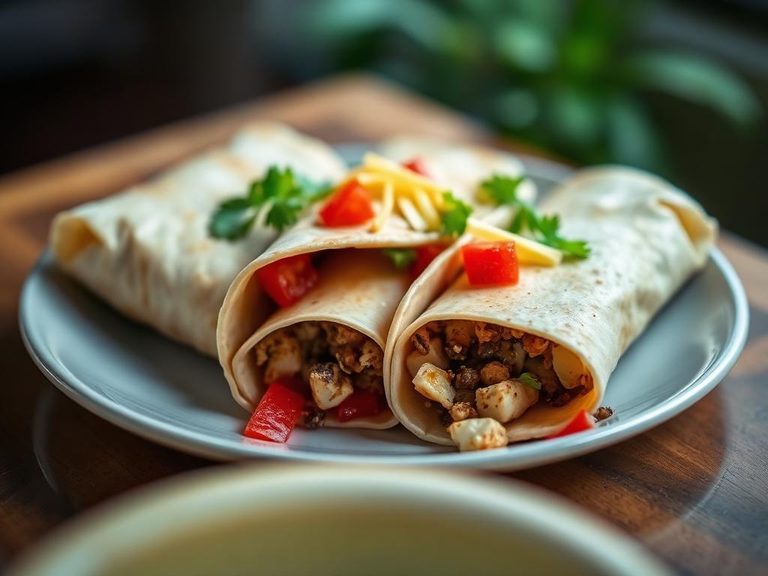
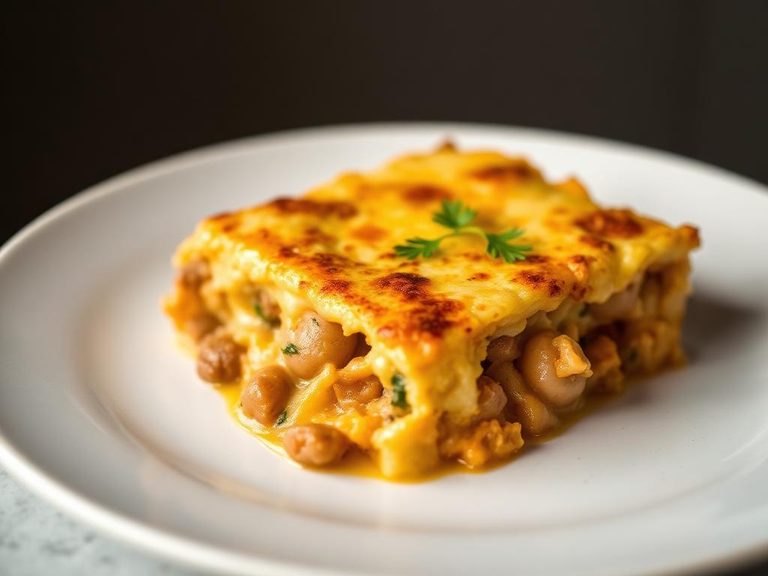
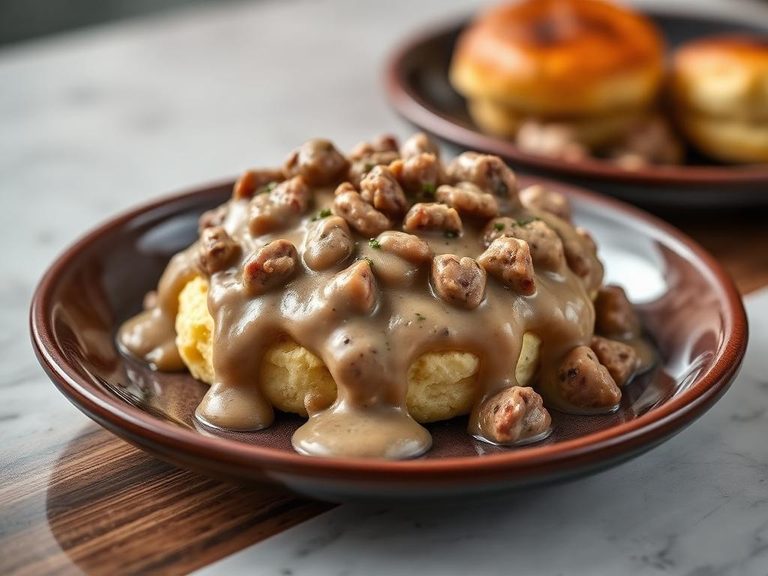
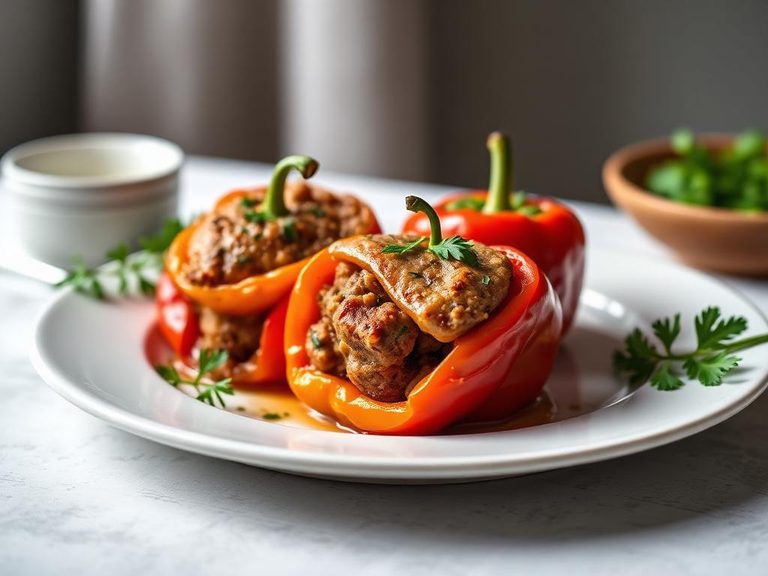
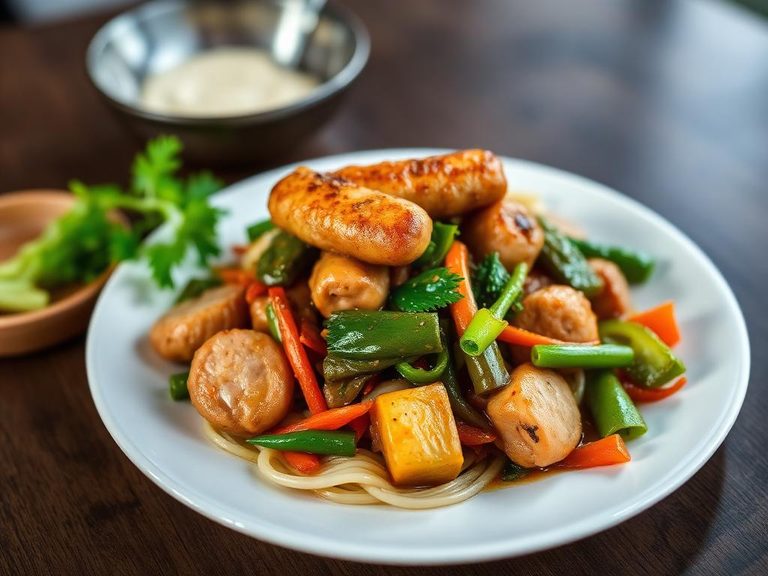
🌍 Where it's eaten
💡 Did you know?
Turkey sausage was popularized in the United States during the 1990s as a health-conscious alternative to pork sausage, driven by dietary trends emphasizing lower fat and higher protein intake.
Full nutrition (USDA data · scales with serving)
| Water | 69.6 g |
| Energy (Atwater General Factors) | 164 kcal |
| Energy (Atwater Specific Factors) | 169 kcal |
| Energy | 169 kcal |
| Energy | 706 kj |
| Nitrogen | 2.7 g |
| Protein | 16.7 g |
| Total lipid (fat) | 10.4 g |
| Total fat (NLEA) | 8.9 g |
| Ash | 2.4 g |
| Carbohydrate, by difference | 0.93 g |
| Calcium, Ca | 32.0 mg |
| Iron, Fe | 1.2 mg |
| Magnesium, Mg | 18.9 mg |
| Phosphorus, P | 178 mg |
| Potassium, K | 310 mg |
| Sodium, Na | 599 mg |
| Zinc, Zn | 2.6 mg |
| Copper, Cu | 0.07 mg |
| Manganese, Mn | 0.04 mg |
| Selenium, Se | 12.5 ug |
| Thiamin | 0.05 mg |
| Riboflavin | 0.30 mg |
| Niacin | 5.0 mg |
| Pantothenic acid | 0.95 mg |
| Vitamin B-6 | 0.34 mg |
| Choline, total | 59.6 mg |
| Choline, free | 1.6 mg |
| Choline, from phosphocholine | 46.4 mg |
| Choline, from phosphotidyl choline | 1.0 mg |
| Choline, from glycerophosphocholine | 2.1 mg |
| Choline, from sphingomyelin | 8.4 mg |
| Betaine | 8.1 mg |
| Vitamin B-12 | 1.2 ug |
| Vitamin E (alpha-tocopherol) | 0.24 mg |
| Tocopherol, beta | 0.00 mg |
| Tocopherol, gamma | 0.24 mg |
| Tocopherol, delta | 0.68 mg |
| Tocotrienol, alpha | 0.00 mg |
| Tocotrienol, beta | 0.00 mg |
| Tocotrienol, gamma | 0.00 mg |
| Tocotrienol, delta | 0.00 mg |
| Vitamin K (phylloquinone) | 0.40 ug |
| Vitamin K (Dihydrophylloquinone) | 0.00 ug |
| Vitamin K (Menaquinone-4) | 36.6 ug |
Fat & fatty acid profile (per 100g)
| Fatty acids, total saturated | 2.5 g |
| SFA 4:0 | 0.00 g |
| SFA 6:0 | 0.00 g |
| SFA 8:0 | 0.00 g |
| SFA 10:0 | 0.00 g |
| SFA 11:0 | 0.00 g |
| SFA 12:0 | 0.01 g |
| SFA 14:0 | 0.08 g |
| SFA 15:0 | 0.01 g |
| SFA 16:0 | 1.7 g |
| SFA 17:0 | 0.02 g |
| SFA 18:0 | 0.65 g |
| SFA 20:0 | 0.01 g |
| SFA 22:0 | 0.01 g |
| SFA 24:0 | 0.00 g |
| Fatty acids, total monounsaturated | 3.1 g |
| MUFA 14:1 c | 0.01 g |
| MUFA 15:1 | 0.00 g |
| MUFA 16:1 c | 0.23 g |
| MUFA 17:1 | 0.01 g |
| MUFA 17:1 c | 0.01 g |
| MUFA 18:1 c | 2.8 g |
| MUFA 20:1 c | 0.05 g |
| MUFA 22:1 c | 0.01 g |
| MUFA 22:1 n-9 | 0.01 g |
| MUFA 24:1 c | 0.01 g |
| Fatty acids, total polyunsaturated | 3.1 g |
| PUFA 18:2 c | 2.8 g |
| PUFA 18:2 n-6 c,c | 2.8 g |
| PUFA 18:2 CLAs | 0.02 g |
| PUFA 18:3 c | 0.19 g |
| PUFA 18:3 n-3 c,c,c (ALA) | 0.19 g |
| PUFA 18:3 n-6 c,c,c | 0.00 g |
| PUFA 18:4 | 0.00 g |
| PUFA 20:2 c | 0.02 g |
| PUFA 20:2 n-6 c,c | 0.02 g |
| PUFA 20:3 c | 0.01 g |
| PUFA 20:3 n-3 | 0.00 g |
| PUFA 20:3 n-6 | 0.01 g |
| PUFA 20:3 n-9 | 0.00 g |
| PUFA 20:4 | 0.09 g |
| PUFA 20:4c | 0.09 g |
| PUFA 20:5c | 0.00 g |
| PUFA 20:5 n-3 (EPA) | 0.00 g |
| PUFA 22:2 | 0.00 g |
| PUFA 22:5 c | 0.01 g |
| PUFA 22:4 | 0.02 g |
| PUFA 22:5 n-3 (DPA) | 0.01 g |
| PUFA 22:6 c | 0.01 g |
| PUFA 22:6 n-3 (DHA) | 0.01 g |
| Fatty acids, total trans | 0.10 g |
| Fatty acids, total trans-monoenoic | 0.09 g |
| TFA 16:1 t | 0.00 g |
| TFA 18:1 t | 0.08 g |
| TFA 22:1 t | 0.00 g |
| Fatty acids, total trans-dienoic | 0.02 g |
| TFA 18:2 t not further defined | 0.02 g |
| Fatty acids, total trans-polyenoic | 0.00 g |
| TFA 18:3 t | 0.00 g |
| Cholesterol | 78.0 mg |
Amino acid profile (per 100g)
| Tryptophan | 0.15 g |
| Threonine | 0.71 g |
| Isoleucine | 0.65 g |
| Leucine | 1.2 g |
| Lysine | 1.4 g |
| Methionine | 0.45 g |
| Phenylalanine | 0.82 g |
| Tyrosine | 0.56 g |
| Valine | 0.65 g |
| Arginine | 1.0 g |
| Histidine | 0.42 g |
| Alanine | 0.94 g |
| Aspartic acid | 1.5 g |
| Glutamic acid | 2.5 g |
| Glycine | 0.88 g |
| Proline | 0.77 g |
| Serine | 0.70 g |
| Hydroxyproline | 0.20 g |
| Cysteine | 0.19 g |
FAQ
Are turkey breakfast links healthier than pork sausage?
Generally, yes. They are lower in fat and calories while providing similar protein levels, making them a leaner choice for those watching fat intake.
Can I use turkey breakfast links in recipes that call for pork sausage?
Yes, they can be substituted in most recipes, though they may have a milder flavor and slightly different texture. Adjust seasoning if needed.
How should I cook turkey breakfast links for best results?
Pan-fry over medium heat until browned and cooked through (internal temperature of 165°F/74°C), or bake in the oven for a hands-off method. Avoid overcooking to prevent dryness.
Nutrient density (calculated · NRF9.3)
Nutrient Rich Foods index: beneficial nutrients (protein, fiber, vitamins, minerals) minus saturated fat, added sugar & sodium, per 100 kcal.
NRF9.3 index — Fulgoni, Keast & Drewnowski, 2009. Computed from USDA nutrients.
Weight-loss friendliness (composite index)
Energy density 1.69 kcal/g · 40% calories from protein · 0.0 g fiber · 0.0 g sugar per 100 g.
Composite of energy density (Rolls et al., 1999), protein & fiber satiety, minus sugar. A calculated heuristic — ranks satiety-per-calorie, not a clinical measure.
Dietary load (calculated from USDA values)
Potential renal acid load. Positive = acid-forming, negative = alkaline-forming.
Sodium-to-potassium ratio: 1.93 (lower is better — aim for ≤ 1)
Sodium:potassium per WHO potassium guidance. Computed from USDA nutrients.