

Sausage, pork, chorizo, link or ground, cooked, pan-fried
Whole food · Sausages and Luncheon Meats

Photo: Wikipedia
This is the rich, spicy heart of Spanish cuisine: cured pork sausage, intensely flavored with smoked paprika and garlic, then pan-fried until the casing crisps and the fat renders into a deep red, aromatic oil. Its texture is a satisfying contrast of a snappy, charred exterior and a juicy, coarse-ground interior. Nutritionally, it's a calorie-dense powerhouse, delivering a significant protein punch alongside a high fat content.
Calorie split: 23% protein · 3% carbs · 74% fat
↓ Full nutrition💚 Why it's loved
People adore chorizo for its explosive, complex flavor—a smoky, garlicky, and slightly spicy kick that instantly elevates any dish. Its versatility is legendary, shining equally in a simple tapa, a hearty stew, or scrambled with eggs.
⚠️ Watch-outs & how to enjoy it better
Its high saturated fat and sodium content can be a concern for heart health or blood pressure management. The curing process also makes it a processed meat, which some dietary guidelines recommend limiting. To enjoy it mindfully, use it as a potent flavoring agent in smaller portions rather than the main protein, and pair it with fiber-rich vegetables or legumes to balance the meal.
Key benefits
- Excellent source of high-quality protein for muscle maintenance.
- Provides essential B vitamins, particularly B12 and niacin.
- Contains minerals like zinc and selenium from pork.
- The fat content aids in the absorption of fat-soluble vitamins from other foods.
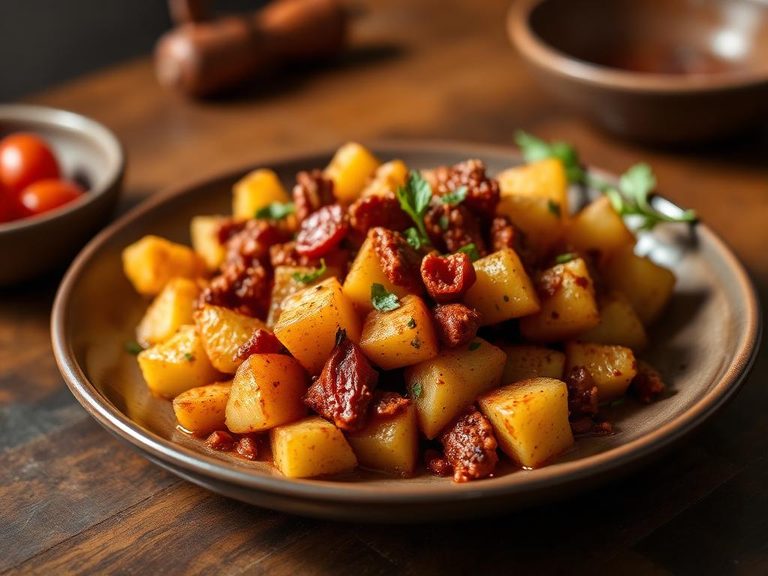
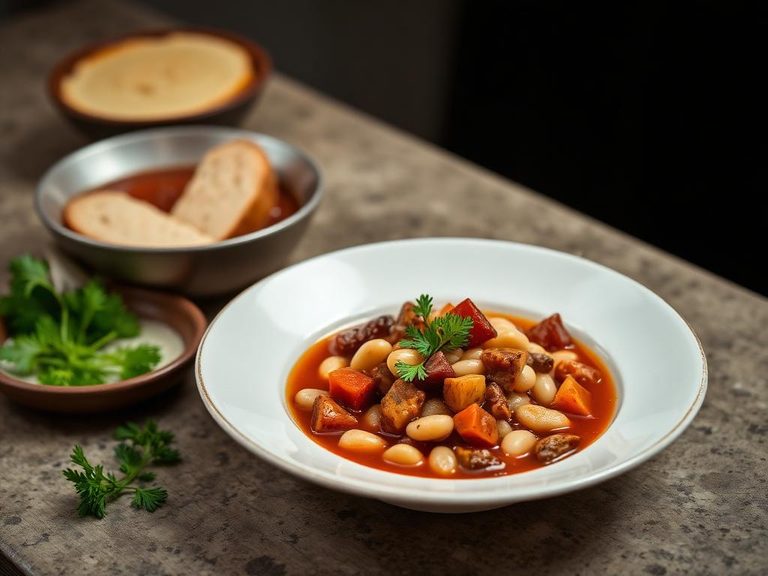
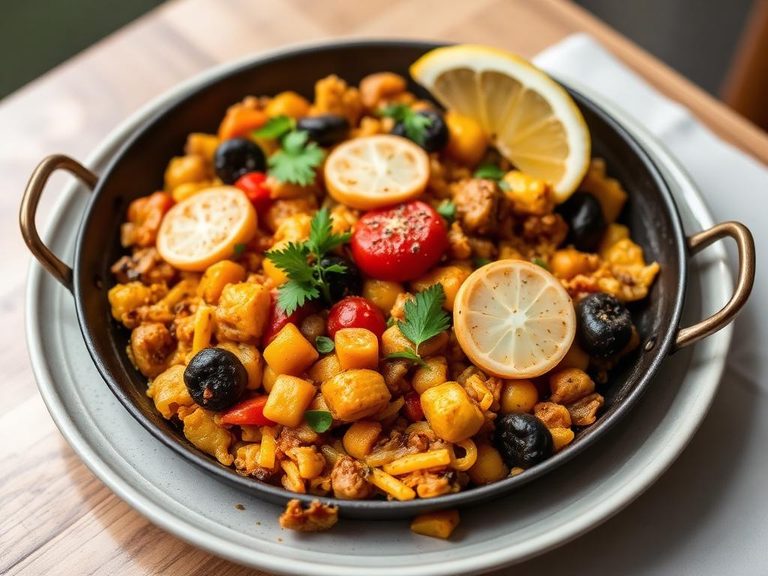
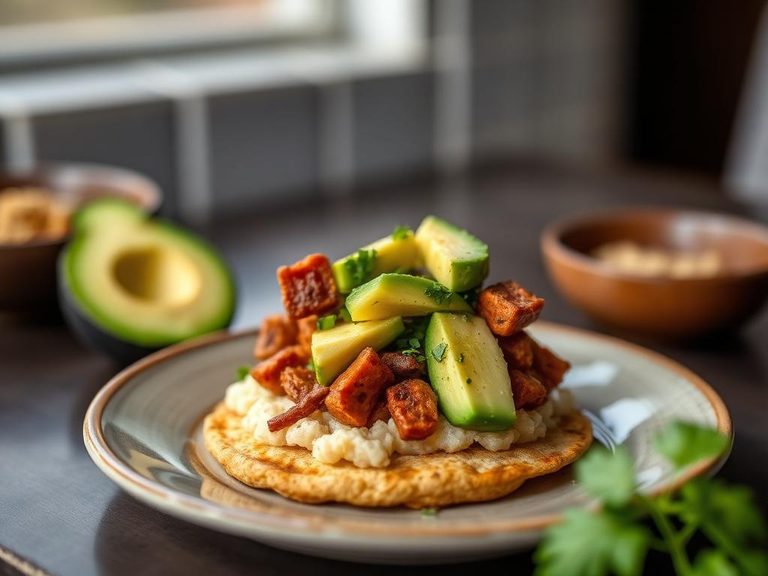
🍽️ Popular dishes


🌍 Where it's eaten
💡 Did you know?
The vibrant red color of chorizo comes exclusively from pimentón (smoked paprika); traditional Spanish chorizo contains no artificial coloring, and its hue is a direct indicator of paprika quality and quantity.
Full nutrition (USDA data · scales with serving)
| Water | 46.3 g |
| Energy | 346 kcal |
| Energy | 1450 kj |
| Nitrogen | 3.1 g |
| Protein | 19.3 g |
| Total lipid (fat) | 28.1 g |
| Total fat (NLEA) | 26.0 g |
| Ash | 3.7 g |
| Carbohydrate, by difference | 2.6 g |
| Calcium, Ca | 37.0 mg |
| Iron, Fe | 2.3 mg |
| Magnesium, Mg | 30.1 mg |
| Phosphorus, P | 207 mg |
| Potassium, K | 435 mg |
| Sodium, Na | 983 mg |
| Zinc, Zn | 2.2 mg |
| Copper, Cu | 0.13 mg |
| Manganese, Mn | 0.19 mg |
| Selenium, Se | 25.9 ug |
| Thiamin | 0.36 mg |
| Riboflavin | 0.42 mg |
| Niacin | 7.1 mg |
| Pantothenic acid | 1.2 mg |
| Vitamin B-6 | 0.55 mg |
| Folate, total | 10.0 ug |
| Choline, total | 97.1 mg |
| Choline, free | 42.7 mg |
| Choline, from phosphocholine | 40.3 mg |
| Choline, from phosphotidyl choline | 0.40 mg |
| Choline, from glycerophosphocholine | 2.8 mg |
| Choline, from sphingomyelin | 10.9 mg |
| Betaine | 6.1 mg |
| Vitamin B-12 | 1.2 ug |
| Vitamin A, RAE | 0.00 ug |
| Retinol | 0.00 ug |
| Vitamin E (alpha-tocopherol) | 1.5 mg |
| Tocopherol, beta | 0.00 mg |
| Tocopherol, gamma | 0.00 mg |
| Tocopherol, delta | 2.4 mg |
| Tocotrienol, alpha | 0.00 mg |
| Tocotrienol, beta | 0.00 mg |
| Tocotrienol, gamma | 0.00 mg |
| Tocotrienol, delta | 0.00 mg |
| Vitamin K (phylloquinone) | 6.0 ug |
| Vitamin K (Dihydrophylloquinone) | 0.00 ug |
| Vitamin K (Menaquinone-4) | 16.8 ug |
Fat & fatty acid profile (per 100g)
| Fatty acids, total saturated | 9.4 g |
| SFA 4:0 | 0.01 g |
| SFA 6:0 | 0.00 g |
| SFA 8:0 | 0.00 g |
| SFA 10:0 | 0.02 g |
| SFA 11:0 | 0.00 g |
| SFA 12:0 | 0.02 g |
| SFA 14:0 | 0.35 g |
| SFA 15:0 | 0.01 g |
| SFA 16:0 | 5.9 g |
| SFA 17:0 | 0.07 g |
| SFA 18:0 | 3.0 g |
| SFA 20:0 | 0.06 g |
| SFA 22:0 | 0.01 g |
| SFA 24:0 | 0.00 g |
| Fatty acids, total monounsaturated | 11.7 g |
| MUFA 14:1 c | 0.01 g |
| MUFA 15:1 | 0.00 g |
| MUFA 16:1 c | 0.57 g |
| MUFA 17:1 | 0.06 g |
| MUFA 17:1 c | 0.06 g |
| MUFA 18:1 c | 10.8 g |
| MUFA 20:1 c | 0.25 g |
| MUFA 22:1 c | 0.01 g |
| MUFA 22:1 n-9 | 0.01 g |
| MUFA 24:1 c | 0.00 g |
| Fatty acids, total polyunsaturated | 4.7 g |
| PUFA 18:2 c | 4.2 g |
| PUFA 18:2 n-6 c,c | 4.1 g |
| PUFA 18:2 CLAs | 0.03 g |
| PUFA 18:3 c | 0.19 g |
| PUFA 18:3 n-3 c,c,c (ALA) | 0.18 g |
| PUFA 18:3 n-6 c,c,c | 0.01 g |
| PUFA 18:4 | 0.00 g |
| PUFA 20:2 c | 0.18 g |
| PUFA 20:2 n-6 c,c | 0.18 g |
| PUFA 20:3 c | 0.06 g |
| PUFA 20:3 n-3 | 0.03 g |
| PUFA 20:3 n-6 | 0.03 g |
| PUFA 20:3 n-9 | 0.00 g |
| PUFA 20:4 | 0.13 g |
| PUFA 20:4c | 0.13 g |
| PUFA 20:5c | 0.00 g |
| PUFA 20:5 n-3 (EPA) | 0.00 g |
| PUFA 22:2 | 0.00 g |
| PUFA 22:5 c | 0.02 g |
| PUFA 22:4 | 0.03 g |
| PUFA 22:5 n-3 (DPA) | 0.02 g |
| PUFA 22:6 c | 0.01 g |
| PUFA 22:6 n-3 (DHA) | 0.01 g |
| Fatty acids, total trans | 0.12 g |
| Fatty acids, total trans-monoenoic | 0.09 g |
| TFA 16:1 t | 0.00 g |
| TFA 18:1 t | 0.09 g |
| TFA 22:1 t | 0.00 g |
| Fatty acids, total trans-dienoic | 0.02 g |
| TFA 18:2 t not further defined | 0.02 g |
| Fatty acids, total trans-polyenoic | 0.00 g |
| TFA 18:3 t | 0.00 g |
| Cholesterol | 107 mg |
Amino acid profile (per 100g)
Estimated from Sausage, smoked link sausage, pork and beef (nonfat dry milk added) — USDA does not publish this profile for Sausage.
| Tryptophan | 0.14 g |
| Threonine | 0.55 g |
| Isoleucine | 0.60 g |
| Leucine | 1.0 g |
| Lysine | 1.0 g |
| Methionine | 0.34 g |
| Cystine | 0.15 g |
| Phenylalanine | 0.52 g |
| Tyrosine | 0.45 g |
| Valine | 0.66 g |
| Arginine | 0.81 g |
| Histidine | 0.41 g |
| Alanine | 0.83 g |
| Aspartic acid | 1.2 g |
| Glutamic acid | 2.1 g |
| Glycine | 0.89 g |
| Proline | 0.81 g |
| Serine | 0.57 g |
FAQ
What's the difference between Spanish and Mexican chorizo?
Spanish chorizo is typically cured and ready to eat, with a firmer texture. Mexican chorizo is usually raw, fresh ground pork that must be cooked before eating, and is often softer and more crumbly.
Can I eat chorizo straight from the package?
It depends on the type. Fully cured, dried Spanish-style chorizo (like a hard salami) is safe to eat uncooked. Fresh, raw Mexican-style chorizo must be thoroughly cooked until no longer pink.
How do I store leftover cooked chorizo?
Store cooked chorizo in an airtight container in the refrigerator for up to 3-4 days. The rendered fat can be saved in the fridge for cooking—it's liquid gold for adding flavor to beans, potatoes, or greens.
Nutrient density (calculated · NRF9.3)
Nutrient Rich Foods index: beneficial nutrients (protein, fiber, vitamins, minerals) minus saturated fat, added sugar & sodium, per 100 kcal.
NRF9.3 index — Fulgoni, Keast & Drewnowski, 2009. Computed from USDA nutrients.
Weight-loss friendliness (composite index)
Energy density 3.46 kcal/g · 22% calories from protein · 0.0 g fiber · 0.0 g sugar per 100 g.
Composite of energy density (Rolls et al., 1999), protein & fiber satiety, minus sugar. A calculated heuristic — ranks satiety-per-calorie, not a clinical measure.
Dietary load (calculated from USDA values)
Potential renal acid load. Positive = acid-forming, negative = alkaline-forming.
Sodium-to-potassium ratio: 2.26 (lower is better — aim for ≤ 1)
Sodium:potassium per WHO potassium guidance. Computed from USDA nutrients.