

Sauce, pesto, CLASSICO, basil pesto, ready-to-serve
Whole food · Soups, Sauces, and Gravies

Photo: Wikipedia
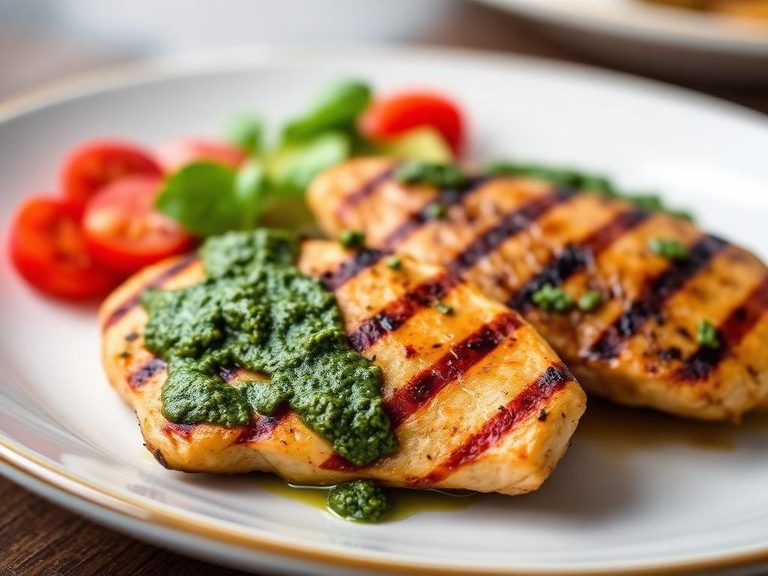
This is a rich, ready-to-serve basil pesto sauce, characterized by its vibrant green color and a robust, aromatic blend of basil, garlic, and Parmesan cheese. Its texture is slightly coarse and oily, delivering a powerful, savory flavor with a distinct nutty undertone. Nutritionally, it is a high-fat condiment, deriving the vast majority of its calories from healthy monounsaturated fats like olive oil.
Calorie split: 4% protein · 7% carbs · 88% fat
↓ Full nutrition💚 Why it's loved
People adore this pesto for its intense, fresh basil flavor that instantly elevates simple dishes like pasta or sandwiches. Its versatility allows it to be used as a sauce, marinade, or dip, making it a beloved staple in Italian-inspired cooking.
⚠️ Watch-outs & how to enjoy it better
The high fat content (over 36g per 100g) makes it very calorie-dense, which can be a concern for those monitoring fat intake. It also contains common allergens like tree nuts (pine nuts) and dairy (Parmesan cheese), and its sodium level can be high; pairing it with lean protein or vegetables can help balance the meal.
Key benefits
- Provides heart-healthy monounsaturated fats from olive oil
- Contains antioxidants from fresh basil
- Offers a quick, concentrated source of flavor for meals
- Includes some protein and fiber from nuts and cheese
🍽️ Popular dishes
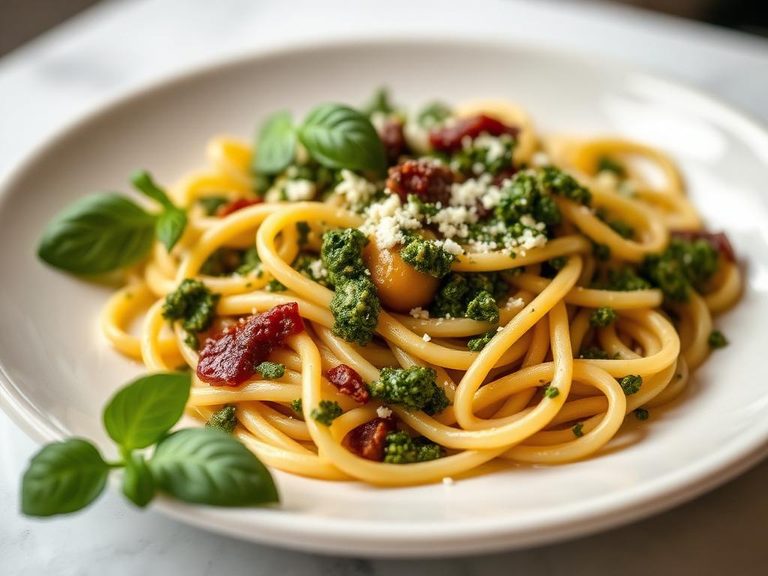
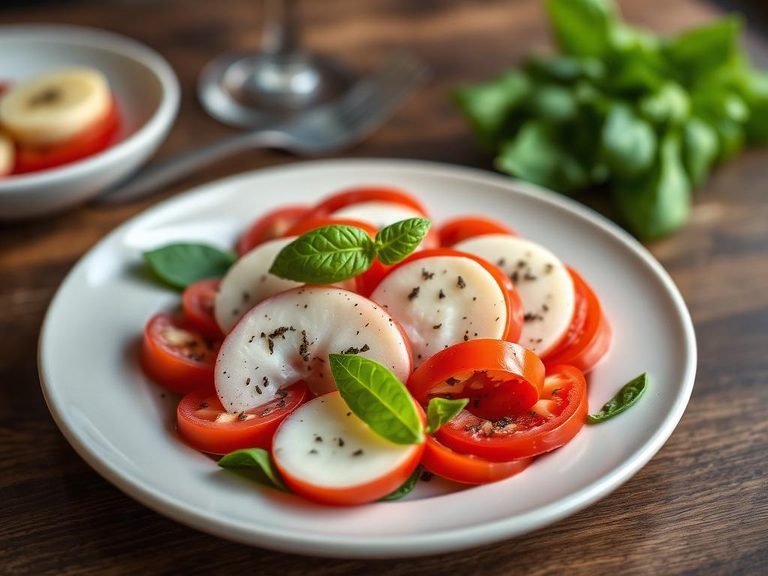
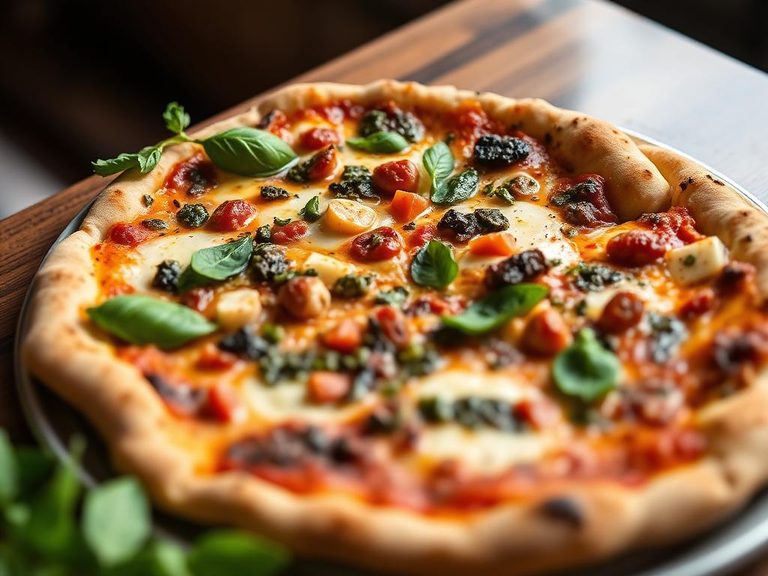
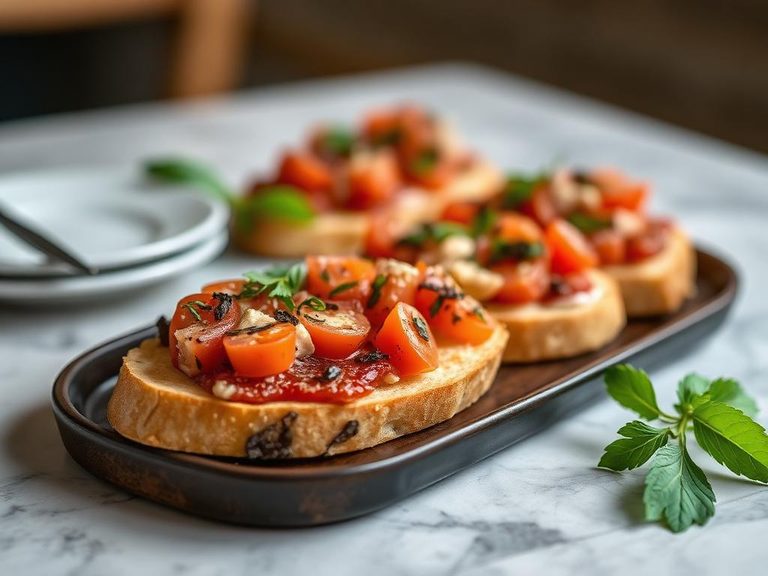
🌍 Where it's eaten
💡 Did you know?
Traditional Genovese pesto is made with a mortar and pestle, which bruises the basil leaves to release their essential oils without generating heat, preserving the bright green color and fresh flavor.
Full nutrition (USDA data · scales with serving)
| Water | 49.2 g |
| Energy | 372 kcal |
| Energy | 1556 kj |
| Protein | 4.2 g |
| Total lipid (fat) | 36.4 g |
| Ash | 3.4 g |
| Carbohydrate, by difference | 6.9 g |
| Fiber, total dietary | 2.1 g |
| Total Sugars | 2.6 g |
| Sucrose | 0.00 g |
| Glucose | 0.39 g |
| Fructose | 2.2 g |
| Lactose | 0.00 g |
| Maltose | 0.00 g |
| Galactose | 0.00 g |
| Starch | 0.07 g |
| Calcium, Ca | 166 mg |
| Iron, Fe | 0.71 mg |
| Magnesium, Mg | 40.0 mg |
| Phosphorus, P | 97.0 mg |
| Potassium, K | 195 mg |
| Sodium, Na | 1028 mg |
| Zinc, Zn | 0.68 mg |
| Copper, Cu | 0.08 mg |
| Manganese, Mn | 0.37 mg |
| Selenium, Se | 5.5 ug |
| Vitamin C, total ascorbic acid | 0.00 mg |
| Thiamin | 0.10 mg |
| Riboflavin | 0.27 mg |
| Niacin | 0.88 mg |
| Pantothenic acid | 0.28 mg |
| Vitamin B-6 | 0.27 mg |
| Folate, total | 29.0 ug |
| Folate, food | 29.0 ug |
| Choline, total | 13.7 mg |
| Betaine | 0.60 mg |
| Vitamin A, RAE | 96.0 ug |
| Carotene, beta | 1151 ug |
| Carotene, alpha | 0.00 ug |
| Cryptoxanthin, beta | 13.0 ug |
| Vitamin A, IU | 1929 iu |
| Lycopene | 0.00 ug |
| Lutein + zeaxanthin | 986 ug |
| Vitamin E (alpha-tocopherol) | 4.6 mg |
| Tocopherol, beta | 0.00 mg |
| Tocopherol, gamma | 26.2 mg |
| Tocopherol, delta | 10.2 mg |
| Tocotrienol, alpha | 0.00 mg |
| Tocotrienol, beta | 0.00 mg |
| Tocotrienol, gamma | 0.00 mg |
| Tocotrienol, delta | 0.00 mg |
| Vitamin K (phylloquinone) | 194 ug |
| Vitamin K (Dihydrophylloquinone) | 0.00 ug |
| Vitamin K (Menaquinone-4) | 0.00 ug |
Fat & fatty acid profile (per 100g)
| Fatty acids, total saturated | 6.7 g |
| SFA 4:0 | 0.04 g |
| SFA 6:0 | 0.04 g |
| SFA 8:0 | 0.02 g |
| SFA 10:0 | 0.06 g |
| SFA 12:0 | 0.06 g |
| SFA 14:0 | 0.22 g |
| SFA 15:0 | 0.03 g |
| SFA 16:0 | 4.4 g |
| SFA 17:0 | 0.04 g |
| SFA 18:0 | 1.6 g |
| SFA 20:0 | 0.12 g |
| SFA 22:0 | 0.10 g |
| SFA 24:0 | 0.03 g |
| Fatty acids, total monounsaturated | 10.0 g |
| MUFA 14:1 | 0.02 g |
| MUFA 15:1 | 0.00 g |
| MUFA 16:1 | 0.14 g |
| MUFA 16:1 c | 0.14 g |
| MUFA 17:1 | 0.02 g |
| MUFA 18:1 | 9.7 g |
| MUFA 18:1 c | 9.6 g |
| MUFA 20:1 | 0.17 g |
| MUFA 22:1 | 0.00 g |
| MUFA 22:1 c | 0.00 g |
| MUFA 24:1 c | 0.00 g |
| Fatty acids, total polyunsaturated | 18.4 g |
| PUFA 18:2 | 16.0 g |
| PUFA 18:2 n-6 c,c | 15.9 g |
| PUFA 18:2 CLAs | 0.03 g |
| PUFA 18:3 | 2.4 g |
| PUFA 18:3 n-3 c,c,c (ALA) | 2.3 g |
| PUFA 18:3 n-6 c,c,c | 0.10 g |
| PUFA 18:3i | 0.00 g |
| PUFA 18:4 | 0.00 g |
| PUFA 20:2 n-6 c,c | 0.01 g |
| PUFA 20:3 | 0.01 g |
| PUFA 20:3 n-3 | 0.00 g |
| PUFA 20:3 n-6 | 0.00 g |
| PUFA 20:4 | 0.00 g |
| PUFA 20:5 n-3 (EPA) | 0.00 g |
| PUFA 22:4 | 0.00 g |
| PUFA 22:5 n-3 (DPA) | 0.00 g |
| PUFA 22:6 n-3 (DHA) | 0.00 g |
| Fatty acids, total trans | 0.15 g |
| Fatty acids, total trans-monoenoic | 0.08 g |
| TFA 16:1 t | 0.01 g |
| TFA 18:1 t | 0.07 g |
| TFA 22:1 t | 0.00 g |
| TFA 18:2 t not further defined | 0.07 g |
| Fatty acids, total trans-polyenoic | 0.07 g |
Amino acid profile (per 100g)
Estimated from Sauce, homemade, white, medium — USDA does not publish this profile for Sauce.
| Tryptophan | 0.04 g |
| Threonine | 0.14 g |
| Isoleucine | 0.19 g |
| Leucine | 0.30 g |
| Lysine | 0.24 g |
| Methionine | 0.08 g |
| Cystine | 0.03 g |
| Phenylalanine | 0.15 g |
| Tyrosine | 0.15 g |
| Valine | 0.20 g |
| Arginine | 0.11 g |
| Histidine | 0.08 g |
| Alanine | 0.10 g |
| Aspartic acid | 0.23 g |
| Glutamic acid | 0.64 g |
| Glycine | 0.07 g |
| Proline | 0.30 g |
| Serine | 0.17 g |
FAQ
What is the main ingredient in this pesto sauce?
The primary ingredient is fresh basil, which gives the sauce its distinctive green color and aromatic flavor.
Is this pesto sauce suitable for a vegan diet?
No, it typically contains Parmesan cheese, which is a dairy product, and may also contain other animal-derived ingredients.
How should I store this pesto sauce after opening?
After opening, store it in an airtight container in the refrigerator and use it within a few days for the best flavor and freshness.
Nutrient density (calculated · NRF9.3)
Nutrient Rich Foods index: beneficial nutrients (protein, fiber, vitamins, minerals) minus saturated fat, added sugar & sodium, per 100 kcal.
NRF9.3 index — Fulgoni, Keast & Drewnowski, 2009. Computed from USDA nutrients.
Weight-loss friendliness (composite index)
Energy density 3.72 kcal/g · 4% calories from protein · 2.1 g fiber · 2.6 g sugar per 100 g.
Composite of energy density (Rolls et al., 1999), protein & fiber satiety, minus sugar. A calculated heuristic — ranks satiety-per-calorie, not a clinical measure.
Dietary load (calculated from USDA values)
Potential renal acid load. Positive = acid-forming, negative = alkaline-forming.
Sodium-to-potassium ratio: 5.27 (lower is better — aim for ≤ 1)
Sodium:potassium per WHO potassium guidance. Computed from USDA nutrients.