

Bruschetta

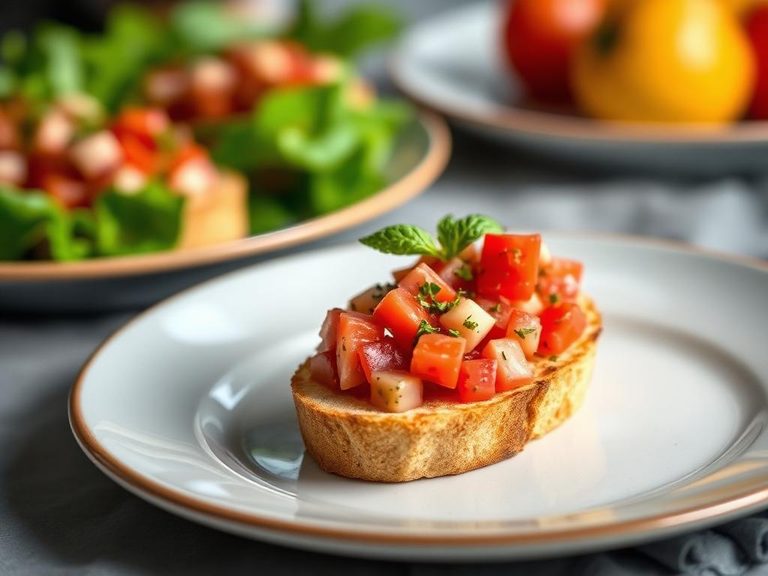
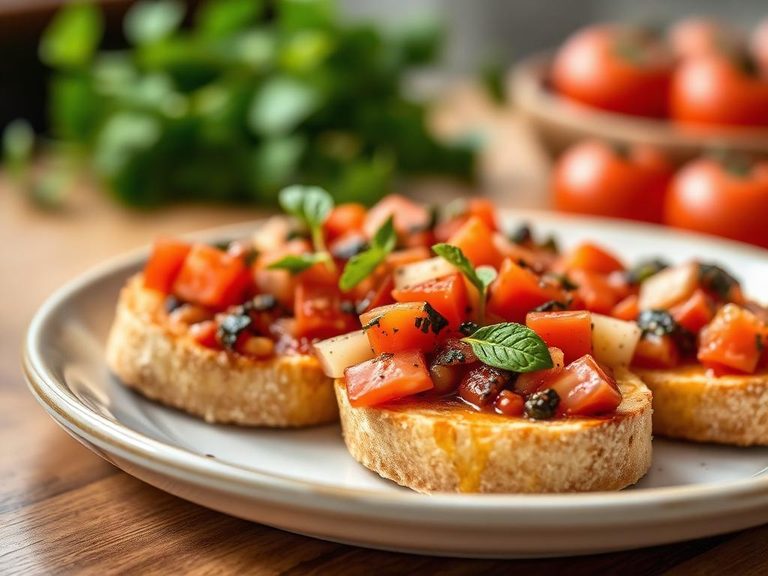
Bruschetta is a classic Italian appetizer featuring grilled or toasted bread rubbed with garlic and topped with a mixture of fresh ingredients. The most iconic version is topped with diced tomatoes, fresh basil, garlic, and extra virgin olive oil, though variations can include beans, cured meats, or cheese. It originates from central Italy, particularly the regions of Tuscany and Umbria.
🍳 View the full Bruschetta recipe →
🍽️ Nutrition at a glance
Bruschetta is primarily a source of carbohydrates from the bread, with healthy fats coming from the generous use of olive oil. It provides vitamins like vitamin C and lycopene from the tomatoes, along with some fiber, and a typical serving contains roughly 150-250 calories.
Nutrition breakdown
| Calories | 250 kcal |
| Protein | 7 g |
| Carbs | 30 g |
| Fat | 11 g |
| Fiber | 3 g |
| Sugar | 4 g |
| Sodium | 400 mg |
| Vitamin C | 10 mg |
| Vitamin K | 15 µg |
| Iron | 2 mg |
| Calcium | 80 mg |
| Potassium | 200 mg |
| Magnesium | 20 mg |
| Phosphorus | 80 mg |
| Selenium | 15 µg |
Per 2 slices (100 g) · estimated, varies by recipe
💡 What's interesting
Culturally, bruschetta was originally a way for olive oil producers to taste the first pressing of the season's oil on fresh bread. Nutritionally, the combination of tomatoes and olive oil enhances the absorption of fat-soluble antioxidants like lycopene.
🍽️ Related dishes






AI estimate may be inaccurate · Terms