

Italian bruschetta
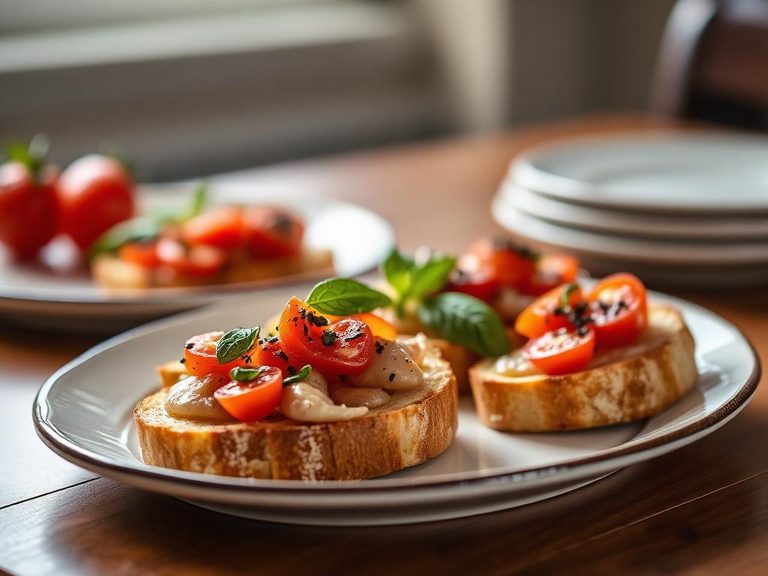
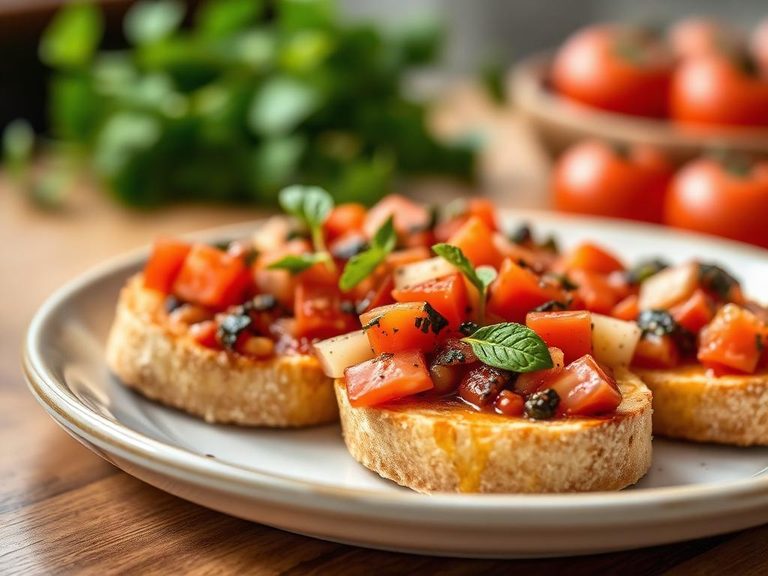
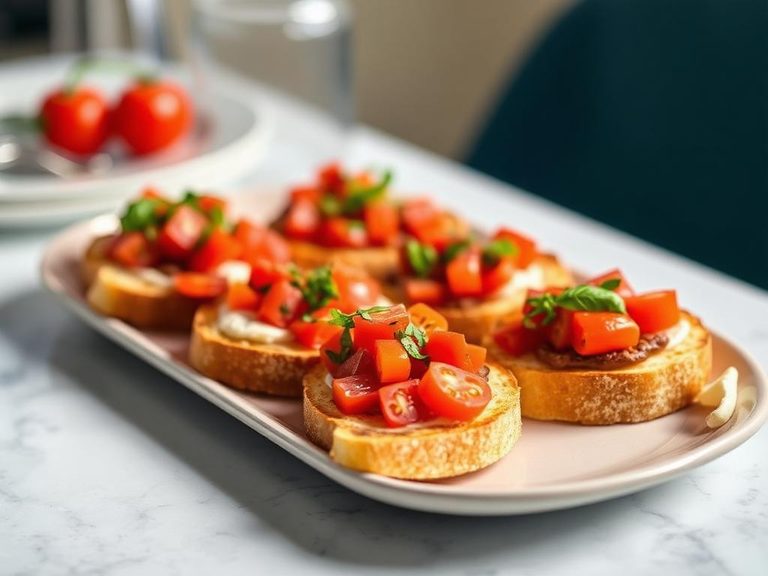
Bruschetta is a classic Italian antipasto featuring grilled bread rubbed with garlic and topped with a vibrant mixture of diced tomatoes, fresh basil, olive oil, and salt. Originating in central Italy, it was originally a way to salvage stale bread by flavoring it with available ingredients. Today, it's celebrated worldwide as a simple yet elegant appetizer.
🍳 View the full Italian bruschetta recipe →
🍽️ Nutrition at a glance
Bruschetta is primarily a source of carbohydrates from the bread, with healthy fats from the olive oil and minimal protein. A typical serving provides a good amount of lycopene from tomatoes and antioxidants from herbs, with a rough calorie range of 150-250 per piece depending on the bread size and topping amount.
Nutrition breakdown
| Calories | 170 kcal |
| Protein | 4.5 g |
| Carbs | 22 g |
| Fat | 7 g |
| Fiber | 2.5 g |
| Sugar | 3 g |
| Sodium | 320 mg |
| Vitamin C | 10 mg |
| Vitamin K | 12 mcg |
| Potassium | 180 mg |
| Lycopene | 2.5 mg |
| Manganese | 0.3 mg |
| Selenium | 8 mcg |
| Folate | 30 mcg |
| Iron | 1.2 mg |
Per 2 slices (approx. 100 g) · estimated, varies by recipe
💡 What's interesting
Culturally, bruschetta embodies the Italian principle of 'cucina povera' (peasant cooking), transforming humble, leftover ingredients into something delicious. Nutritionally, the combination of olive oil and tomatoes enhances the absorption of fat-soluble vitamins and antioxidants, making it a surprisingly nutrient-dense snack.
🍽️ Related dishes

AI estimate may be inaccurate · Terms