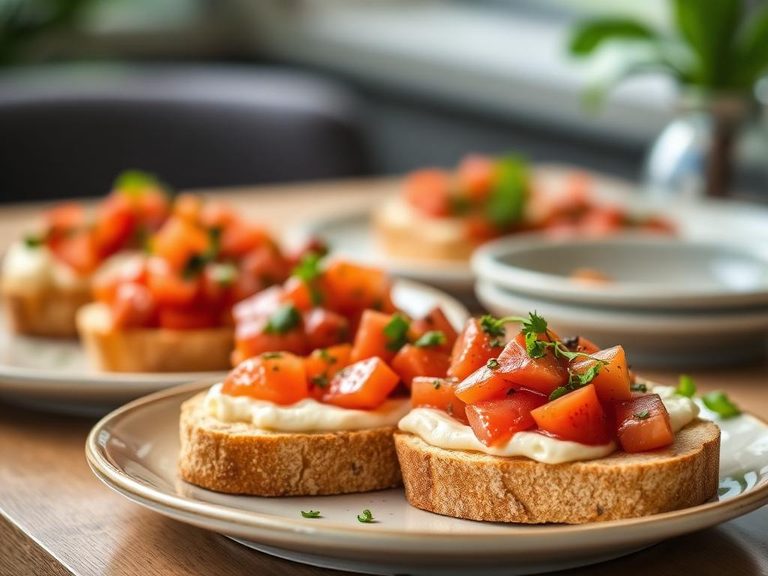
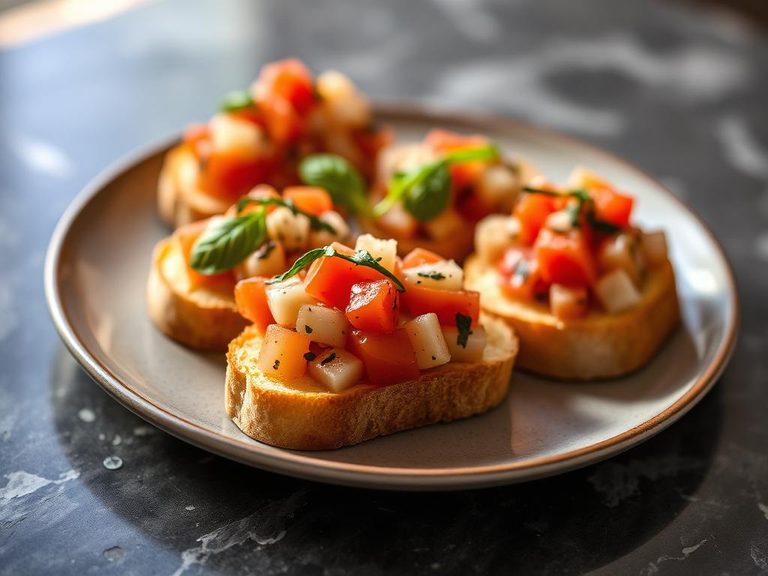
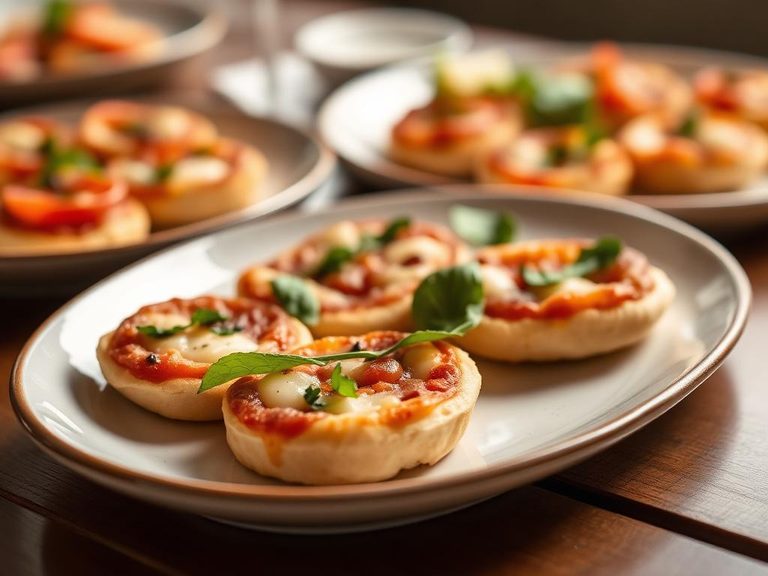
Base for mini bruschetta
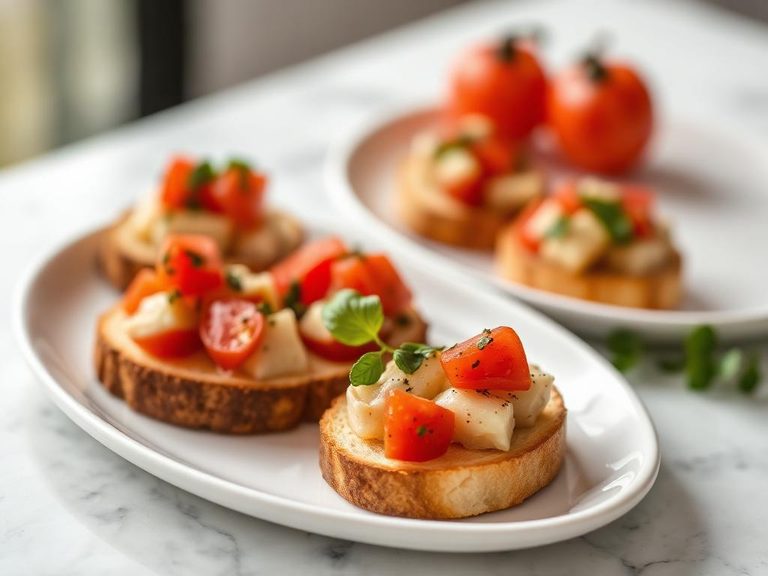
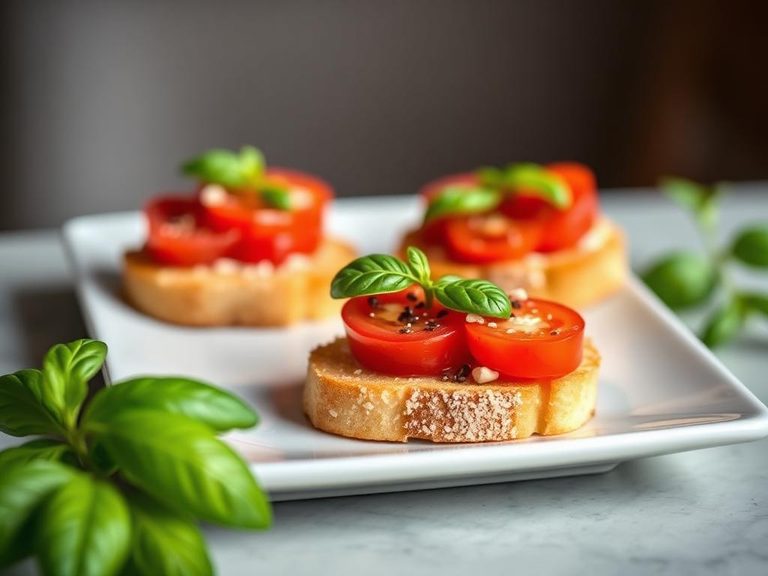
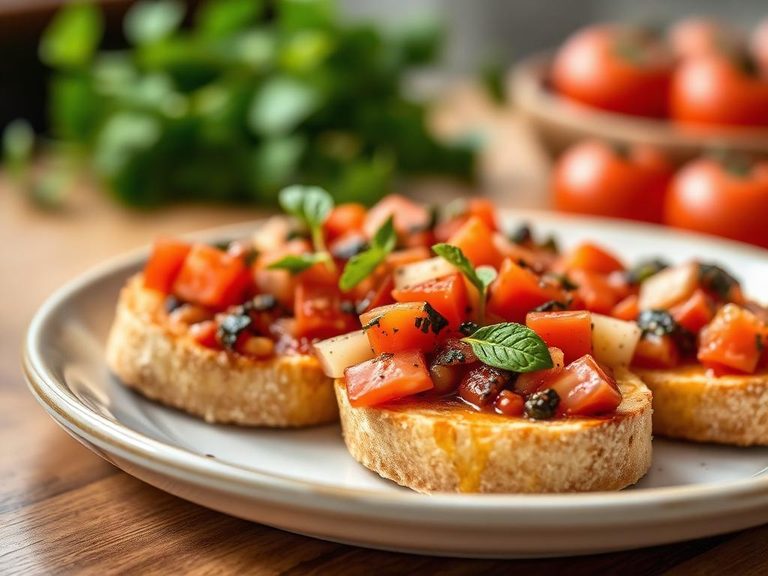
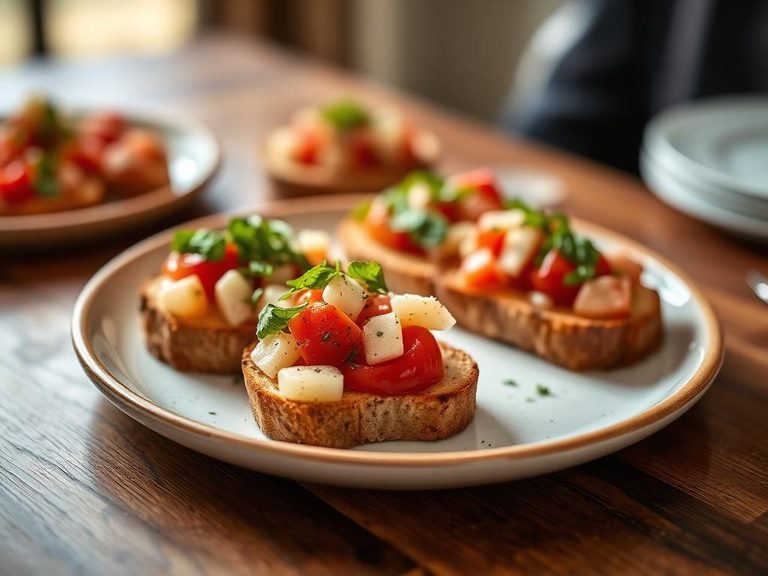
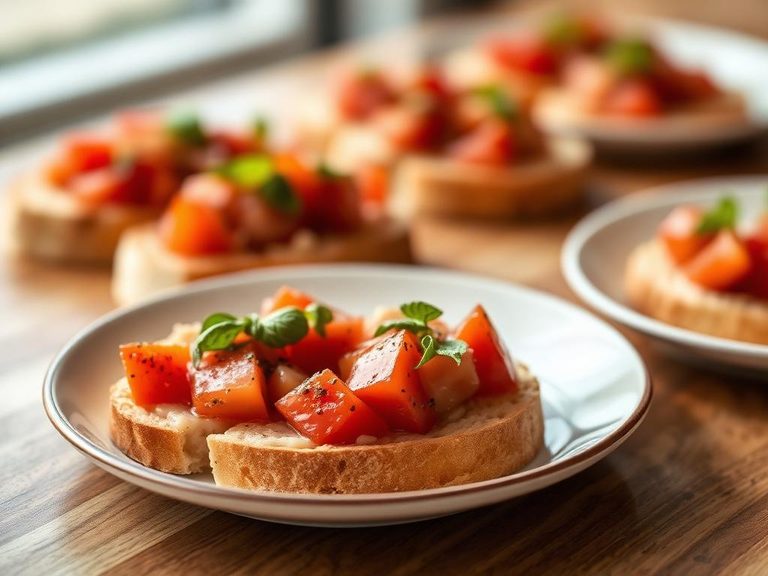
The base for mini bruschetta is typically small, toasted slices of crusty bread, such as baguette or ciabatta, often rubbed with garlic and brushed with olive oil. This Italian appetizer foundation provides a crispy, flavorful platform for toppings like diced tomatoes, basil, and balsamic glaze. It originates from Italy, where bruschetta is a classic antipasto.
🍽️ Nutrition at a glance
This base is primarily a source of carbohydrates from the bread, with some healthy fats from the olive oil. It provides a moderate amount of energy, with a typical serving containing roughly 100-150 calories.
Nutrition breakdown
| Calories | 130 kcal |
| Protein | 3 g |
| Carbs | 18 g |
| Fat | 5 g |
| Fiber | 1 g |
| Sugar | 1 g |
| Sodium | 150 mg |
| Iron | 1.2 mg |
| Thiamin (B1) | 0.15 mg |
| Niacin (B3) | 1.8 mg |
| Folate | 30 mcg |
| Magnesium | 10 mg |
| Phosphorus | 35 mg |
| Selenium | 5 mcg |
| Vitamin E | 0.5 mg |
Per 4 mini slices (approx. 60 g) · estimated, varies by recipe
💡 What's interesting
Culturally, bruschetta was originally a way for olive oil producers to taste their new harvest by grilling bread and drizzling it with fresh oil. Nutritionally, the combination of whole-grain bread (if used) and olive oil offers a good balance of complex carbs and monounsaturated fats.