

Bruschetta
Common food

Photo: Wikipedia
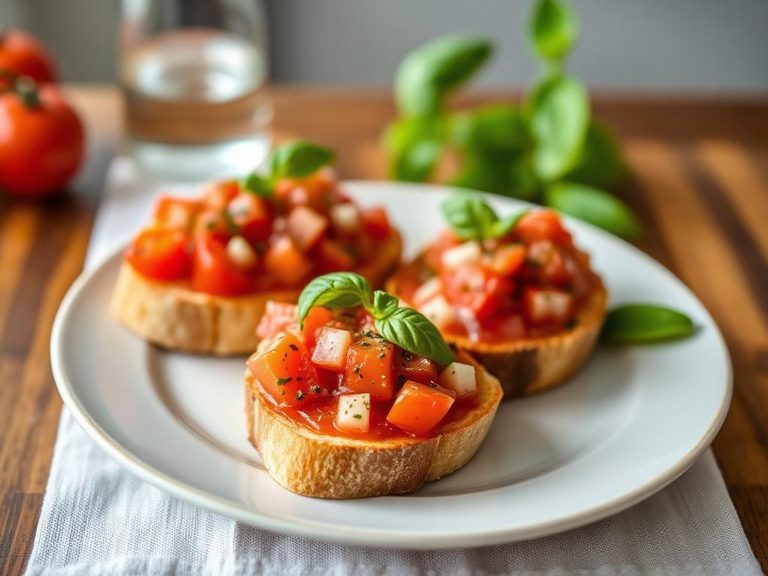
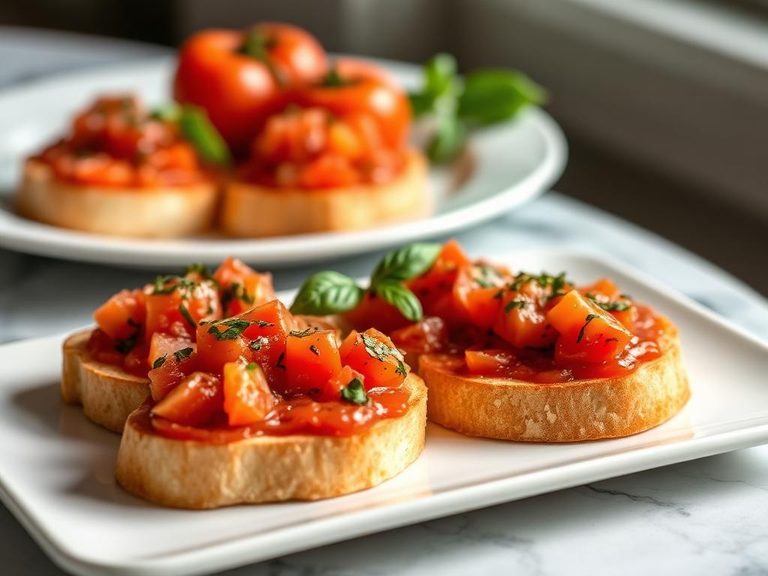
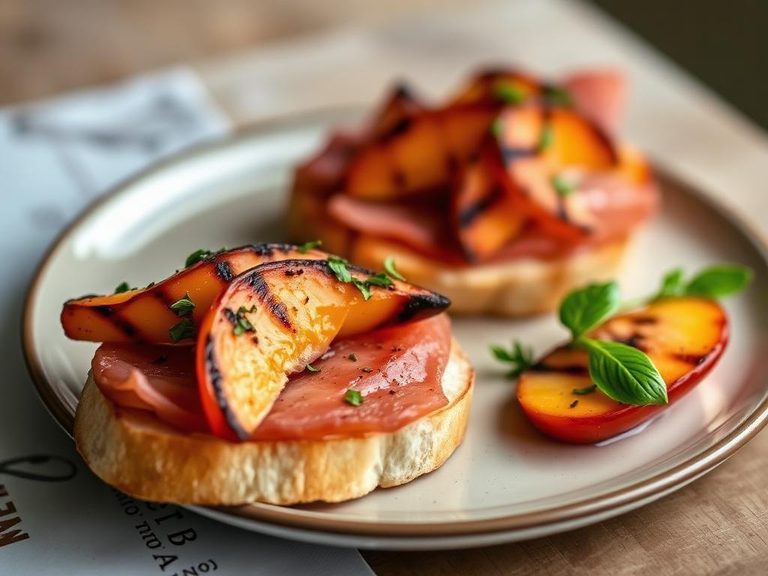
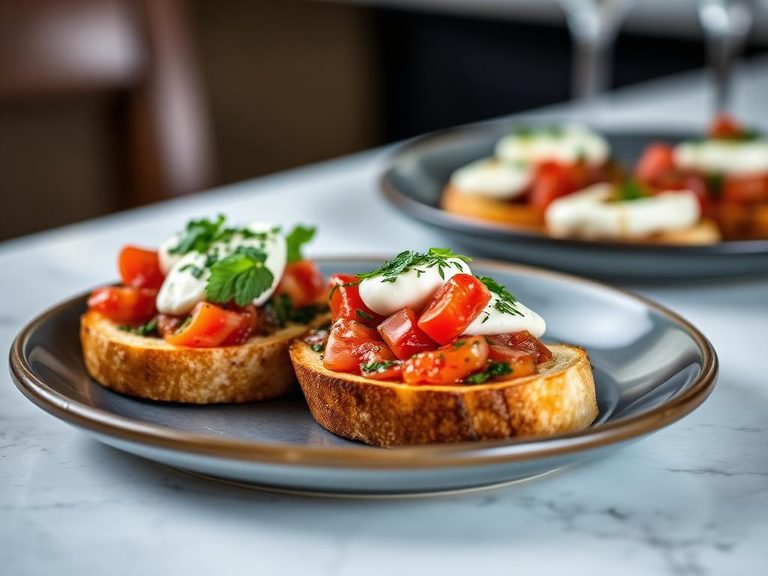
Bruschetta is a classic Italian appetizer of grilled bread rubbed with garlic and topped with a vibrant mixture of diced tomatoes, fresh basil, olive oil, and salt. The texture is a delightful contrast between the crispy, smoky bread and the juicy, fresh topping. Nutritionally, it's a relatively light bite, with its calories primarily coming from the bread's carbohydrates and the olive oil's healthy fats.
Calorie split: 10% protein · 50% carbs · 40% fat
↓ Full nutrition💚 Why it's loved
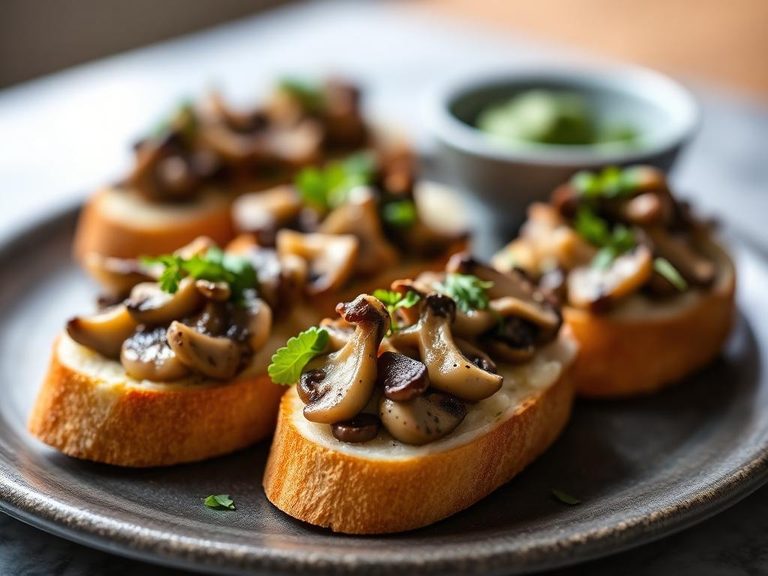
People love bruschetta for its perfect balance of rustic, smoky bread with the bright, acidic burst of fresh tomato and herbs. It's a versatile canvas that can be customized with countless toppings, making it a beloved staple of Italian antipasto culture.
⚠️ Watch-outs & how to enjoy it better
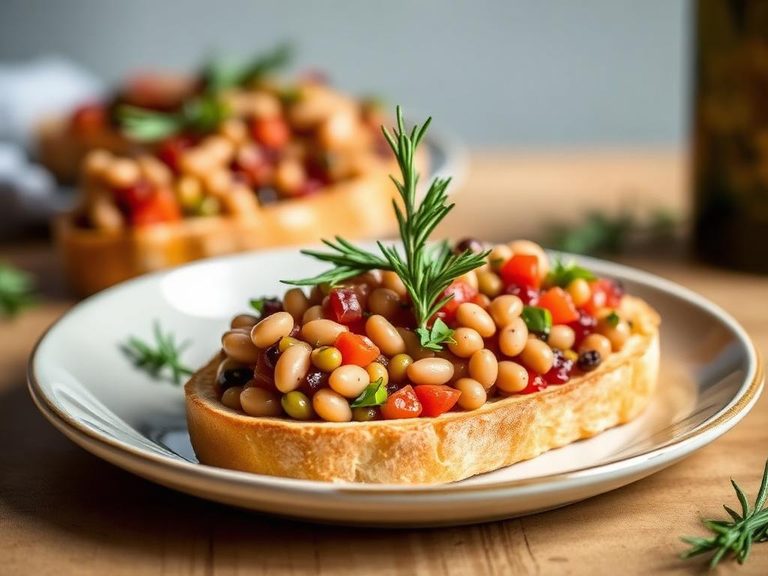
The bread can cause blood-sugar spikes due to its refined carbohydrates, and the olive oil adds significant calories. Those with gluten intolerance or a nightshade allergy should avoid it. To counteract, choose whole-grain bread for more fiber, pair with a protein like white beans or cheese, and practice portion control by having one or two pieces as part of a larger meal.
Key benefits
- Provides quick energy from carbohydrates.
- Contains healthy monounsaturated fats from olive oil.
- Fresh tomato topping offers vitamins C and K.
- Can be a low-calorie appetizer with portion control.
- Simple preparation highlights fresh, whole ingredients.
🍽️ Popular dishes
🌍 Where it's eaten
💡 Did you know?
The word 'bruschetta' comes from the Roman dialect word 'bruscare,' meaning 'to roast over coals,' highlighting its origins as a way to use up stale bread.
Full nutrition (USDA data · scales with serving)
| Water | 65.6 g |
| Energy | 171 kcal |
| Protein | 4.3 g |
| Total lipid (fat) | 7.6 g |
| Carbohydrate, by difference | 21.3 g |
| Fiber, total dietary | 1.5 g |
| Total Sugars | 3.3 g |
| Calcium, Ca | 50.0 mg |
| Iron, Fe | 1.6 mg |
| Magnesium, Mg | 17.0 mg |
| Phosphorus, P | 52.0 mg |
| Potassium, K | 187 mg |
| Sodium, Na | 264 mg |
| Zinc, Zn | 0.42 mg |
| Copper, Cu | 0.09 mg |
| Selenium, Se | 6.8 ug |
| Vitamin C, total ascorbic acid | 7.9 mg |
| Thiamin | 0.21 mg |
| Riboflavin | 0.14 mg |
| Niacin | 2.1 mg |
| Vitamin B-6 | 0.10 mg |
| Folate, total | 45.0 ug |
| Folic acid | 26.0 ug |
| Folate, food | 43.0 ug |
| Folate, DFE | 63.0 ug |
| Choline, total | 9.8 mg |
| Vitamin B-12 | 0.00 ug |
| Vitamin B-12, added | 0.00 ug |
| Vitamin A, RAE | 26.0 ug |
| Retinol | 0.00 ug |
| Carotene, beta | 275 ug |
| Carotene, alpha | 57.0 ug |
| Cryptoxanthin, beta | 0.00 ug |
| Lycopene | 1451 ug |
| Lutein + zeaxanthin | 126 ug |
| Vitamin E (alpha-tocopherol) | 1.8 mg |
| Vitamin E, added | 0.00 mg |
| Vitamin D (D2 + D3) | 0.00 ug |
| Vitamin K (phylloquinone) | 10.2 ug |
| Alcohol, ethyl | 0.00 g |
| Caffeine | 0.00 mg |
| Theobromine | 0.00 mg |
Fat & fatty acid profile (per 100g)
| Fatty acids, total saturated | 1.2 g |
| SFA 4:0 | 0.00 g |
| SFA 6:0 | 0.00 g |
| SFA 8:0 | 0.00 g |
| SFA 10:0 | 0.00 g |
| SFA 12:0 | 0.00 g |
| SFA 14:0 | 0.00 g |
| SFA 16:0 | 0.93 g |
| SFA 18:0 | 0.24 g |
| Fatty acids, total monounsaturated | 4.6 g |
| MUFA 16:1 | 0.07 g |
| MUFA 18:1 | 4.5 g |
| MUFA 20:1 | 0.02 g |
| MUFA 22:1 | 0.00 g |
| Fatty acids, total polyunsaturated | 1.2 g |
| PUFA 18:2 | 1.1 g |
| PUFA 18:3 | 0.10 g |
| PUFA 18:4 | 0.00 g |
| PUFA 20:4 | 0.00 g |
| PUFA 20:5 n-3 (EPA) | 0.00 g |
| PUFA 22:5 n-3 (DPA) | 0.00 g |
| PUFA 22:6 n-3 (DHA) | 0.00 g |
| Cholesterol | 0.00 mg |
FAQ
Is bruschetta healthy?
It can be a healthy choice, especially when made with whole-grain bread and loaded with fresh vegetables. The main nutritional considerations are the carbohydrates from the bread and the calories from olive oil.
What is the difference between bruschetta and crostini?
Bruschetta is traditionally made with rustic, larger slices of bread that are grilled and rubbed with garlic, while crostini are smaller, thinner rounds of toasted bread, often made from a baguette.
Can I make bruschetta ahead of time?
The bread should be grilled just before serving to stay crisp. The tomato topping can be prepared a few hours in advance and kept refrigerated, but drain any excess liquid before topping the bread to prevent sogginess.
Nutrient density (calculated · NRF9.3)
Nutrient Rich Foods index: beneficial nutrients (protein, fiber, vitamins, minerals) minus saturated fat, added sugar & sodium, per 100 kcal.
NRF9.3 index — Fulgoni, Keast & Drewnowski, 2009. Computed from USDA nutrients.
Weight-loss friendliness (composite index)
Energy density 1.71 kcal/g · 10% calories from protein · 1.5 g fiber · 3.3 g sugar per 100 g.
Composite of energy density (Rolls et al., 1999), protein & fiber satiety, minus sugar. A calculated heuristic — ranks satiety-per-calorie, not a clinical measure.
Dietary load (calculated from USDA values)
Potential renal acid load. Positive = acid-forming, negative = alkaline-forming.
Sodium-to-potassium ratio: 1.41 (lower is better — aim for ≤ 1)
Sodium:potassium per WHO potassium guidance. Computed from USDA nutrients.