

Pasta, gluten-free, corn flour and quinoa flour, cooked, ANCIENT HARVEST
Whole food · Cereal Grains and Pasta
This is a hearty, protein-boosted pasta made from a blend of corn and quinoa flours, offering a satisfyingly firm, al dente bite with a subtle, earthy sweetness. Its golden hue and slightly nutty flavor profile make it a standout in gluten-free pantries. Nutritionally, it delivers a solid fiber punch and a complete protein source thanks to the quinoa.
Calorie split: 8% protein · 80% carbs · 12% fat
↓ Full nutrition💚 Why it's loved
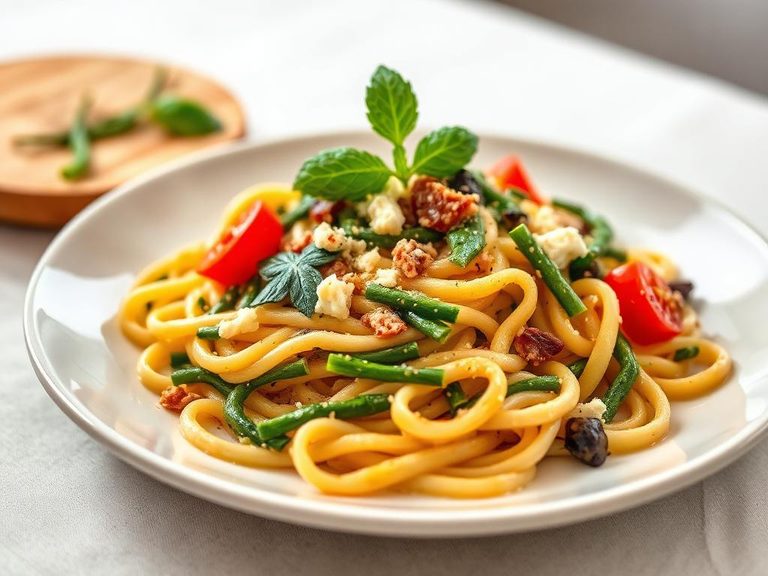
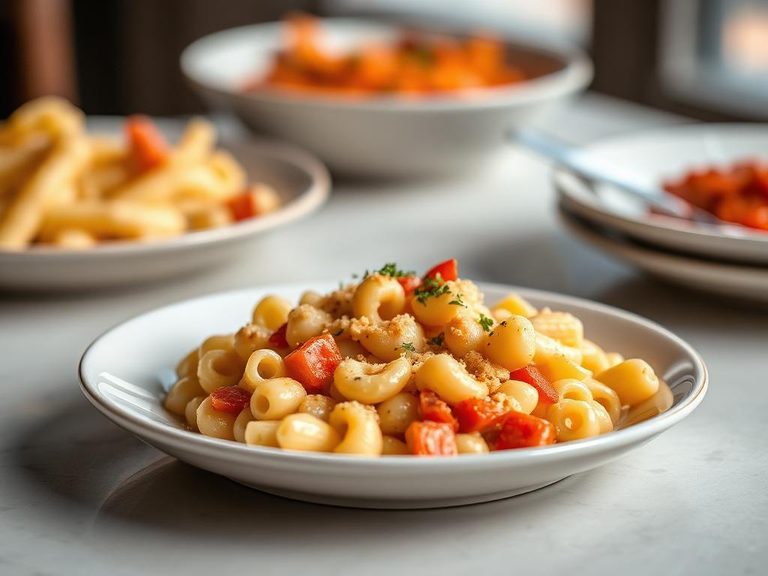
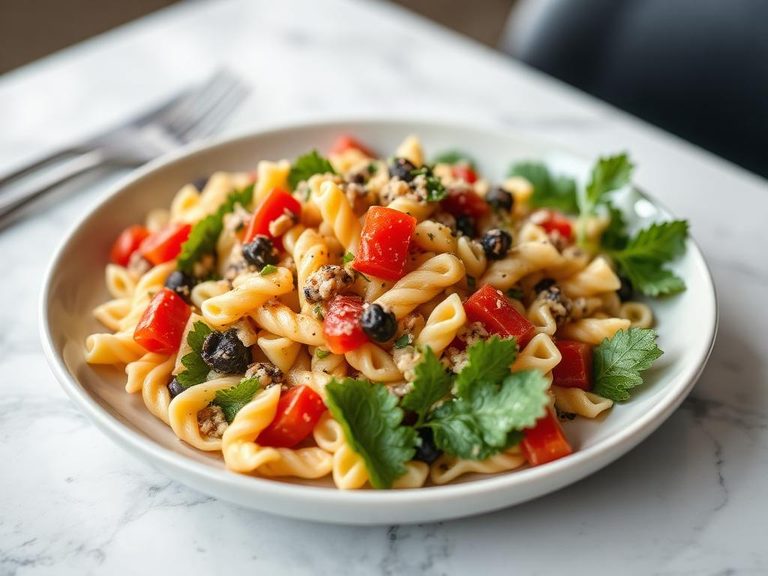
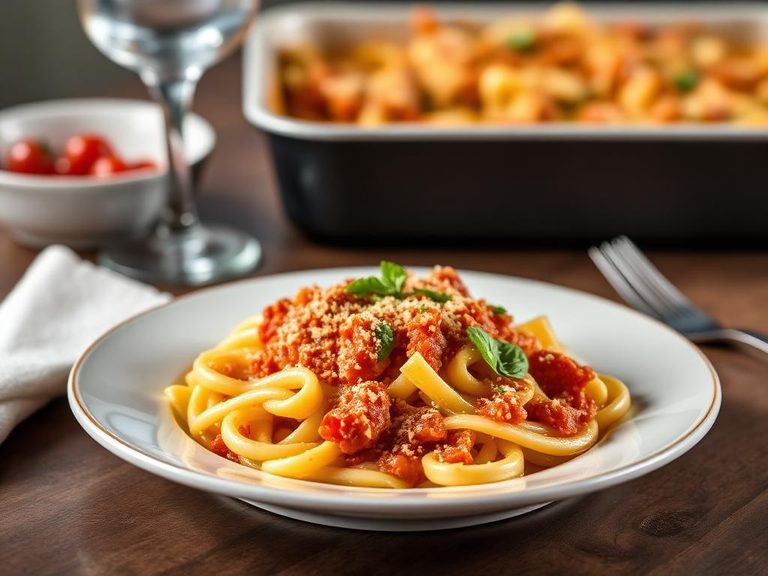
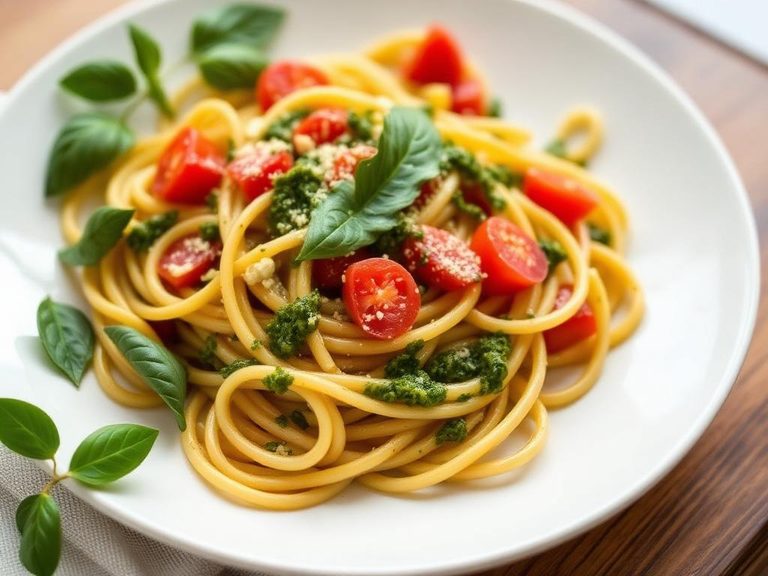
People love it for its robust, toothsome texture that holds up beautifully in salads and baked dishes, far superior to many gluten-free pastas. Its mild, versatile flavor acts as a perfect canvas for bold sauces, from pesto to hearty ragùs.
⚠️ Watch-outs & how to enjoy it better
Some may find the texture slightly denser or grainier than traditional wheat pasta, and it can have a distinct earthy aftertaste. For those managing blood sugar, the high carbohydrate content (31g per 100g) means portion control is key; pairing it with healthy fats (like olive oil) and protein (like chicken or beans) can help moderate glycemic response.
Key benefits
- Naturally gluten-free and suitable for celiac diets
- Quinoa provides all nine essential amino acids
- Good source of dietary fiber (3.3g per 100g)
- Low in sugar (0.3g per 100g)
- Provides sustained energy from complex carbohydrates
🍽️ Popular dishes
🌍 Where it's eaten
💡 Did you know?
The quinoa flour in this blend makes it one of the few pastas that is a complete protein, containing all nine essential amino acids, a trait more common in animal proteins.
Full nutrition (USDA data · scales with serving)
| Water | 63.2 g |
| Energy | 152 kcal |
| Energy | 638 kj |
| Protein | 3.2 g |
| Total lipid (fat) | 2.1 g |
| Ash | 0.39 g |
| Carbohydrate, by difference | 31.1 g |
| Fiber, total dietary | 3.3 g |
| Total Sugars | 0.30 g |
| Sucrose | 0.30 g |
| Glucose | 0.00 g |
| Fructose | 0.00 g |
| Lactose | 0.00 g |
| Maltose | 0.00 g |
| Galactose | 0.00 g |
| Starch | 27.9 g |
| Calcium, Ca | 7.0 mg |
| Iron, Fe | 0.72 mg |
| Magnesium, Mg | 41.0 mg |
| Phosphorus, P | 91.0 mg |
| Potassium, K | 63.0 mg |
| Sodium, Na | 4.0 mg |
| Zinc, Zn | 0.70 mg |
| Copper, Cu | 0.06 mg |
| Manganese, Mn | 0.21 mg |
| Selenium, Se | 2.2 ug |
| Vitamin C, total ascorbic acid | 0.00 mg |
| Thiamin | 0.12 mg |
| Riboflavin | 0.09 mg |
| Niacin | 0.45 mg |
| Pantothenic acid | 0.21 mg |
| Vitamin B-6 | 0.05 mg |
| Folate, total | 8.0 ug |
| Folic acid | 0.00 ug |
| Folate, food | 8.0 ug |
| Folate, DFE | 8.0 ug |
| Choline, total | 5.8 mg |
| Vitamin B-12 | 0.00 ug |
| Vitamin B-12, added | 0.00 ug |
| Vitamin A, RAE | 1.0 ug |
| Retinol | 0.00 ug |
| Carotene, beta | 3.0 ug |
| Carotene, alpha | 0.00 ug |
| Cryptoxanthin, beta | 6.0 ug |
| Vitamin A, IU | 11.0 iu |
| Lycopene | 0.00 ug |
| Lutein + zeaxanthin | 131 ug |
| Vitamin E (alpha-tocopherol) | 0.23 mg |
| Vitamin E, added | 0.00 mg |
| Vitamin D (D2 + D3), International Units | 0.00 iu |
| Vitamin D (D2 + D3) | 0.00 ug |
| Vitamin K (phylloquinone) | 0.00 ug |
| Alcohol, ethyl | 0.00 g |
| Caffeine | 0.00 mg |
| Theobromine | 0.00 mg |
Fat & fatty acid profile (per 100g)
| Fatty acids, total saturated | 0.15 g |
| SFA 4:0 | 0.00 g |
| SFA 6:0 | 0.00 g |
| SFA 8:0 | 0.00 g |
| SFA 10:0 | 0.00 g |
| SFA 12:0 | 0.00 g |
| SFA 14:0 | 0.01 g |
| SFA 15:0 | 0.00 g |
| SFA 16:0 | 0.09 g |
| SFA 17:0 | 0.00 g |
| SFA 18:0 | 0.04 g |
| SFA 20:0 | 0.01 g |
| SFA 22:0 | 0.00 g |
| SFA 24:0 | 0.00 g |
| Fatty acids, total monounsaturated | 0.66 g |
| MUFA 14:1 | 0.00 g |
| MUFA 15:1 | 0.17 g |
| MUFA 16:1 | 0.00 g |
| MUFA 16:1 c | 0.00 g |
| MUFA 17:1 | 0.00 g |
| MUFA 18:1 | 0.48 g |
| MUFA 18:1 c | 0.47 g |
| MUFA 20:1 | 0.01 g |
| MUFA 22:1 | 0.00 g |
| MUFA 22:1 c | 0.00 g |
| MUFA 24:1 c | 0.00 g |
| Fatty acids, total polyunsaturated | 0.95 g |
| PUFA 18:2 | 0.91 g |
| PUFA 18:2 n-6 c,c | 0.91 g |
| PUFA 18:2 CLAs | 0.00 g |
| PUFA 18:3 | 0.03 g |
| PUFA 18:3 n-3 c,c,c (ALA) | 0.03 g |
| PUFA 18:3 n-6 c,c,c | 0.00 g |
| PUFA 18:3i | 0.00 g |
| PUFA 18:4 | 0.00 g |
| PUFA 20:2 n-6 c,c | 0.00 g |
| PUFA 20:3 | 0.00 g |
| PUFA 20:3 n-3 | 0.00 g |
| PUFA 20:3 n-6 | 0.00 g |
| PUFA 20:4 | 0.00 g |
| PUFA 20:5 n-3 (EPA) | 0.00 g |
| PUFA 22:4 | 0.00 g |
| PUFA 22:5 n-3 (DPA) | 0.00 g |
| PUFA 22:6 n-3 (DHA) | 0.00 g |
| Fatty acids, total trans | 0.01 g |
| Fatty acids, total trans-monoenoic | 0.00 g |
| TFA 16:1 t | 0.00 g |
| TFA 18:1 t | 0.00 g |
| TFA 22:1 t | 0.00 g |
| TFA 18:2 t not further defined | 0.00 g |
| Fatty acids, total trans-polyenoic | 0.00 g |
| Cholesterol | 0.00 mg |
Amino acid profile (per 100g)
| Tryptophan | 0.02 g |
| Threonine | 0.10 g |
| Isoleucine | 0.09 g |
| Leucine | 0.35 g |
| Lysine | 0.16 g |
| Methionine | 0.06 g |
| Cystine | 0.07 g |
| Phenylalanine | 0.15 g |
| Tyrosine | 0.12 g |
| Valine | 0.11 g |
| Arginine | 0.18 g |
| Histidine | 0.09 g |
| Alanine | 0.21 g |
| Aspartic acid | 0.19 g |
| Glutamic acid | 0.46 g |
| Glycine | 0.12 g |
| Proline | 0.29 g |
| Serine | 0.15 g |
| Hydroxyproline | 0.00 g |
FAQ
Is this pasta suitable for a keto diet?
No. With over 31g of carbohydrates per 100g serving, it is too high in carbs for a standard ketogenic diet.
How does the cooking time differ from regular pasta?
It typically requires a slightly longer cooking time, often 10-12 minutes, to achieve a tender yet firm texture. Always check the package instructions and taste-test a minute early.
Can I use this in any recipe that calls for regular pasta?
Yes, it's a direct 1:1 substitute in most recipes like baked dishes, salads, and with sauces. Be aware it may have a slightly different mouthfeel and absorb sauces differently.
Nutrient density (calculated · NRF9.3)
Nutrient Rich Foods index: beneficial nutrients (protein, fiber, vitamins, minerals) minus saturated fat, added sugar & sodium, per 100 kcal.
NRF9.3 index — Fulgoni, Keast & Drewnowski, 2009. Computed from USDA nutrients.
Weight-loss friendliness (composite index)
Energy density 1.52 kcal/g · 9% calories from protein · 3.3 g fiber · 0.3 g sugar per 100 g.
Composite of energy density (Rolls et al., 1999), protein & fiber satiety, minus sugar. A calculated heuristic — ranks satiety-per-calorie, not a clinical measure.
Dietary load (calculated from USDA values)
Potential renal acid load. Positive = acid-forming, negative = alkaline-forming.
Sodium-to-potassium ratio: 0.06 (lower is better — aim for ≤ 1)
Sodium:potassium per WHO potassium guidance. Computed from USDA nutrients.