

Mushrooms, white, microwaved
Whole food · Vegetables and Vegetable Products

Photo: Wikipedia
Microwaved white mushrooms are a quick, savory side dish, transforming from spongy and raw to tender and juicy with a concentrated, earthy umami flavor. This low-calorie, high-fiber preparation makes them a nutritional powerhouse, delivering nearly 4 grams of protein and over 6 grams of carbs per 100g, with virtually no fat.
Calorie split: 36% protein · 55% carbs · 9% fat
↓ Full nutrition💚 Why it's loved
People love microwaved mushrooms for their incredible convenience and the deep, savory umami flavor they develop in just minutes. Their mild, adaptable taste makes them a perfect canvas for herbs, garlic, or a splash of soy sauce, fitting seamlessly into countless meals.
⚠️ Watch-outs & how to enjoy it better
Some find the texture of microwaved mushrooms can become slightly rubbery or watery if overcooked. To counteract this, cook in short bursts (30-60 seconds), don't overcrowd the dish, and consider a quick sauté in a pan afterward to evaporate excess moisture and improve texture.
Key benefits
- Excellent source of dietary fiber (2.5g per 100g)
- High in protein for a vegetable (3.91g per 100g)
- Very low in fat (0.46g per 100g)
- Low-calorie, nutrient-dense food (35 kcal per 100g)
- Microwaving preserves water-soluble vitamins better than boiling
🍽️ Popular dishes

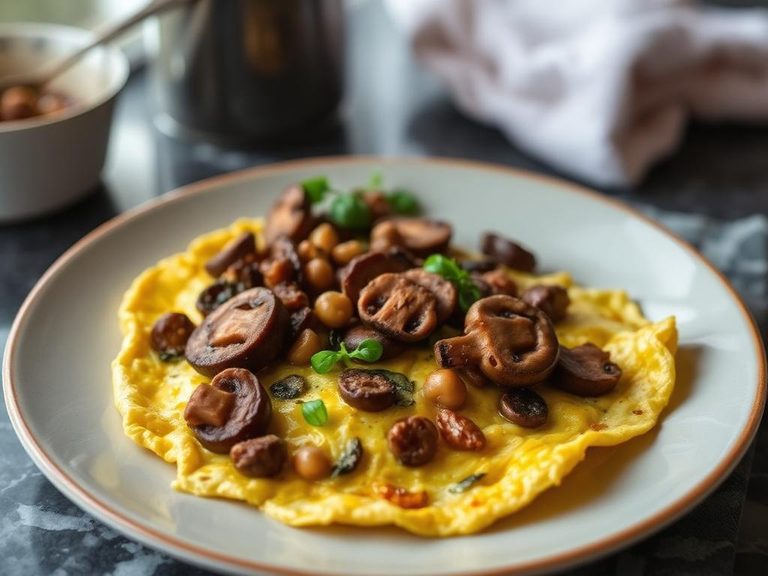
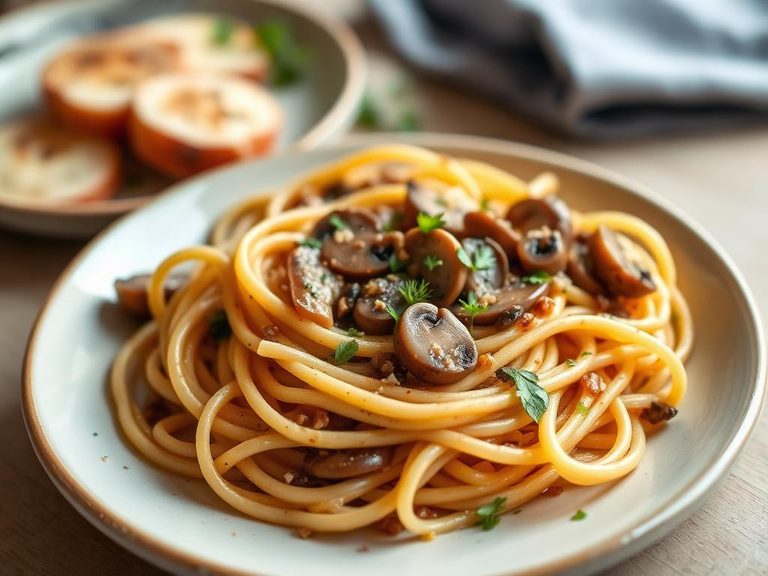
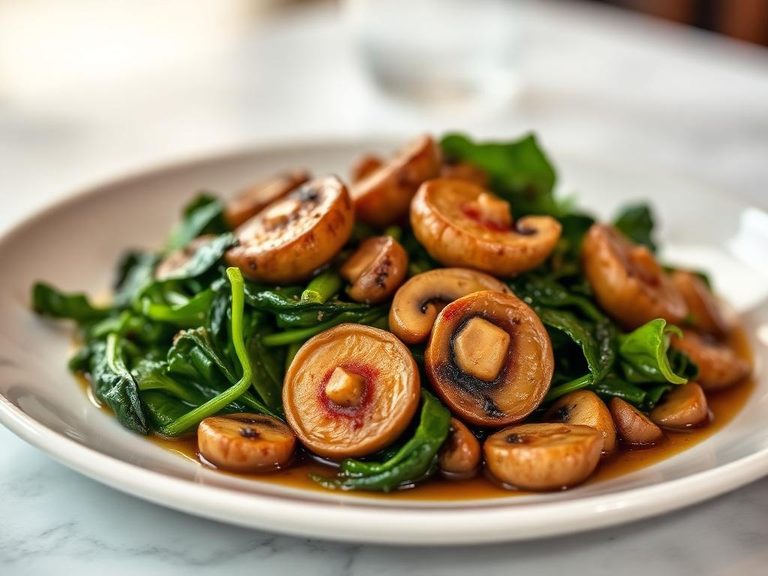
🌍 Where it's eaten
💡 Did you know?
White button mushrooms are the immature form of the same fungus that becomes the brown cremini and the large portobello mushroom as it matures.
Full nutrition (USDA data · scales with serving)
| Water | 88.5 g |
| Energy | 35.0 kcal |
| Energy | 147 kj |
| Protein | 3.9 g |
| Total lipid (fat) | 0.46 g |
| Ash | 1.1 g |
| Carbohydrate, by difference | 6.0 g |
| Fiber, total dietary | 2.5 g |
| Total Sugars | 0.00 g |
| Sucrose | 0.00 g |
| Glucose | 0.00 g |
| Fructose | 0.00 g |
| Lactose | 0.00 g |
| Maltose | 0.00 g |
| Galactose | 0.00 g |
| Starch | 0.00 g |
| Calcium, Ca | 6.0 mg |
| Iron, Fe | 0.33 mg |
| Magnesium, Mg | 14.0 mg |
| Phosphorus, P | 127 mg |
| Potassium, K | 488 mg |
| Sodium, Na | 17.0 mg |
| Zinc, Zn | 0.73 mg |
| Copper, Cu | 0.37 mg |
| Manganese, Mn | 0.06 mg |
| Selenium, Se | 18.0 ug |
| Vitamin C, total ascorbic acid | 0.00 mg |
| Thiamin | 0.06 mg |
| Riboflavin | 0.43 mg |
| Niacin | 5.3 mg |
| Pantothenic acid | 2.0 mg |
| Vitamin B-6 | 0.05 mg |
| Folate, total | 16.0 ug |
| Folic acid | 0.00 ug |
| Folate, food | 16.0 ug |
| Folate, DFE | 16.0 ug |
| Choline, total | 30.3 mg |
| Betaine | 10.1 mg |
| Vitamin B-12 | 0.00 ug |
| Vitamin A, RAE | 0.00 ug |
| Retinol | 0.00 ug |
| Carotene, beta | 0.00 ug |
| Carotene, alpha | 0.00 ug |
| Cryptoxanthin, beta | 0.00 ug |
| Vitamin A, IU | 0.00 iu |
| Lycopene | 0.00 ug |
| Lutein + zeaxanthin | 0.00 ug |
| Vitamin E (alpha-tocopherol) | 0.00 mg |
| Tocopherol, beta | 0.00 mg |
| Tocopherol, gamma | 0.00 mg |
| Tocopherol, delta | 0.00 mg |
| Tocotrienol, alpha | 0.00 mg |
| Tocotrienol, beta | 0.00 mg |
| Tocotrienol, gamma | 0.00 mg |
| Tocotrienol, delta | 0.00 mg |
| Vitamin D (D2 + D3), International Units | 11.0 iu |
| Vitamin D (D2 + D3) | 0.30 ug |
| Vitamin D2 (ergocalciferol) | 0.30 ug |
| Vitamin D3 (cholecalciferol) | 0.00 ug |
| Vitamin K (phylloquinone) | 0.00 ug |
| Vitamin K (Dihydrophylloquinone) | 0.00 ug |
| Vitamin K (Menaquinone-4) | 0.00 ug |
| Alcohol, ethyl | 0.00 g |
| Caffeine | 0.00 mg |
| Theobromine | 0.00 mg |
Fat & fatty acid profile (per 100g)
| Fatty acids, total saturated | 0.06 g |
| SFA 4:0 | 0.00 g |
| SFA 6:0 | 0.00 g |
| SFA 8:0 | 0.00 g |
| SFA 10:0 | 0.00 g |
| SFA 12:0 | 0.00 g |
| SFA 14:0 | 0.00 g |
| SFA 15:0 | 0.00 g |
| SFA 16:0 | 0.05 g |
| SFA 17:0 | 0.00 g |
| SFA 18:0 | 0.01 g |
| SFA 20:0 | 0.00 g |
| SFA 22:0 | 0.00 g |
| SFA 24:0 | 0.00 g |
| Fatty acids, total monounsaturated | 0.02 g |
| MUFA 14:1 | 0.00 g |
| MUFA 15:1 | 0.00 g |
| MUFA 16:1 | 0.01 g |
| MUFA 17:1 | 0.00 g |
| MUFA 18:1 | 0.01 g |
| MUFA 20:1 | 0.00 g |
| MUFA 22:1 | 0.00 g |
| MUFA 24:1 c | 0.00 g |
| Fatty acids, total polyunsaturated | 0.28 g |
| PUFA 18:2 | 0.28 g |
| PUFA 18:3 | 0.00 g |
| PUFA 18:4 | 0.00 g |
| PUFA 20:2 n-6 c,c | 0.00 g |
| PUFA 20:3 | 0.00 g |
| PUFA 20:4 | 0.00 g |
| PUFA 20:5 n-3 (EPA) | 0.00 g |
| PUFA 21:5 | 0.00 g |
| PUFA 22:4 | 0.00 g |
| PUFA 22:5 n-3 (DPA) | 0.00 g |
| PUFA 22:6 n-3 (DHA) | 0.00 g |
| Fatty acids, total trans | 0.00 g |
| Cholesterol | 0.00 mg |
Amino acid profile (per 100g)
| Tryptophan | 0.04 g |
| Threonine | 0.12 g |
| Isoleucine | 0.09 g |
| Leucine | 0.14 g |
| Lysine | 0.12 g |
| Methionine | 0.04 g |
| Cystine | 0.01 g |
| Phenylalanine | 0.10 g |
| Tyrosine | 0.05 g |
| Valine | 0.27 g |
| Arginine | 0.09 g |
| Histidine | 0.07 g |
| Alanine | 0.23 g |
| Aspartic acid | 0.22 g |
| Glutamic acid | 0.39 g |
| Glycine | 0.10 g |
| Proline | 0.09 g |
| Serine | 0.11 g |
FAQ
Why do mushrooms release so much water when microwaved?
Mushrooms are about 90% water by weight. Microwaving heats the water inside their cells very quickly, causing it to turn to steam and rupture the cell walls, releasing the liquid.
Is microwaving a healthy way to cook mushrooms?
Yes, it's one of the healthiest methods. It requires no added fat, cooks quickly, and helps retain more heat-sensitive nutrients like B vitamins compared to prolonged boiling.
How do I prevent rubbery texture?
Avoid overcooking. Microwave in 30-second intervals, check doneness, and stop when they are just tender. Patting them dry before cooking can also help.
Nutrient density (calculated · NRF9.3)
Nutrient Rich Foods index: beneficial nutrients (protein, fiber, vitamins, minerals) minus saturated fat, added sugar & sodium, per 100 kcal.
NRF9.3 index — Fulgoni, Keast & Drewnowski, 2009. Computed from USDA nutrients.
Weight-loss friendliness (composite index)
Energy density 0.35 kcal/g · 45% calories from protein · 2.5 g fiber · 0.0 g sugar per 100 g.
Composite of energy density (Rolls et al., 1999), protein & fiber satiety, minus sugar. A calculated heuristic — ranks satiety-per-calorie, not a clinical measure.
Dietary load (calculated from USDA values)
Potential renal acid load. Positive = acid-forming, negative = alkaline-forming.
Sodium-to-potassium ratio: 0.03 (lower is better — aim for ≤ 1)
Sodium:potassium per WHO potassium guidance. Computed from USDA nutrients.