

Mushrooms, portabella, raw
Whole food · Vegetables and Vegetable Products

Photo: Wikipedia
The portabella is a large, mature cremini mushroom, prized for its deep, earthy umami flavor and a uniquely meaty, substantial texture that holds up beautifully to grilling and searing. Nutritionally, it's a low-calorie powerhouse, offering a good source of B vitamins and the antioxidant selenium for just 22 calories per 100g.
Calorie split: 31% protein · 57% carbs · 12% fat
↓ Full nutrition💚 Why it's loved
People love portabellas for their satisfying, steak-like chew and rich, savory flavor that can anchor a vegetarian meal. Their large, flat cap makes them incredibly versatile as a burger bun, a pizza base, or a hearty side dish.
⚠️ Watch-outs & how to enjoy it better
Some find their texture spongy if overcooked, and their high water content can lead to a soggy dish if not prepared properly. To counteract this, pat them dry before cooking and use high-heat methods like grilling or pan-searing to evaporate moisture and concentrate flavor.
Key benefits
- Excellent low-calorie, low-fat meat substitute
- Good source of dietary fiber and B vitamins
- Contains the antioxidant selenium
- Provides umami depth without added sodium
🍽️ Popular dishes
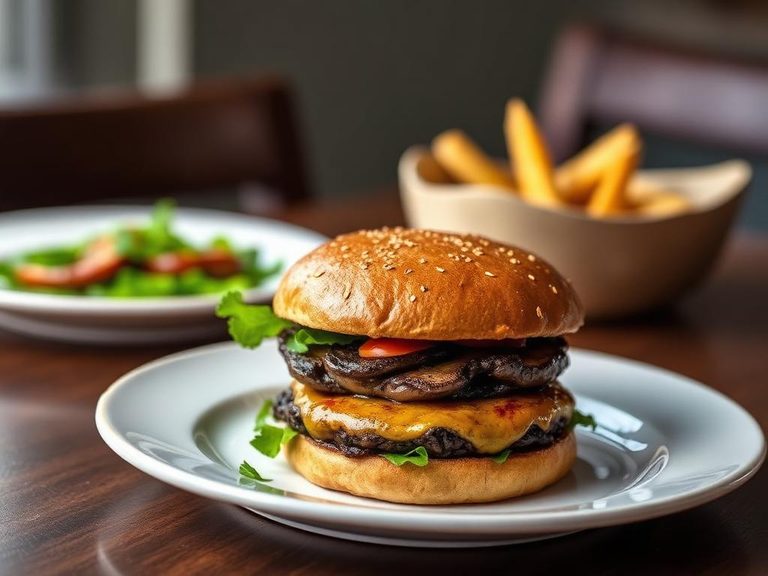
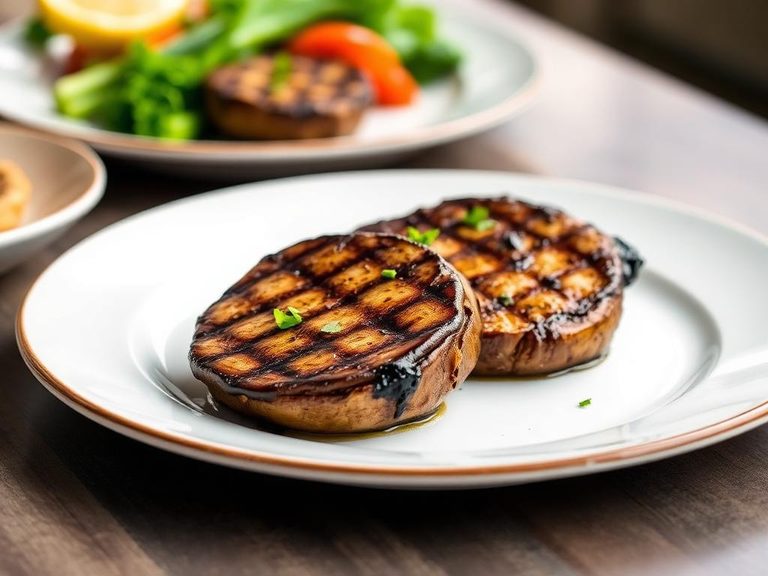
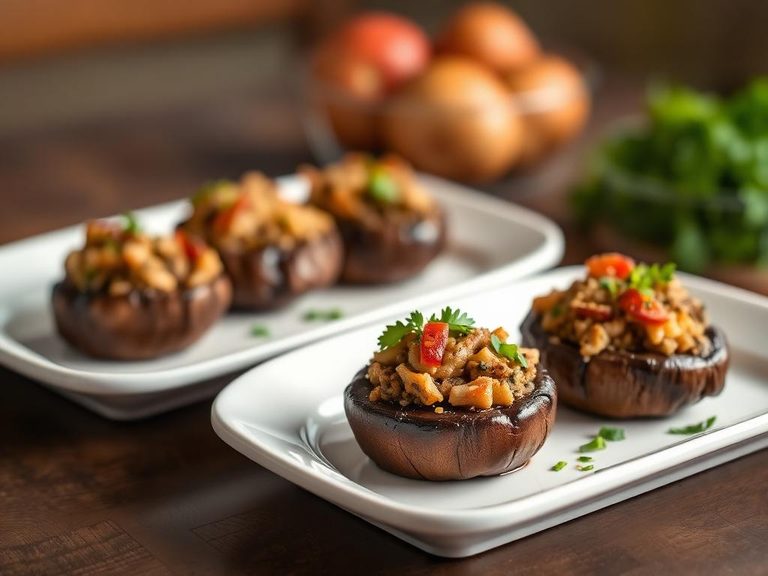
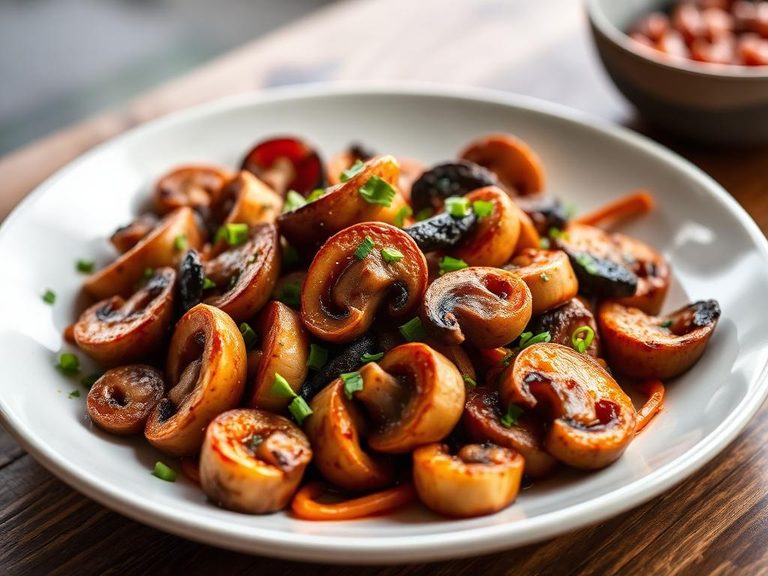
🌍 Where it's eaten
💡 Did you know?
The portabella is simply a cremini mushroom allowed to mature fully, growing to a diameter of 4-6 inches—a case of age, not a different species, creating its signature size and flavor.
Full nutrition (USDA data · scales with serving)
| Water | 92.8 g |
| Energy | 22.0 kcal |
| Energy | 92.0 kj |
| Protein | 2.1 g |
| Total lipid (fat) | 0.35 g |
| Ash | 0.85 g |
| Carbohydrate, by difference | 3.9 g |
| Fiber, total dietary | 1.3 g |
| Total Sugars | 2.5 g |
| Sucrose | 0.00 g |
| Glucose | 2.0 g |
| Fructose | 0.49 g |
| Lactose | 0.00 g |
| Maltose | 0.00 g |
| Galactose | 0.00 g |
| Calcium, Ca | 3.0 mg |
| Iron, Fe | 0.31 mg |
| Phosphorus, P | 108 mg |
| Potassium, K | 364 mg |
| Sodium, Na | 9.0 mg |
| Zinc, Zn | 0.53 mg |
| Copper, Cu | 0.29 mg |
| Manganese, Mn | 0.07 mg |
| Selenium, Se | 18.6 ug |
| Vitamin C, total ascorbic acid | 0.00 mg |
| Thiamin | 0.06 mg |
| Riboflavin | 0.13 mg |
| Niacin | 4.5 mg |
| Pantothenic acid | 1.1 mg |
| Vitamin B-6 | 0.15 mg |
| Folate, total | 28.0 ug |
| Folic acid | 0.00 ug |
| Folate, food | 28.0 ug |
| Folate, DFE | 28.0 ug |
| Choline, total | 21.2 mg |
| Betaine | 6.1 mg |
| Vitamin B-12 | 0.05 ug |
| Vitamin B-12, added | 0.00 ug |
| Vitamin A, RAE | 0.00 ug |
| Retinol | 0.00 ug |
| Carotene, beta | 0.00 ug |
| Carotene, alpha | 0.00 ug |
| Cryptoxanthin, beta | 0.00 ug |
| Vitamin A, IU | 0.00 iu |
| Lycopene | 0.00 ug |
| Lutein + zeaxanthin | 0.00 ug |
| Vitamin E (alpha-tocopherol) | 0.02 mg |
| Vitamin E, added | 0.00 mg |
| Tocopherol, beta | 0.00 mg |
| Tocopherol, gamma | 0.00 mg |
| Tocopherol, delta | 0.00 mg |
| Tocotrienol, alpha | 0.02 mg |
| Tocotrienol, beta | 0.00 mg |
| Tocotrienol, gamma | 0.00 mg |
| Tocotrienol, delta | 0.00 mg |
| Vitamin D (D2 + D3), International Units | 10.0 iu |
| Vitamin D (D2 + D3) | 0.30 ug |
| Vitamin D2 (ergocalciferol) | 0.30 ug |
| Vitamin D3 (cholecalciferol) | 0.00 ug |
| Vitamin K (phylloquinone) | 0.00 ug |
| Vitamin K (Dihydrophylloquinone) | 1.8 ug |
| Vitamin K (Menaquinone-4) | 0.00 ug |
| Alcohol, ethyl | 0.00 g |
| Caffeine | 0.00 mg |
| Theobromine | 0.00 mg |
Fat & fatty acid profile (per 100g)
| Fatty acids, total saturated | 0.01 g |
| SFA 4:0 | 0.00 g |
| SFA 15:0 | 0.00 g |
| SFA 17:0 | 0.00 g |
| SFA 20:0 | 0.00 g |
| SFA 22:0 | 0.00 g |
| SFA 24:0 | 0.00 g |
| Fatty acids, total monounsaturated | 0.04 g |
| MUFA 14:1 | 0.00 g |
| MUFA 15:1 | 0.00 g |
| MUFA 16:1 | 0.01 g |
| MUFA 16:1 c | 0.01 g |
| MUFA 17:1 | 0.00 g |
| MUFA 18:1 | 0.02 g |
| MUFA 18:1 c | 0.01 g |
| MUFA 22:1 | 0.00 g |
| MUFA 22:1 c | 0.00 g |
| MUFA 24:1 c | 0.00 g |
| Fatty acids, total polyunsaturated | 0.30 g |
| PUFA 18:2 | 0.15 g |
| PUFA 18:2 n-6 c,c | 0.15 g |
| PUFA 18:2 CLAs | 0.00 g |
| PUFA 18:3 | 0.00 g |
| PUFA 18:3 n-3 c,c,c (ALA) | 0.00 g |
| PUFA 18:3 n-6 c,c,c | 0.00 g |
| PUFA 20:2 n-6 c,c | 0.00 g |
| PUFA 20:3 | 0.00 g |
| PUFA 20:3 n-3 | 0.00 g |
| PUFA 20:3 n-6 | 0.00 g |
| PUFA 22:4 | 0.00 g |
| Fatty acids, total trans | 0.00 g |
| Fatty acids, total trans-monoenoic | 0.00 g |
| TFA 16:1 t | 0.00 g |
| TFA 18:1 t | 0.00 g |
| TFA 22:1 t | 0.00 g |
| TFA 18:2 t not further defined | 0.00 g |
| Fatty acids, total trans-polyenoic | 0.00 g |
| Cholesterol | 0.00 mg |
| Stigmasterol | 0.00 mg |
| Campesterol | 2.0 mg |
| Beta-sitosterol | 0.00 mg |
Amino acid profile (per 100g)
| Tryptophan | 0.04 g |
| Threonine | 0.10 g |
| Isoleucine | 0.08 g |
| Leucine | 0.13 g |
| Lysine | 0.12 g |
| Methionine | 0.03 g |
| Cystine | 0.01 g |
| Phenylalanine | 0.08 g |
| Tyrosine | 0.01 g |
| Valine | 0.08 g |
| Arginine | 0.08 g |
| Histidine | 0.06 g |
| Alanine | 0.17 g |
| Aspartic acid | 0.22 g |
| Glutamic acid | 0.32 g |
| Glycine | 0.10 g |
| Proline | 0.08 g |
| Serine | 0.09 g |
FAQ
What's the difference between a portabella, cremini, and button mushroom?
They are all the same species (Agaricus bisporus) at different stages of maturity. The white button is youngest, cremini is intermediate, and portabella is fully mature, larger, and has a deeper flavor.
Do I need to peel or clean a portabella mushroom?
No peeling is necessary. Simply wipe the cap clean with a damp paper towel or brush off dirt. Avoid soaking, as mushrooms absorb water like sponges.
How do I prevent a portabella burger from being soggy?
Remove the gills with a spoon (they hold moisture), pat the cap thoroughly dry, and cook on high heat (grill or broil) to sear the outside and drive off steam.
Nutrient density (calculated · NRF9.3)
Nutrient Rich Foods index: beneficial nutrients (protein, fiber, vitamins, minerals) minus saturated fat, added sugar & sodium, per 100 kcal.
NRF9.3 index — Fulgoni, Keast & Drewnowski, 2009. Computed from USDA nutrients.
Weight-loss friendliness (composite index)
Energy density 0.22 kcal/g · 38% calories from protein · 1.3 g fiber · 2.5 g sugar per 100 g.
Composite of energy density (Rolls et al., 1999), protein & fiber satiety, minus sugar. A calculated heuristic — ranks satiety-per-calorie, not a clinical measure.
Dietary load (calculated from USDA values)
Potential renal acid load. Positive = acid-forming, negative = alkaline-forming.
Sodium-to-potassium ratio: 0.02 (lower is better — aim for ≤ 1)
Sodium:potassium per WHO potassium guidance. Computed from USDA nutrients.