

Margarine,spread, 35-39% fat, tub
Whole food · Fats and Oils

Photo: Wikipedia
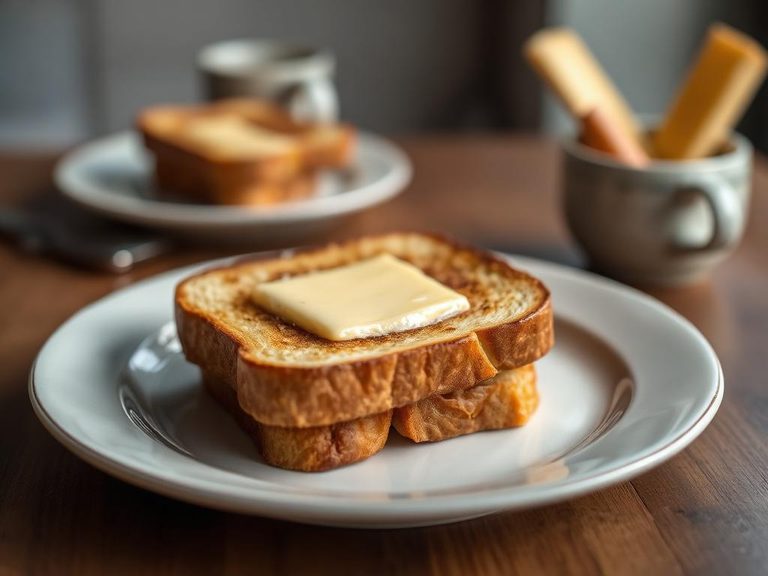
This is a smooth, spreadable margarine designed for easy use directly from a tub, typically containing 35-39% fat. It has a creamy, soft texture that's ideal for spreading on bread or toast without tearing it. Nutritionally, it's almost pure fat, providing a dense source of calories with negligible protein or carbohydrates.
Calorie split: 0% protein · 2% carbs · 98% fat
↓ Full nutrition💚 Why it's loved
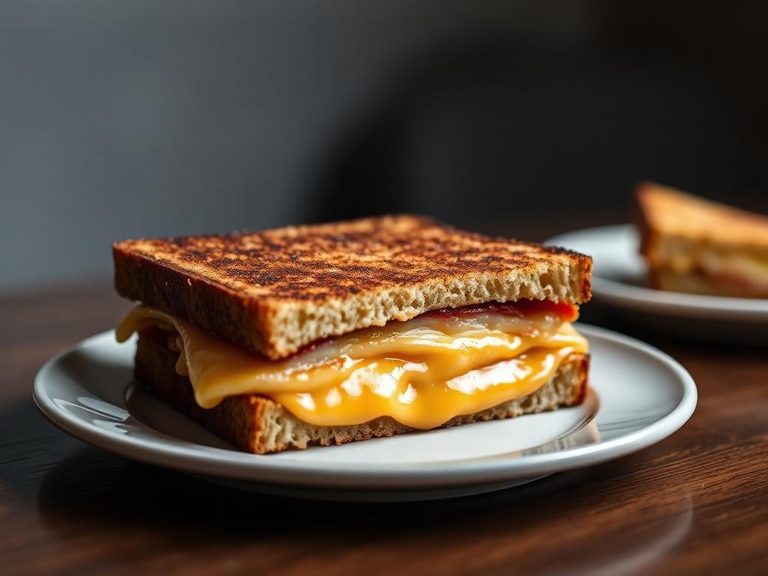
People love its convenience and mild, neutral flavor that doesn't overpower other foods. It's a staple for quick meals, from buttering toast to making simple sandwiches, and fits into many cultural cooking routines.
⚠️ Watch-outs & how to enjoy it better
As a highly processed fat source, it can be high in calories and may contain trans fats if made with partially hydrogenated oils, which are less heart-healthy. To mitigate, use it sparingly as a flavor enhancer rather than a main ingredient, and pair it with fiber-rich foods like whole-grain bread to slow fat absorption.
Key benefits
- Provides a convenient, plant-based alternative to butter
- Soft texture makes it easy to spread straight from the refrigerator
- Often fortified with vitamins A and D
- Contains no cholesterol
- Long shelf life compared to dairy butter
🍽️ Popular dishes
🌍 Where it's eaten
💡 Did you know?
Margarine was invented in 1869 by a French chemist in response to Napoleon III's request for a butter substitute for the armed forces and lower classes.
Full nutrition (USDA data · scales with serving)
| Water | 58.7 g |
| Energy | 349 kcal |
| Energy | 1459 kj |
| Protein | 0.23 g |
| Total lipid (fat) | 38.0 g |
| Ash | 1.6 g |
| Carbohydrate, by difference | 1.5 g |
| Fiber, total dietary | 0.00 g |
| Total Sugars | 0.00 g |
| Starch | 2.0 g |
| Calcium, Ca | 6.0 mg |
| Iron, Fe | 0.04 mg |
| Magnesium, Mg | 1.0 mg |
| Phosphorus, P | 7.0 mg |
| Potassium, K | 51.0 mg |
| Sodium, Na | 584 mg |
| Zinc, Zn | 0.02 mg |
| Copper, Cu | 0.01 mg |
| Manganese, Mn | 0.01 mg |
| Selenium, Se | 0.00 ug |
| Vitamin C, total ascorbic acid | 0.00 mg |
| Thiamin | 0.00 mg |
| Riboflavin | 0.00 mg |
| Niacin | 0.00 mg |
| Pantothenic acid | 0.03 mg |
| Vitamin B-6 | 0.38 mg |
| Folate, total | 3.0 ug |
| Folic acid | 0.00 ug |
| Folate, food | 1.0 ug |
| Folate, DFE | 1.0 ug |
| Choline, total | 12.4 mg |
| Vitamin B-12 | 0.06 ug |
| Vitamin B-12, added | 0.00 ug |
| Vitamin A, RAE | 1348 ug |
| Retinol | 1297 ug |
| Carotene, beta | 610 ug |
| Carotene, alpha | 0.00 ug |
| Cryptoxanthin, beta | 0.00 ug |
| Vitamin A, IU | 5339 iu |
| Lycopene | 0.00 ug |
| Lutein + zeaxanthin | 0.00 ug |
| Vitamin E (alpha-tocopherol) | 13.4 mg |
| Vitamin E, added | 0.00 mg |
| Vitamin D (D2 + D3), International Units | 0.00 iu |
| Vitamin D (D2 + D3) | 17.5 ug |
| Vitamin D2 (ergocalciferol) | 0.00 ug |
| Vitamin D3 (cholecalciferol) | 17.5 ug |
| Vitamin K (phylloquinone) | 74.6 ug |
| Alcohol, ethyl | 0.00 g |
| Caffeine | 0.00 mg |
| Theobromine | 0.00 mg |
Fat & fatty acid profile (per 100g)
| Fatty acids, total saturated | 8.7 g |
| SFA 4:0 | 0.01 g |
| SFA 6:0 | 0.00 g |
| SFA 8:0 | 0.05 g |
| SFA 10:0 | 0.07 g |
| SFA 12:0 | 0.69 g |
| SFA 14:0 | 0.32 g |
| SFA 15:0 | 0.01 g |
| SFA 16:0 | 5.8 g |
| SFA 17:0 | 0.03 g |
| SFA 18:0 | 1.5 g |
| SFA 20:0 | 0.14 g |
| SFA 22:0 | 0.10 g |
| SFA 24:0 | 0.04 g |
| Fatty acids, total monounsaturated | 11.2 g |
| MUFA 14:1 | 0.00 g |
| MUFA 15:1 | 0.00 g |
| MUFA 16:1 | 0.04 g |
| MUFA 16:1 c | 0.04 g |
| MUFA 17:1 | 0.02 g |
| MUFA 18:1 | 10.9 g |
| MUFA 18:1 c | 10.9 g |
| MUFA 20:1 | 0.18 g |
| MUFA 22:1 | 0.01 g |
| MUFA 22:1 c | 0.01 g |
| MUFA 24:1 c | 0.01 g |
| Fatty acids, total polyunsaturated | 16.1 g |
| PUFA 18:2 | 13.8 g |
| PUFA 18:2 n-6 c,c | 13.7 g |
| PUFA 18:2 CLAs | 0.02 g |
| PUFA 18:3 | 2.3 g |
| PUFA 18:3 n-3 c,c,c (ALA) | 2.2 g |
| PUFA 18:3 n-6 c,c,c | 0.09 g |
| PUFA 18:3i | 0.00 g |
| PUFA 18:4 | 0.00 g |
| PUFA 20:2 n-6 c,c | 0.01 g |
| PUFA 20:3 | 0.00 g |
| PUFA 20:3 n-3 | 0.00 g |
| PUFA 20:3 n-6 | 0.00 g |
| PUFA 20:4 | 0.01 g |
| PUFA 20:5 n-3 (EPA) | 0.00 g |
| PUFA 22:4 | 0.00 g |
| PUFA 22:5 n-3 (DPA) | 0.00 g |
| PUFA 22:6 n-3 (DHA) | 0.00 g |
| Fatty acids, total trans | 0.08 g |
| Fatty acids, total trans-monoenoic | 0.03 g |
| TFA 16:1 t | 0.00 g |
| TFA 18:1 t | 0.03 g |
| TFA 22:1 t | 0.00 g |
| TFA 18:2 t not further defined | 0.05 g |
| Fatty acids, total trans-polyenoic | 0.05 g |
| Cholesterol | 0.00 mg |
Amino acid profile (per 100g)
Estimated from Margarine, regular, hard, soybean (hydrogenated) — USDA does not publish this profile for Margarine.
| Tryptophan | 0.01 g |
| Threonine | 0.04 g |
| Isoleucine | 0.05 g |
| Leucine | 0.08 g |
| Lysine | 0.07 g |
| Methionine | 0.02 g |
| Cystine | 0.01 g |
| Phenylalanine | 0.04 g |
| Tyrosine | 0.04 g |
| Valine | 0.06 g |
| Arginine | 0.03 g |
| Histidine | 0.02 g |
| Alanine | 0.03 g |
| Aspartic acid | 0.07 g |
| Glutamic acid | 0.18 g |
| Glycine | 0.02 g |
| Proline | 0.08 g |
| Serine | 0.05 g |
FAQ
Is this the same as butter?
No. Butter is made from animal milk fat, while this is a plant-based emulsion, typically from vegetable oils. They differ in flavor, texture, and nutritional profile, especially in cholesterol and saturated fat content.
Can I use it for baking?
Yes, but results may vary. It can be used in many recipes for cookies or cakes, but its higher water content and different fat structure can affect texture and rise compared to butter or baking-specific margarine.
What does '35-39% fat' mean?
It indicates the product is a low-fat spread compared to butter (which is ~80% fat). The remaining weight is mostly water, with small amounts of emulsifiers, salt, and vitamins.
Nutrient density (calculated · NRF9.3)
Nutrient Rich Foods index: beneficial nutrients (protein, fiber, vitamins, minerals) minus saturated fat, added sugar & sodium, per 100 kcal.
NRF9.3 index — Fulgoni, Keast & Drewnowski, 2009. Computed from USDA nutrients.
Weight-loss friendliness (composite index)
Energy density 3.49 kcal/g · 0% calories from protein · 0.0 g fiber · 0.0 g sugar per 100 g.
Composite of energy density (Rolls et al., 1999), protein & fiber satiety, minus sugar. A calculated heuristic — ranks satiety-per-calorie, not a clinical measure.
Dietary load (calculated from USDA values)
Potential renal acid load. Positive = acid-forming, negative = alkaline-forming.
Sodium-to-potassium ratio: 11.45 (lower is better — aim for ≤ 1)
Sodium:potassium per WHO potassium guidance. Computed from USDA nutrients.