

Biscuit dough
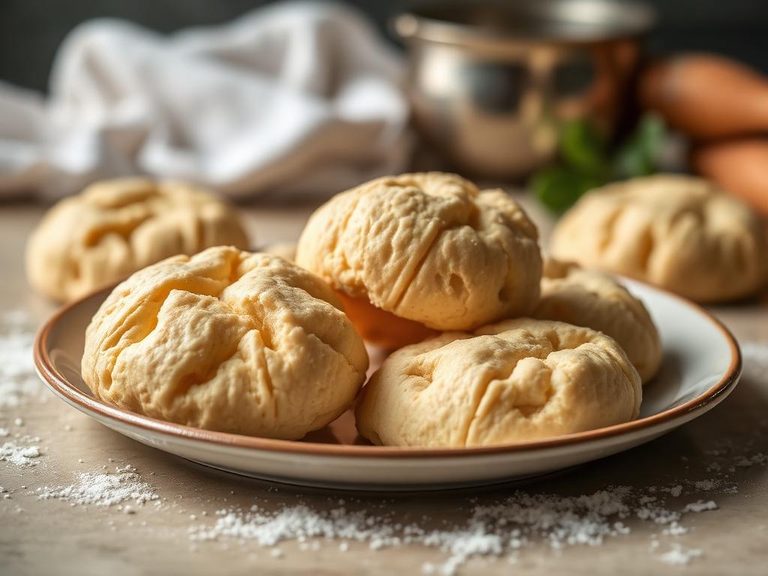
Biscuit dough is a soft, pliable dough used to make quick breads, most commonly associated with American Southern cuisine. It typically consists of flour, a leavening agent like baking powder, a fat such as butter or shortening, and a liquid like buttermilk or milk. The dough is mixed minimally to ensure a tender, flaky texture in the final baked biscuit.
🍳 View the full Biscuit dough recipe →
🍽️ Nutrition at a glance
Biscuit dough is primarily a source of carbohydrates from the flour, with a moderate amount of fat from the added butter or shortening. A standard homemade biscuit made from this dough provides roughly 200-300 calories, along with some iron and B vitamins from the enriched flour.
Nutrition breakdown
| Calories | 250 kcal |
| Protein | 4 g |
| Carbs | 32 g |
| Fat | 12 g |
| Fiber | 1 g |
| Sugar | 2 g |
| Sodium | 480 mg |
| Iron | 2.5 mg |
| Calcium | 60 mg |
| Phosphorus | 80 mg |
| Thiamin (B1) | 0.3 mg |
| Niacin (B3) | 2.5 mg |
| Folate | 45 mcg |
| Selenium | 10 mcg |
| Manganese | 0.4 mg |
Per 1/2 cup (70 g) · estimated, varies by recipe
💡 What's interesting
The key to a perfect biscuit is 'cold ingredients' and minimal handling, which creates steam pockets during baking for a flaky rise. Culturally, biscuits are a staple of Southern hospitality, often served as a breakfast side or used to make sandwiches like the classic 'biscuit and gravy'.
🍽️ Related dishes


AI estimate may be inaccurate · Terms