

Jelly-Filled Doughnut
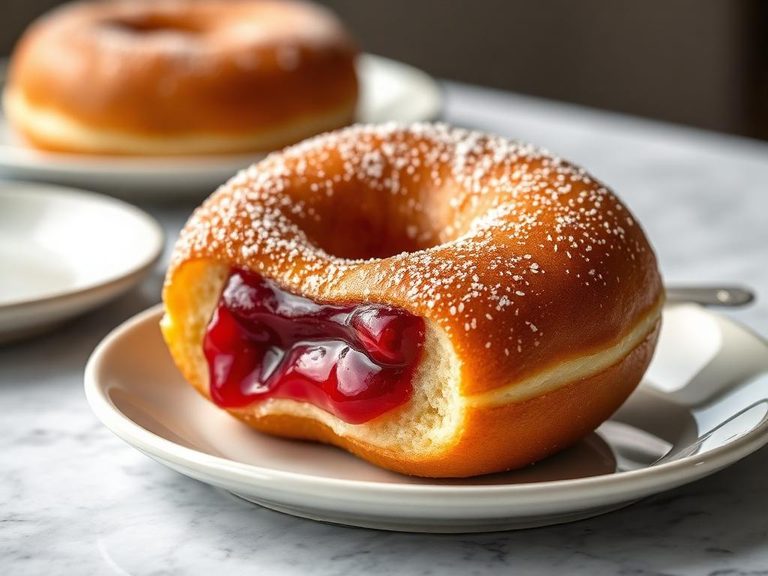
A jelly-filled doughnut is a soft, sweet pastry, typically round and deep-fried, that is injected or filled with a sweet fruit preserve like raspberry, strawberry, or apricot jam. Originating in Europe, it has become a beloved treat worldwide, often dusted with powdered sugar or coated in granulated sugar. The dough is usually a rich, leavened mixture similar to brioche, which becomes light and airy when fried.
🍳 View the full Jelly-Filled Doughnut recipe →
🍽️ Nutrition at a glance
This indulgent treat is very high in carbohydrates and fat, with minimal protein, and a single doughnut can range from 250 to 400 calories. It provides a quick source of energy from sugars and fats but is generally low in essential vitamins and minerals.
Nutrition breakdown
| Calories | 290 kcal |
| Protein | 4.5 g |
| Carbs | 38 g |
| Fat | 14 g |
| Fiber | 1.2 g |
| Sugar | 17 g |
| Sodium | 220 mg |
| Iron | 2.1 mg |
| Calcium | 40 mg |
| Potassium | 90 mg |
| Vitamin B1 (Thiamine) | 0.15 mg |
| Vitamin B2 (Riboflavin) | 0.1 mg |
| Niacin (B3) | 1.8 mg |
| Folate | 45 mcg |
| Phosphorus | 60 mg |
Per 1 doughnut (85 g) · estimated, varies by recipe
💡 What's interesting
Culturally, jelly-filled doughnuts are a centerpiece of many celebrations, such as Hanukkah (as sufganiyot) in Jewish tradition and Fat Tuesday (as paczki) in Polish culture, symbolizing joy and festivity before a period of fasting. Nutritionally, the combination of a high-fat, high-sugar profile with a soft, airy texture makes it a classic example of a hyper-palatable food that provides immediate but short-lived energy.
🍽️ Related dishes





AI estimate may be inaccurate · Terms