

Doughnuts, cake-type, plain, sugared or glazed
Whole food · Baked Products
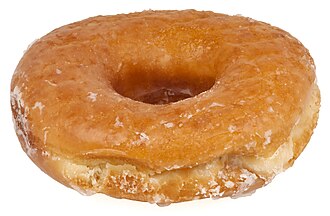
Photo: Wikipedia
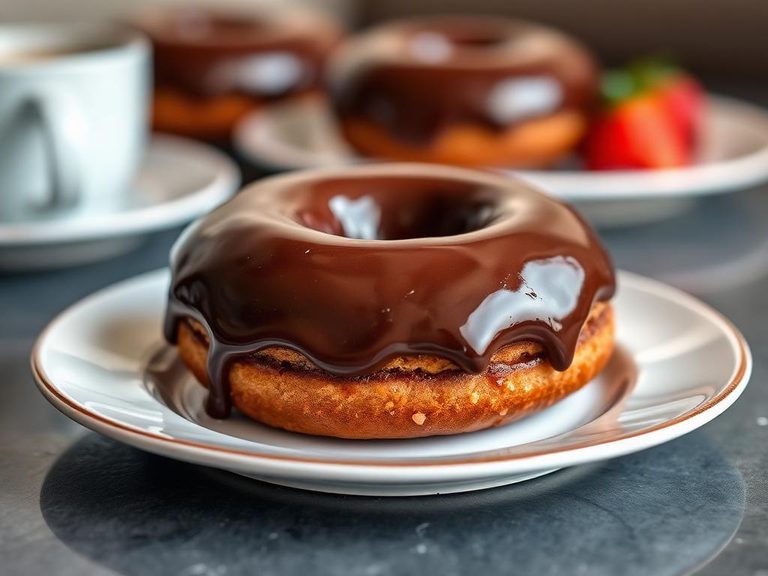
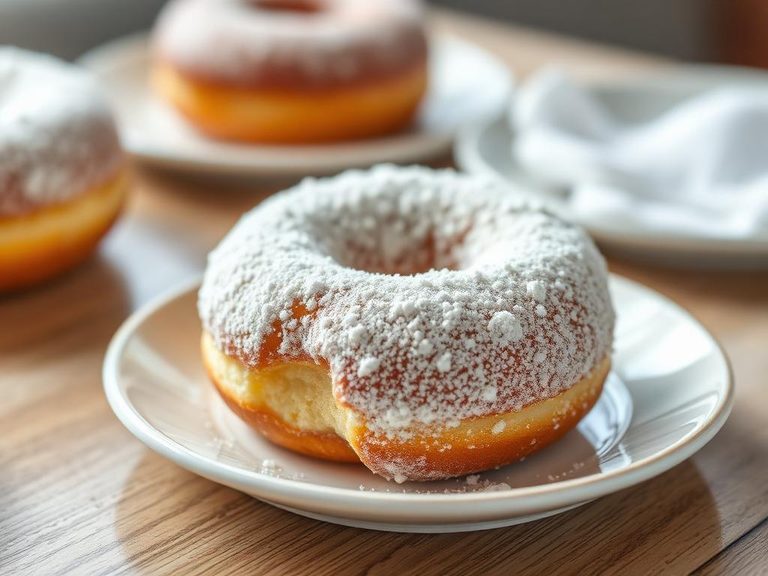
A dense, cakey doughnut made with a leavened batter, fried to a golden crisp and finished with a simple sugar coating or a sweet, crackly glaze. Its interior is moist and tender, offering a satisfying, less airy bite than its yeast-raised cousin. Nutritionally, it's a concentrated source of energy, delivering over 400 calories per 100g, primarily from refined carbohydrates and fats.
Calorie split: 5% protein · 47% carbs · 48% fat
↓ Full nutrition💚 Why it's loved
People adore its comforting, nostalgic sweetness and the delightful contrast between a crisp, sugary exterior and a soft, cake-like center. It's a beloved staple at coffee shops, fairs, and breakfast tables, symbolizing simple indulgence.
⚠️ Watch-outs & how to enjoy it better
Its high calorie, refined carb, and fat content can cause rapid blood sugar spikes and offers little sustained nutrition. Those monitoring blood sugar, calorie intake, or with gluten/wheat allergies should be cautious. To counteract, pair a single doughnut with a source of protein (like Greek yogurt or nuts) and fiber (like berries) to slow sugar absorption, and practice strict portion control.
Key benefits
- Quick source of energy from carbohydrates and fats
- Contains small amounts of protein and iron
- Often enriched with vitamins like niacin and thiamin
- A traditional comfort food for celebrations and gatherings
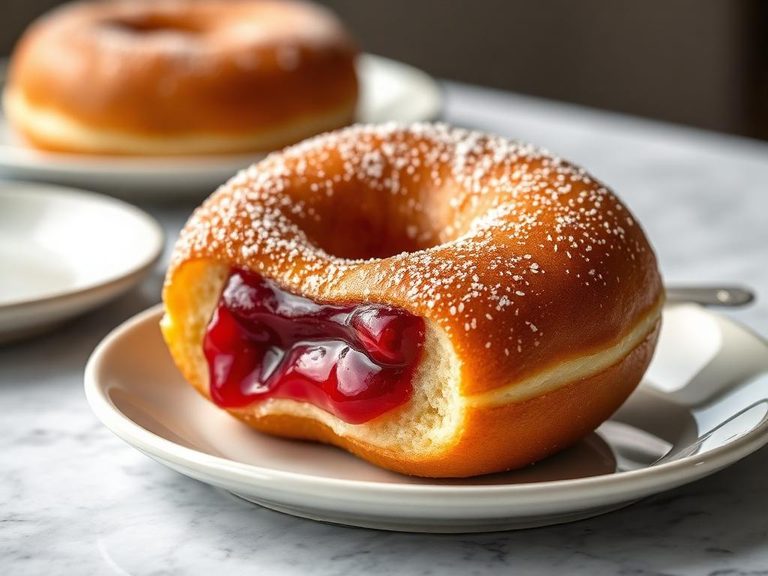
- Versatile base for various sweet toppings and fillings
🍽️ Popular dishes
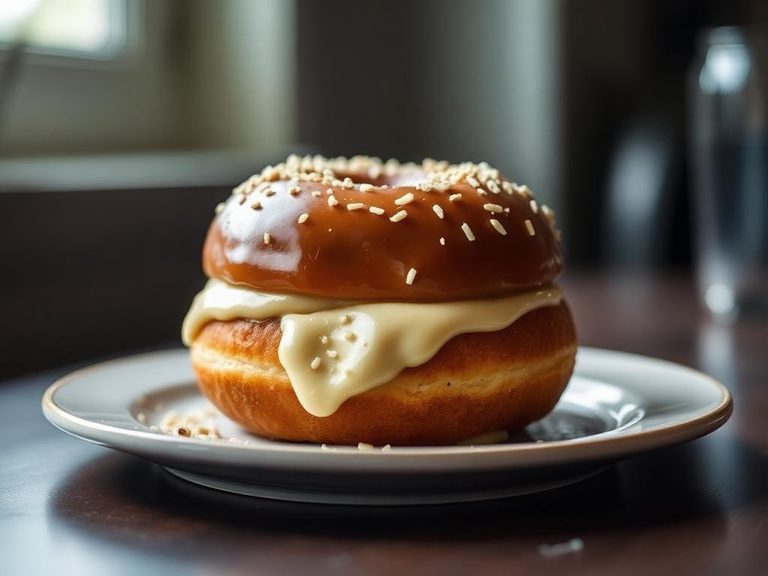
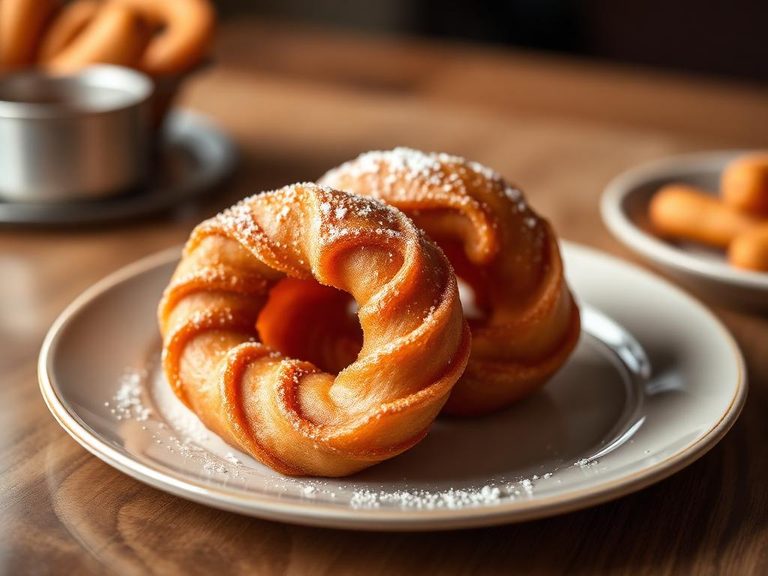
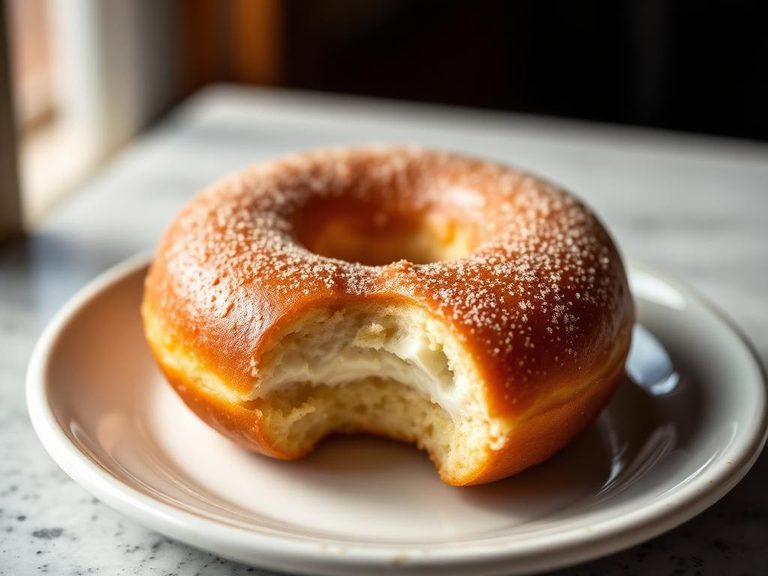
🌍 Where it's eaten
💡 Did you know?
The 'hole' in the doughnut is popularly (though likely apocryphally) attributed to a 19th-century sailor, Hanson Gregory, who claimed to have punched it out to solve the problem of the doughy, undercooked center of fried dough.
Full nutrition (USDA data · scales with serving)
| Water | 19.6 g |
| Energy | 426 kcal |
| Energy | 1782 kj |
| Protein | 5.2 g |
| Total lipid (fat) | 22.9 g |
| Ash | 1.5 g |
| Carbohydrate, by difference | 50.8 g |
| Fiber, total dietary | 1.5 g |
| Calcium, Ca | 60.0 mg |
| Iron, Fe | 1.1 mg |
| Magnesium, Mg | 17.0 mg |
| Phosphorus, P | 117 mg |
| Potassium, K | 102 mg |
| Sodium, Na | 402 mg |
| Zinc, Zn | 0.44 mg |
| Copper, Cu | 0.10 mg |
| Manganese, Mn | 0.33 mg |
| Selenium, Se | 9.6 ug |
| Vitamin C, total ascorbic acid | 0.10 mg |
| Thiamin | 0.23 mg |
| Riboflavin | 0.20 mg |
| Niacin | 1.5 mg |
| Pantothenic acid | 0.43 mg |
| Vitamin B-6 | 0.03 mg |
| Folate, total | 46.0 ug |
| Folic acid | 34.0 ug |
| Folate, food | 12.0 ug |
| Folate, DFE | 70.0 ug |
| Vitamin B-12 | 0.24 ug |
| Vitamin A, RAE | 3.0 ug |
| Retinol | 3.0 ug |
| Vitamin A, IU | 10.0 iu |
Fat & fatty acid profile (per 100g)
| Fatty acids, total saturated | 5.9 g |
| SFA 4:0 | 0.00 g |
| SFA 6:0 | 0.00 g |
| SFA 8:0 | 0.00 g |
| SFA 10:0 | 0.00 g |
| SFA 12:0 | 0.00 g |
| SFA 14:0 | 0.11 g |
| SFA 16:0 | 3.2 g |
| SFA 18:0 | 2.6 g |
| Fatty acids, total monounsaturated | 12.7 g |
| MUFA 16:1 | 0.06 g |
| MUFA 18:1 | 12.6 g |
| MUFA 20:1 | 0.01 g |
| MUFA 22:1 | 0.00 g |
| Fatty acids, total polyunsaturated | 2.9 g |
| PUFA 18:2 | 2.7 g |
| PUFA 18:3 | 0.14 g |
| PUFA 20:4 | 0.03 g |
| PUFA 20:5 n-3 (EPA) | 0.00 g |
| PUFA 22:5 n-3 (DPA) | 0.00 g |
| PUFA 22:6 n-3 (DHA) | 0.01 g |
| Cholesterol | 32.0 mg |
Amino acid profile (per 100g)
| Tryptophan | 0.07 g |
| Threonine | 0.19 g |
| Isoleucine | 0.23 g |
| Leucine | 0.41 g |
| Lysine | 0.26 g |
| Methionine | 0.10 g |
| Cystine | 0.10 g |
| Phenylalanine | 0.24 g |
| Tyrosine | 0.18 g |
| Valine | 0.26 g |
| Arginine | 0.24 g |
| Histidine | 0.12 g |
| Alanine | 0.19 g |
| Aspartic acid | 0.32 g |
| Glutamic acid | 1.4 g |
| Glycine | 0.16 g |
| Proline | 0.49 g |
| Serine | 0.31 g |
FAQ
What's the main difference between a cake doughnut and a yeast doughnut?
A cake doughnut uses a chemical leavener like baking powder, resulting in a denser, more crumbly texture. A yeast doughnut uses yeast for a lighter, airier, and chewier texture.
Why are cake doughnuts often denser and more moist than yeast doughnuts?
Their batter contains more fat (like butter or shortening) and sometimes sour cream or buttermilk, which contributes to a richer, moister, and more tender crumb.
Can cake doughnuts be made at home without a deep fryer?
Yes, they can be fried in a heavy-bottomed pot with a few inches of oil, using a candy thermometer to maintain the correct temperature (usually around 375°F or 190°C) for even cooking.
Nutrient density (calculated · NRF9.3)
Nutrient Rich Foods index: beneficial nutrients (protein, fiber, vitamins, minerals) minus saturated fat, added sugar & sodium, per 100 kcal.
NRF9.3 index — Fulgoni, Keast & Drewnowski, 2009. Computed from USDA nutrients.
Weight-loss friendliness (composite index)
Energy density 4.26 kcal/g · 5% calories from protein · 1.5 g fiber · 0.0 g sugar per 100 g.
Composite of energy density (Rolls et al., 1999), protein & fiber satiety, minus sugar. A calculated heuristic — ranks satiety-per-calorie, not a clinical measure.
Dietary load (calculated from USDA values)
Potential renal acid load. Positive = acid-forming, negative = alkaline-forming.
Sodium-to-potassium ratio: 3.94 (lower is better — aim for ≤ 1)
Sodium:potassium per WHO potassium guidance. Computed from USDA nutrients.