

Fish, salmon, pink, canned, total can contents
Whole food · Finfish and Shellfish Products

Photo: Wikipedia
This is pink salmon, pressure-cooked and sealed in its own juices or a light brine, yielding a tender, flaky texture with a delicate, sweet marine flavor. It's a nutritional powerhouse, delivering a remarkable 19.68 grams of high-quality protein per 100g with virtually no carbohydrates, making it a staple for lean protein intake.
Calorie split: 64% protein · 0% carbs · 36% fat
↓ Full nutrition💚 Why it's loved
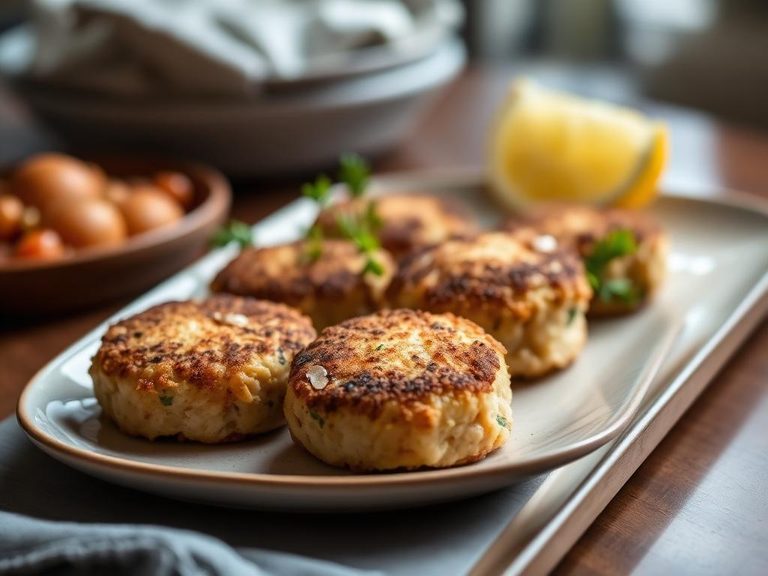
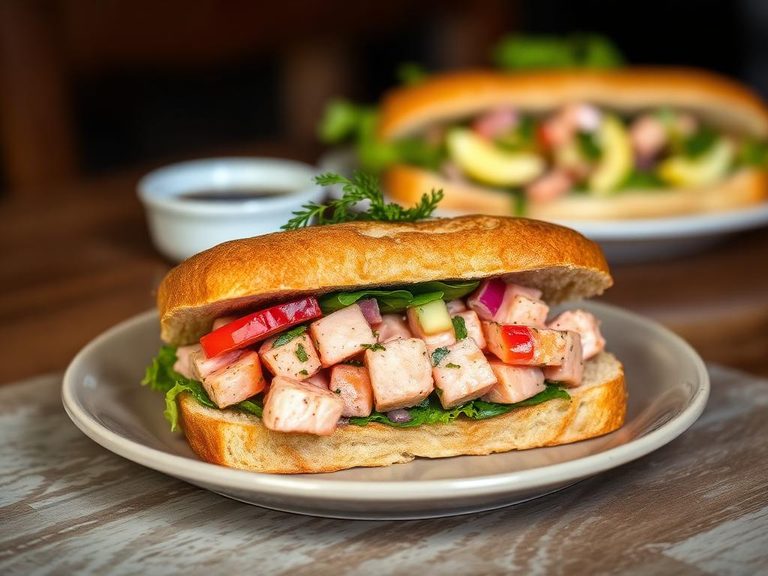
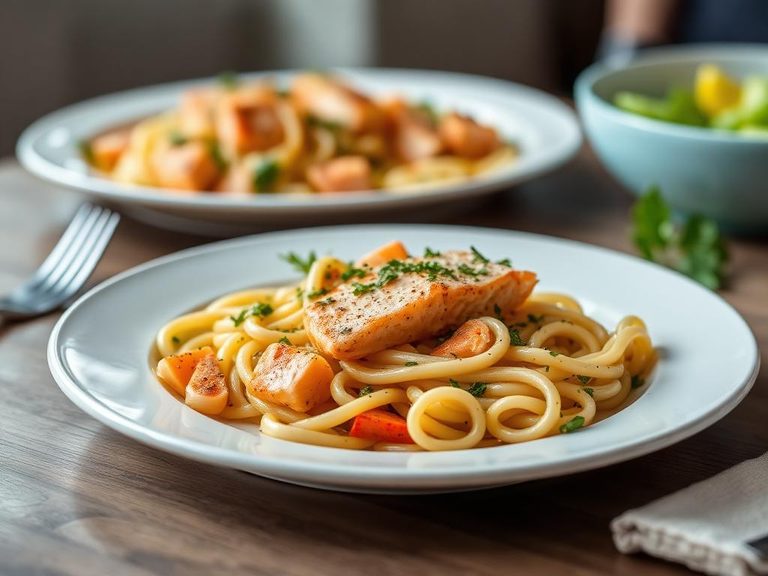
People adore it for its incredible convenience and clean, savory flavor that elevates simple meals instantly. Its versatility is legendary, seamlessly fitting into salads, pastas, and sandwiches, while its affordability makes quality protein accessible.
⚠️ Watch-outs & how to enjoy it better
The primary caution is the often-high sodium content from the canning brine, which can be a concern for those managing blood pressure. To counteract this, rinse the salmon thoroughly under cold water to remove up to 40% of the sodium, or choose 'no salt added' varieties. It's also a common fish allergen.
Key benefits
- Excellent source of complete protein for muscle maintenance and repair.
- Naturally rich in omega-3 fatty acids (EPA & DHA) for heart and brain health.
- Provides significant vitamin D and B12, often lacking in modern diets.
- Zero carbohydrates, making it ideal for low-carb and ketogenic diets.
- Highly convenient, shelf-stable, and ready to eat with no cooking required.
🍽️ Popular dishes
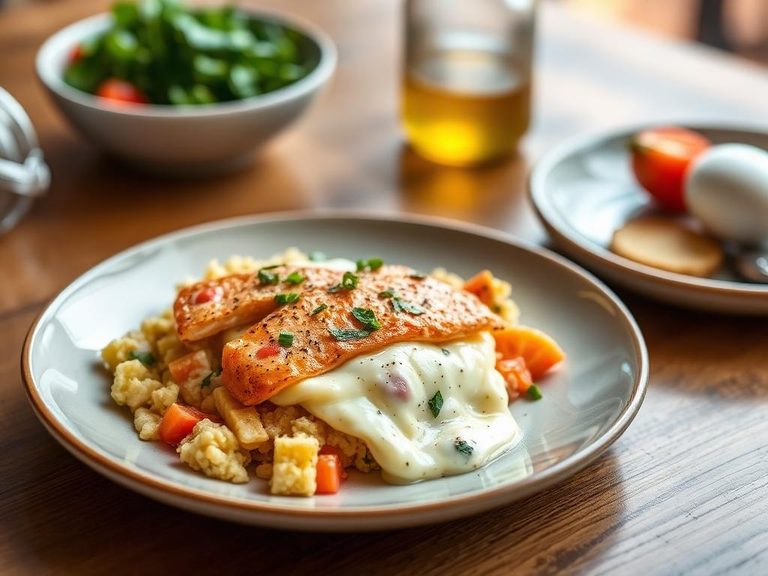
🌍 Where it's eaten
💡 Did you know?
The pink color of this salmon comes from astaxanthin, a powerful antioxidant pigment that the fish obtains from eating krill and shrimp; it's the same compound that gives flamingos their pink feathers.
Full nutrition (USDA data · scales with serving)
| Water | 74.0 g |
| Energy | 129 kcal |
| Energy | 539 kj |
| Protein | 19.7 g |
| Total lipid (fat) | 5.0 g |
| Ash | 2.4 g |
| Carbohydrate, by difference | 0.00 g |
| Fiber, total dietary | 0.00 g |
| Total Sugars | 0.00 g |
| Calcium, Ca | 215 mg |
| Iron, Fe | 0.64 mg |
| Magnesium, Mg | 30.0 mg |
| Phosphorus, P | 337 mg |
| Potassium, K | 344 mg |
| Sodium, Na | 403 mg |
| Zinc, Zn | 0.76 mg |
| Copper, Cu | 0.07 mg |
| Manganese, Mn | 0.02 mg |
| Selenium, Se | 33.2 ug |
| Vitamin C, total ascorbic acid | 0.00 mg |
| Thiamin | 0.02 mg |
| Riboflavin | 0.19 mg |
| Niacin | 6.5 mg |
| Pantothenic acid | 0.55 mg |
| Vitamin B-6 | 0.30 mg |
| Folate, total | 15.0 ug |
| Folic acid | 0.00 ug |
| Folate, food | 15.0 ug |
| Folate, DFE | 15.0 ug |
| Choline, total | 87.8 mg |
| Vitamin B-12 | 4.4 ug |
| Vitamin B-12, added | 0.00 ug |
| Vitamin A, RAE | 17.0 ug |
| Retinol | 17.0 ug |
| Carotene, beta | 0.00 ug |
| Carotene, alpha | 0.00 ug |
| Cryptoxanthin, beta | 0.00 ug |
| Vitamin A, IU | 57.0 iu |
| Lycopene | 0.00 ug |
| Lutein + zeaxanthin | 0.00 ug |
| Vitamin E (alpha-tocopherol) | 0.64 mg |
| Vitamin E, added | 0.00 mg |
| Tocopherol, beta | 0.00 mg |
| Tocopherol, gamma | 0.00 mg |
| Tocopherol, delta | 0.00 mg |
| Vitamin D (D2 + D3), International Units | 547 iu |
| Vitamin D (D2 + D3) | 13.7 ug |
| Vitamin D3 (cholecalciferol) | 13.7 ug |
| Vitamin K (phylloquinone) | 0.50 ug |
| Alcohol, ethyl | 0.00 g |
| Caffeine | 0.00 mg |
| Theobromine | 0.00 mg |
Fat & fatty acid profile (per 100g)
| Fatty acids, total saturated | 0.86 g |
| SFA 4:0 | 0.00 g |
| SFA 6:0 | 0.00 g |
| SFA 8:0 | 0.00 g |
| SFA 10:0 | 0.01 g |
| SFA 12:0 | 0.00 g |
| SFA 14:0 | 0.18 g |
| SFA 15:0 | 0.02 g |
| SFA 16:0 | 0.52 g |
| SFA 17:0 | 0.01 g |
| SFA 18:0 | 0.10 g |
| SFA 20:0 | 0.01 g |
| SFA 22:0 | 0.00 g |
| SFA 24:0 | 0.00 g |
| Fatty acids, total monounsaturated | 1.2 g |
| MUFA 14:1 | 0.00 g |
| MUFA 15:1 | 0.00 g |
| MUFA 16:1 | 0.14 g |
| MUFA 16:1 c | 0.14 g |
| MUFA 17:1 | 0.01 g |
| MUFA 18:1 | 0.55 g |
| MUFA 18:1 c | 0.54 g |
| MUFA 20:1 | 0.44 g |
| MUFA 22:1 | 0.05 g |
| MUFA 22:1 c | 0.05 g |
| MUFA 24:1 c | 0.01 g |
| Fatty acids, total polyunsaturated | 1.4 g |
| PUFA 18:2 | 0.09 g |
| PUFA 18:2 n-6 c,c | 0.08 g |
| PUFA 18:2 CLAs | 0.01 g |
| PUFA 18:3 | 0.05 g |
| PUFA 18:3 n-3 c,c,c (ALA) | 0.05 g |
| PUFA 18:3 n-6 c,c,c | 0.00 g |
| PUFA 18:4 | 0.14 g |
| PUFA 20:2 n-6 c,c | 0.01 g |
| PUFA 20:3 | 0.01 g |
| PUFA 20:3 n-3 | 0.01 g |
| PUFA 20:3 n-6 | 0.01 g |
| PUFA 20:4 | 0.02 g |
| PUFA 20:5 n-3 (EPA) | 0.32 g |
| PUFA 22:4 | 0.00 g |
| PUFA 22:5 n-3 (DPA) | 0.09 g |
| PUFA 22:6 n-3 (DHA) | 0.67 g |
| Fatty acids, total trans | 0.03 g |
| Fatty acids, total trans-monoenoic | 0.02 g |
| TFA 16:1 t | 0.01 g |
| TFA 18:1 t | 0.01 g |
| TFA 22:1 t | 0.00 g |
| TFA 18:2 t not further defined | 0.01 g |
| Fatty acids, total trans-polyenoic | 0.01 g |
| Cholesterol | 55.0 mg |
Amino acid profile (per 100g)
| Tryptophan | 0.21 g |
| Threonine | 1.0 g |
| Isoleucine | 0.92 g |
| Leucine | 1.5 g |
| Lysine | 1.7 g |
| Methionine | 0.55 g |
| Cystine | 0.15 g |
| Phenylalanine | 0.81 g |
| Tyrosine | 0.71 g |
| Valine | 1.1 g |
| Arginine | 1.2 g |
| Histidine | 0.52 g |
| Alanine | 1.3 g |
| Aspartic acid | 2.5 g |
| Glutamic acid | 2.8 g |
| Glycine | 1.2 g |
| Proline | 0.83 g |
| Serine | 0.87 g |
FAQ
Is the liquid in the can nutritious?
Yes, the canning liquid (often a light broth or brine) contains leached nutrients, including omega-3s and minerals. Using it in sauces or dressings can recapture some of this flavor and nutrition, though it may also be high in sodium.
How does it compare to fresh or frozen salmon?
Canned pink salmon is pre-cooked, which slightly alters texture and flavor. Nutritionally, it's very comparable, often with higher calcium if the soft, edible bones are included. It's a more affordable and shelf-stable alternative.
What are those white, chalky chunks I sometimes see?
That's coagulated albumin, a harmless, protein-rich substance that solidifies during the cooking process. It's completely edible and a sign of the salmon's protein content.
Nutrient density (calculated · NRF9.3)
Nutrient Rich Foods index: beneficial nutrients (protein, fiber, vitamins, minerals) minus saturated fat, added sugar & sodium, per 100 kcal.
NRF9.3 index — Fulgoni, Keast & Drewnowski, 2009. Computed from USDA nutrients.
Weight-loss friendliness (composite index)
Energy density 1.29 kcal/g · 61% calories from protein · 0.0 g fiber · 0.0 g sugar per 100 g.
Composite of energy density (Rolls et al., 1999), protein & fiber satiety, minus sugar. A calculated heuristic — ranks satiety-per-calorie, not a clinical measure.
Dietary load (calculated from USDA values)
Potential renal acid load. Positive = acid-forming, negative = alkaline-forming.
Sodium-to-potassium ratio: 1.17 (lower is better — aim for ≤ 1)
Sodium:potassium per WHO potassium guidance. Computed from USDA nutrients.