

Crustaceans, crab, blue, canned
Whole food · Finfish and Shellfish Products
Canned blue crab is a ready-to-eat, delicate meat harvested from the Atlantic blue crab, offering a sweet, briny flavor with a tender, flaky texture. It's a nutritional powerhouse, packing an impressive 17.88 grams of lean protein per 100g serving with virtually no fat or carbohydrates, making it an excellent choice for high-protein, low-calorie diets.
Calorie split: 91% protein · 0% carbs · 9% fat
↓ Full nutrition💚 Why it's loved
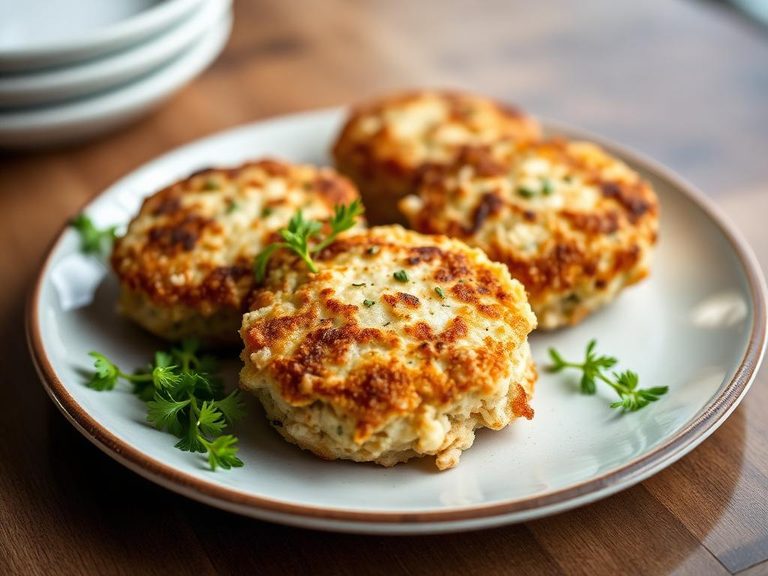
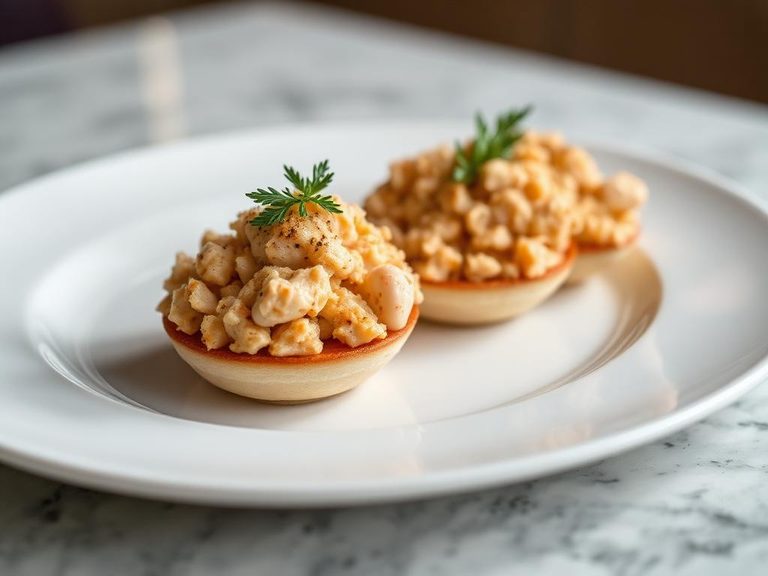
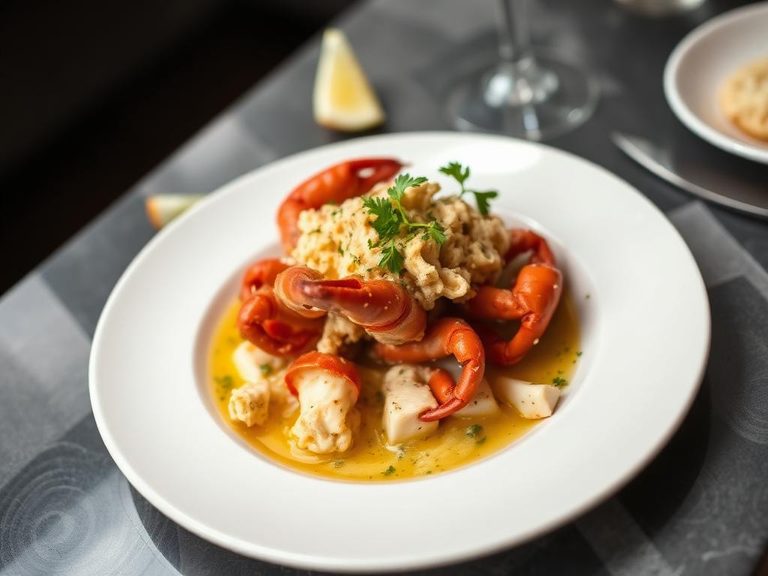
People love it for its pure, ocean-sweet flavor that captures the essence of fresh crab in a convenient, shelf-stable form. Its versatility makes it a beloved staple for quick salads, dips, and elegant appetizers without the labor of picking fresh crab.
⚠️ Watch-outs & how to enjoy it better
As a canned seafood product, it can be high in sodium, which may be a concern for those monitoring salt intake. It is also a common shellfish allergen. To counteract sodium, rinse the crab meat briefly under cold water before use and pair it with potassium-rich foods like avocado or leafy greens. Always check labels for 'may contain' warnings if you have allergies.
Key benefits
- Exceptionally high in lean protein for muscle maintenance and satiety.
- Very low in calories (83 kcal per 100g), supporting weight management.
- Naturally free of carbohydrates, sugar, and dietary fiber.
- Contains essential minerals like zinc and selenium.
- Provides a source of omega-3 fatty acids.
🍽️ Popular dishes
🌍 Where it's eaten
💡 Did you know?
The blue crab (Callinectes sapidus) is named for the blue tint on its claws, not its cooked color, which turns bright red.
Full nutrition (USDA data · scales with serving)
| Water | 79.7 g |
| Energy | 83.0 kcal |
| Energy | 347 kj |
| Protein | 17.9 g |
| Total lipid (fat) | 0.74 g |
| Ash | 2.0 g |
| Carbohydrate, by difference | 0.00 g |
| Fiber, total dietary | 0.00 g |
| Total Sugars | 0.00 g |
| Sucrose | 0.00 g |
| Glucose | 0.00 g |
| Fructose | 0.00 g |
| Lactose | 0.00 g |
| Maltose | 0.00 g |
| Galactose | 0.00 g |
| Starch | 0.00 g |
| Calcium, Ca | 91.0 mg |
| Iron, Fe | 0.50 mg |
| Magnesium, Mg | 36.0 mg |
| Phosphorus, P | 234 mg |
| Potassium, K | 259 mg |
| Sodium, Na | 563 mg |
| Zinc, Zn | 3.8 mg |
| Copper, Cu | 0.81 mg |
| Manganese, Mn | 0.07 mg |
| Selenium, Se | 42.9 ug |
| Fluoride, F | 210 ug |
| Vitamin C, total ascorbic acid | 3.3 mg |
| Thiamin | 0.02 mg |
| Riboflavin | 0.09 mg |
| Niacin | 2.7 mg |
| Pantothenic acid | 1.00 mg |
| Vitamin B-6 | 0.16 mg |
| Folate, total | 51.0 ug |
| Folic acid | 0.00 ug |
| Folate, food | 51.0 ug |
| Folate, DFE | 51.0 ug |
| Choline, total | 80.9 mg |
| Betaine | 12.6 mg |
| Vitamin B-12 | 3.3 ug |
| Vitamin B-12, added | 0.00 ug |
| Vitamin A, RAE | 1.0 ug |
| Retinol | 1.0 ug |
| Carotene, beta | 0.00 ug |
| Carotene, alpha | 0.00 ug |
| Cryptoxanthin, beta | 0.00 ug |
| Vitamin A, IU | 2.0 iu |
| Lycopene | 0.00 ug |
| Lutein + zeaxanthin | 0.00 ug |
| Vitamin E (alpha-tocopherol) | 1.8 mg |
| Vitamin E, added | 0.00 mg |
| Tocopherol, beta | 0.00 mg |
| Tocopherol, gamma | 0.00 mg |
| Tocopherol, delta | 0.00 mg |
| Tocotrienol, alpha | 0.00 mg |
| Tocotrienol, beta | 0.00 mg |
| Tocotrienol, gamma | 0.00 mg |
| Tocotrienol, delta | 0.00 mg |
| Vitamin D (D2 + D3), International Units | 0.00 iu |
| Vitamin D (D2 + D3) | 0.00 ug |
| Vitamin D3 (cholecalciferol) | 0.00 ug |
| Vitamin K (phylloquinone) | 0.30 ug |
| Vitamin K (Dihydrophylloquinone) | 0.00 ug |
| Vitamin K (Menaquinone-4) | 0.00 ug |
| Alcohol, ethyl | 0.00 g |
| Caffeine | 0.00 mg |
| Theobromine | 0.00 mg |
Fat & fatty acid profile (per 100g)
| Fatty acids, total saturated | 0.20 g |
| SFA 4:0 | 0.00 g |
| SFA 6:0 | 0.00 g |
| SFA 8:0 | 0.00 g |
| SFA 10:0 | 0.00 g |
| SFA 12:0 | 0.00 g |
| SFA 14:0 | 0.01 g |
| SFA 15:0 | 0.00 g |
| SFA 16:0 | 0.10 g |
| SFA 17:0 | 0.01 g |
| SFA 18:0 | 0.07 g |
| SFA 20:0 | 0.00 g |
| SFA 22:0 | 0.00 g |
| SFA 24:0 | 0.00 g |
| Fatty acids, total monounsaturated | 0.13 g |
| MUFA 14:1 | 0.00 g |
| MUFA 15:1 | 0.00 g |
| MUFA 16:1 | 0.03 g |
| MUFA 17:1 | 0.00 g |
| MUFA 18:1 | 0.09 g |
| MUFA 20:1 | 0.01 g |
| MUFA 22:1 | 0.00 g |
| MUFA 24:1 c | 0.00 g |
| Fatty acids, total polyunsaturated | 0.26 g |
| PUFA 18:2 | 0.02 g |
| PUFA 18:3 | 0.01 g |
| PUFA 18:4 | 0.00 g |
| PUFA 20:2 n-6 c,c | 0.01 g |
| PUFA 20:3 | 0.01 g |
| PUFA 20:4 | 0.04 g |
| PUFA 20:5 n-3 (EPA) | 0.10 g |
| PUFA 22:4 | 0.00 g |
| PUFA 22:5 n-3 (DPA) | 0.01 g |
| PUFA 22:6 n-3 (DHA) | 0.07 g |
| Fatty acids, total trans | 0.01 g |
| Cholesterol | 97.0 mg |
Amino acid profile (per 100g)
| Tryptophan | 0.23 g |
| Threonine | 0.73 g |
| Isoleucine | 0.78 g |
| Leucine | 1.3 g |
| Lysine | 1.4 g |
| Methionine | 0.45 g |
| Cystine | 0.19 g |
| Phenylalanine | 0.71 g |
| Tyrosine | 0.66 g |
| Valine | 0.81 g |
| Arginine | 1.8 g |
| Histidine | 0.39 g |
| Alanine | 0.89 g |
| Aspartic acid | 1.7 g |
| Glutamic acid | 2.6 g |
| Glycine | 1.1 g |
| Proline | 0.68 g |
| Serine | 0.68 g |
FAQ
Is canned crab meat as nutritious as fresh?
Yes, the canning process preserves the high protein and mineral content very well. The primary nutritional difference is often a higher sodium content in the canning liquid.
How should I store leftover canned crab?
Once opened, transfer any unused crab meat to an airtight container, cover with a bit of water or its own liquid, and refrigerate. Use within 2-3 days for best quality.
What's the difference between 'lump' and 'flake' canned crab?
'Lump' consists of larger, premium pieces of claw and body meat, ideal for dishes where presentation matters. 'Flake' is smaller, shredded meat, perfect for dips, salads, and crab cakes.
Nutrient density (calculated · NRF9.3)
Nutrient Rich Foods index: beneficial nutrients (protein, fiber, vitamins, minerals) minus saturated fat, added sugar & sodium, per 100 kcal.
NRF9.3 index — Fulgoni, Keast & Drewnowski, 2009. Computed from USDA nutrients.
Weight-loss friendliness (composite index)
Energy density 0.83 kcal/g · 86% calories from protein · 0.0 g fiber · 0.0 g sugar per 100 g.
Composite of energy density (Rolls et al., 1999), protein & fiber satiety, minus sugar. A calculated heuristic — ranks satiety-per-calorie, not a clinical measure.
Dietary load (calculated from USDA values)
Potential renal acid load. Positive = acid-forming, negative = alkaline-forming.
Sodium-to-potassium ratio: 2.17 (lower is better — aim for ≤ 1)
Sodium:potassium per WHO potassium guidance. Computed from USDA nutrients.