

Cornmeal, degermed, enriched, yellow
Whole food · Cereal Grains and Pasta
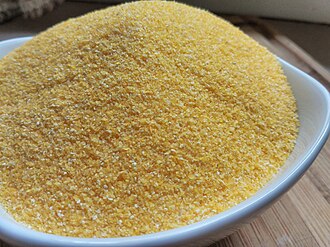
Photo: Wikipedia
Degermed, enriched yellow cornmeal is a finely ground, bright golden flour made from corn kernels with the germ and bran removed. It cooks into a smooth, creamy porridge or a tender, cake-like bread with a mild, subtly sweet corn flavor. Nutritionally, it's a dense source of carbohydrates (79.45g per 100g) and is fortified with B vitamins and iron.
Calorie split: 8% protein · 88% carbs · 4% fat
↓ Full nutrition💚 Why it's loved
People love its versatile, mild sweetness and smooth texture, which forms the foundation of countless comforting dishes. It's cherished across cultures for its ability to be both a simple, nourishing porridge and a base for savory, crispy cakes.
⚠️ Watch-outs & how to enjoy it better
As a refined, high-carb grain, it can cause rapid blood-sugar spikes, especially when consumed in large, plain portions. To counteract this, pair it with protein (like beans or eggs) and healthy fats (like cheese or avocado), and opt for smaller servings or mix it with whole-grain flours.
Key benefits
- High in complex carbohydrates for sustained energy
- Enriched with B vitamins (thiamin, niacin, folic acid) and iron
- Naturally low in fat (1.75g per 100g)
- Gluten-free, suitable for those with celiac disease or gluten sensitivity
- Provides a modest amount of dietary fiber (3.9g per 100g)
🍽️ Popular dishes
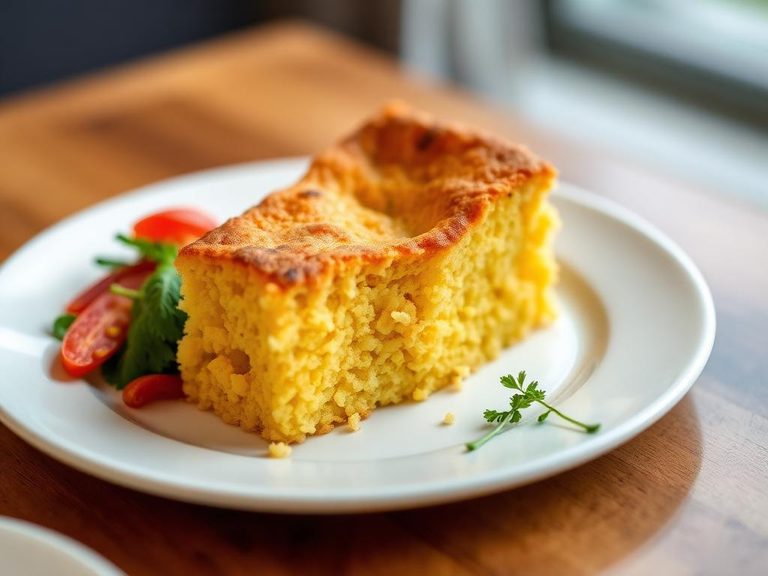
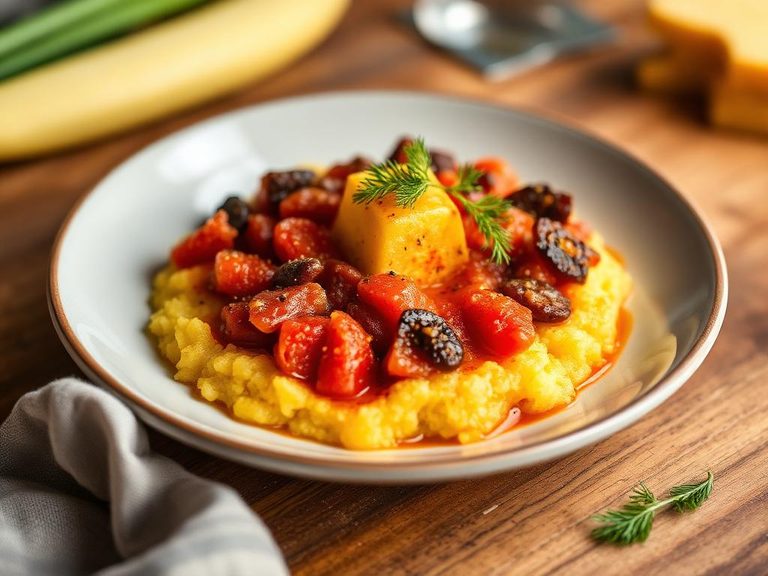


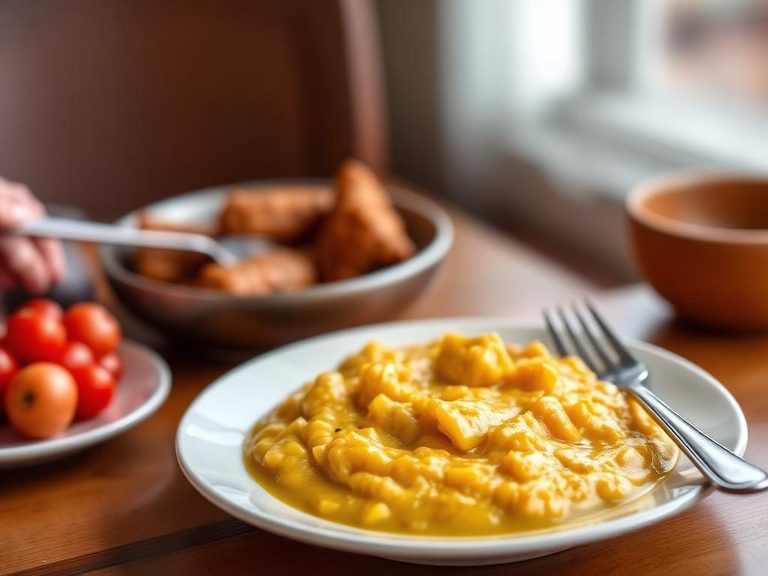
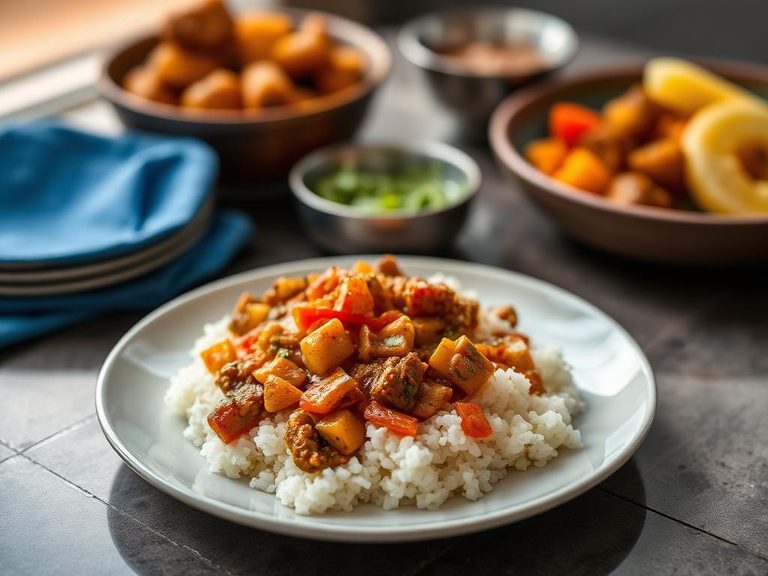
🌍 Where it's eaten
💡 Did you know?
The degerming process, which removes the oily germ, dramatically extends the cornmeal's shelf life from a few weeks to over a year, but it also strips away many of the natural B vitamins and minerals, which is why it's 'enriched' to add them back.
Full nutrition (USDA data · scales with serving)
| Water | 11.2 g |
| Energy | 370 kcal |
| Energy | 1547 kj |
| Protein | 7.1 g |
| Total lipid (fat) | 1.8 g |
| Ash | 0.51 g |
| Carbohydrate, by difference | 79.5 g |
| Fiber, total dietary | 3.9 g |
| Total Sugars | 1.6 g |
| Sucrose | 0.68 g |
| Glucose | 0.56 g |
| Fructose | 0.17 g |
| Lactose | 0.00 g |
| Maltose | 0.19 g |
| Galactose | 0.00 g |
| Starch | 73.3 g |
| Calcium, Ca | 3.0 mg |
| Iron, Fe | 4.4 mg |
| Magnesium, Mg | 32.0 mg |
| Phosphorus, P | 99.0 mg |
| Potassium, K | 142 mg |
| Sodium, Na | 7.0 mg |
| Zinc, Zn | 0.66 mg |
| Copper, Cu | 0.08 mg |
| Manganese, Mn | 0.17 mg |
| Selenium, Se | 10.5 ug |
| Vitamin C, total ascorbic acid | 0.00 mg |
| Thiamin | 0.55 mg |
| Riboflavin | 0.38 mg |
| Niacin | 5.0 mg |
| Pantothenic acid | 0.24 mg |
| Vitamin B-6 | 0.18 mg |
| Folate, total | 209 ug |
| Folic acid | 180 ug |
| Folate, food | 30.0 ug |
| Folate, DFE | 335 ug |
| Choline, total | 8.6 mg |
| Betaine | 1.0 mg |
| Vitamin B-12 | 0.00 ug |
| Vitamin B-12, added | 0.00 ug |
| Vitamin A, RAE | 11.0 ug |
| Retinol | 0.00 ug |
| Carotene, beta | 97.0 ug |
| Carotene, alpha | 63.0 ug |
| Cryptoxanthin, beta | 0.00 ug |
| Vitamin A, IU | 214 iu |
| Lycopene | 0.00 ug |
| Lutein + zeaxanthin | 1628 ug |
| Vitamin E (alpha-tocopherol) | 0.12 mg |
| Vitamin E, added | 0.00 mg |
| Tocopherol, beta | 0.02 mg |
| Tocopherol, gamma | 0.45 mg |
| Tocopherol, delta | 0.04 mg |
| Tocotrienol, alpha | 0.35 mg |
| Tocotrienol, beta | 0.00 mg |
| Tocotrienol, gamma | 0.58 mg |
| Tocotrienol, delta | 0.00 mg |
| Vitamin D (D2 + D3), International Units | 0.00 iu |
| Vitamin D (D2 + D3) | 0.00 ug |
| Vitamin K (phylloquinone) | 0.00 ug |
| Vitamin K (Dihydrophylloquinone) | 0.00 ug |
| Alcohol, ethyl | 0.00 g |
| Caffeine | 0.00 mg |
| Theobromine | 0.00 mg |
Fat & fatty acid profile (per 100g)
| Fatty acids, total saturated | 0.22 g |
| SFA 4:0 | 0.00 g |
| SFA 6:0 | 0.00 g |
| SFA 8:0 | 0.00 g |
| SFA 10:0 | 0.00 g |
| SFA 12:0 | 0.00 g |
| SFA 13:0 | 0.00 g |
| SFA 14:0 | 0.00 g |
| SFA 15:0 | 0.00 g |
| SFA 16:0 | 0.17 g |
| SFA 17:0 | 0.00 g |
| SFA 18:0 | 0.04 g |
| SFA 20:0 | 0.00 g |
| SFA 22:0 | 0.00 g |
| SFA 24:0 | 0.00 g |
| Fatty acids, total monounsaturated | 0.39 g |
| MUFA 14:1 | 0.00 g |
| MUFA 15:1 | 0.00 g |
| MUFA 16:1 | 0.00 g |
| MUFA 17:1 | 0.00 g |
| MUFA 18:1 | 0.39 g |
| MUFA 20:1 | 0.00 g |
| MUFA 22:1 | 0.00 g |
| MUFA 24:1 c | 0.00 g |
| Fatty acids, total polyunsaturated | 0.83 g |
| PUFA 18:2 | 0.81 g |
| PUFA 18:3 | 0.02 g |
| PUFA 18:3 n-6 c,c,c | 0.00 g |
| PUFA 18:4 | 0.00 g |
| PUFA 20:2 n-6 c,c | 0.00 g |
| PUFA 20:3 | 0.00 g |
| PUFA 20:4 | 0.00 g |
| PUFA 20:5 n-3 (EPA) | 0.00 g |
| PUFA 21:5 | 0.00 g |
| PUFA 22:4 | 0.00 g |
| PUFA 22:5 n-3 (DPA) | 0.00 g |
| PUFA 22:6 n-3 (DHA) | 0.00 g |
| Fatty acids, total trans | 0.00 g |
| Fatty acids, total trans-monoenoic | 0.00 g |
| TFA 18:1 t | 0.00 g |
| Cholesterol | 0.00 mg |
Amino acid profile (per 100g)
| Tryptophan | 0.04 g |
| Threonine | 0.17 g |
| Isoleucine | 0.24 g |
| Leucine | 1.0 g |
| Lysine | 0.10 g |
| Methionine | 0.16 g |
| Cystine | 0.16 g |
| Phenylalanine | 0.37 g |
| Tyrosine | 0.19 g |
| Valine | 0.34 g |
| Arginine | 0.24 g |
| Histidine | 0.17 g |
| Alanine | 0.56 g |
| Aspartic acid | 0.47 g |
| Glutamic acid | 1.5 g |
| Glycine | 0.22 g |
| Proline | 0.75 g |
| Serine | 0.34 g |
| Hydroxyproline | 0.00 g |
FAQ
What's the difference between degermed and whole-grain cornmeal?
Degermed cornmeal has the germ and bran removed, making it finer, lighter in color, and longer-lasting, but with less fiber and nutrients. Whole-grain cornmeal retains all parts of the kernel, offering more fiber, fat, and a nuttier flavor.
Is yellow cornmeal the same as polenta?
Polenta is a dish made from cornmeal, typically coarsely ground, but 'polenta' can also refer to the specific coarse grind itself. Yellow cornmeal can be used to make polenta, but it's often a finer grind.
How should I store this cornmeal to keep it fresh?
Store it in an airtight container in a cool, dark, and dry place like a pantry. For longer storage, you can refrigerate or freeze it to prevent the small amount of residual fat from going rancid.
Nutrient density (calculated · NRF9.3)
Nutrient Rich Foods index: beneficial nutrients (protein, fiber, vitamins, minerals) minus saturated fat, added sugar & sodium, per 100 kcal.
NRF9.3 index — Fulgoni, Keast & Drewnowski, 2009. Computed from USDA nutrients.
Weight-loss friendliness (composite index)
Energy density 3.70 kcal/g · 8% calories from protein · 3.9 g fiber · 1.6 g sugar per 100 g.
Composite of energy density (Rolls et al., 1999), protein & fiber satiety, minus sugar. A calculated heuristic — ranks satiety-per-calorie, not a clinical measure.
Dietary load (calculated from USDA values)
Potential renal acid load. Positive = acid-forming, negative = alkaline-forming.
Sodium-to-potassium ratio: 0.05 (lower is better — aim for ≤ 1)
Sodium:potassium per WHO potassium guidance. Computed from USDA nutrients.