

Chicken, broiler or fryers, breast, skinless, boneless, meat only, with added solution, cooked, braised
Whole food · Poultry Products
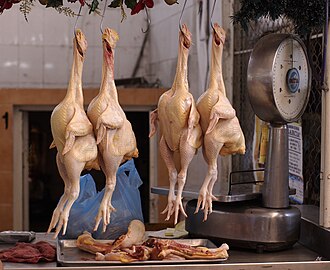
Photo: Wikipedia
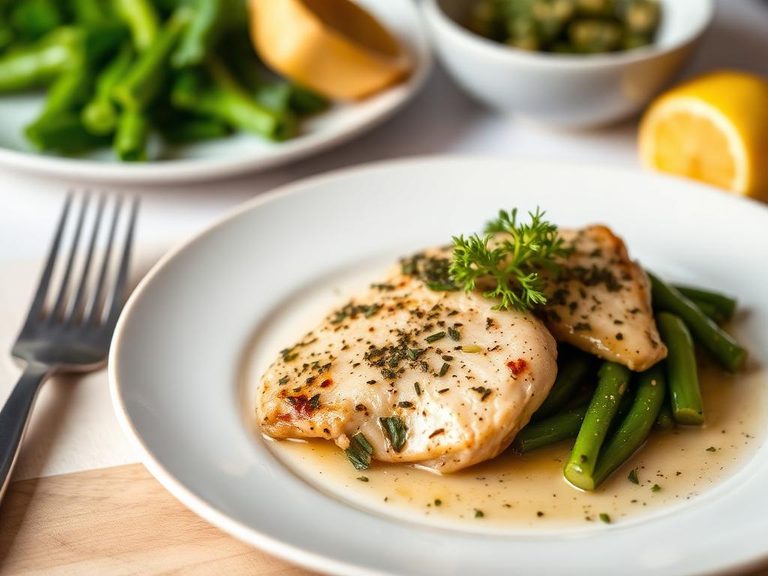
This is lean, braised chicken breast that has been plumped with a solution to enhance juiciness and tenderness. The braising process results in a moist, tender texture with a mild, savory flavor. It's a powerhouse of lean protein, delivering over 28 grams per 100 grams with virtually no carbohydrates or sugar.
Calorie split: 78% protein · 0% carbs · 22% fat
↓ Full nutrition💚 Why it's loved
People love it for its incredible versatility and reliable leanness, making it a go-to for healthy eating without sacrificing protein. Its mild flavor acts as a perfect canvas for bold marinades, spices, and sauces from any cuisine.
⚠️ Watch-outs & how to enjoy it better
The 'added solution' (often a saline or broth mixture) can significantly increase the sodium content, which is a concern for those monitoring blood pressure. To counteract this, rinse the chicken briefly before cooking and pair it with potassium-rich vegetables like leafy greens or sweet potatoes to help balance electrolytes. Always check the label for specific sodium content.
Key benefits
- Excellent source of complete, high-quality protein
- Very low in fat, especially saturated fat
- Zero carbohydrates and sugar, ideal for low-carb diets
- Versatile base for countless healthy meal preparations
- The braising method helps retain moisture and nutrients
🍽️ Popular dishes
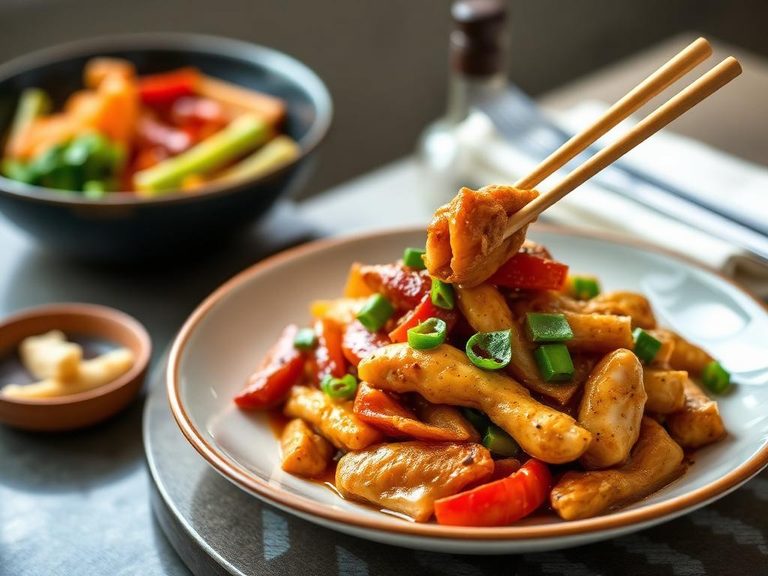
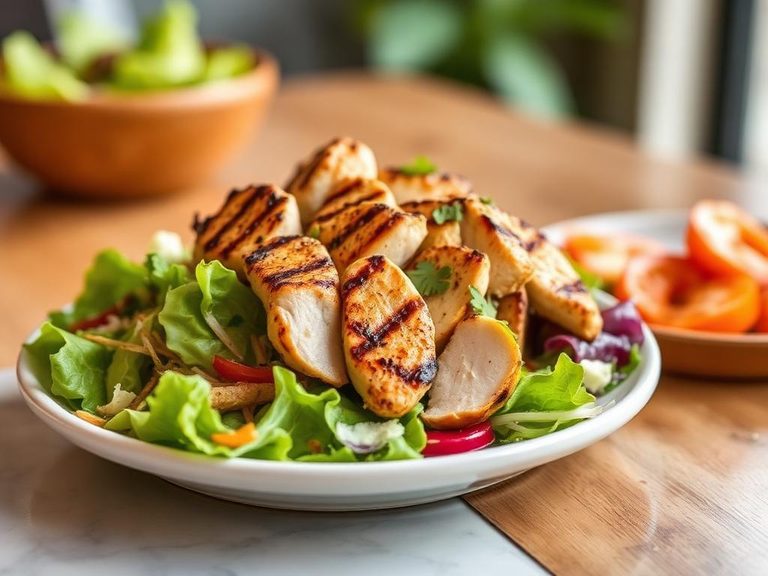

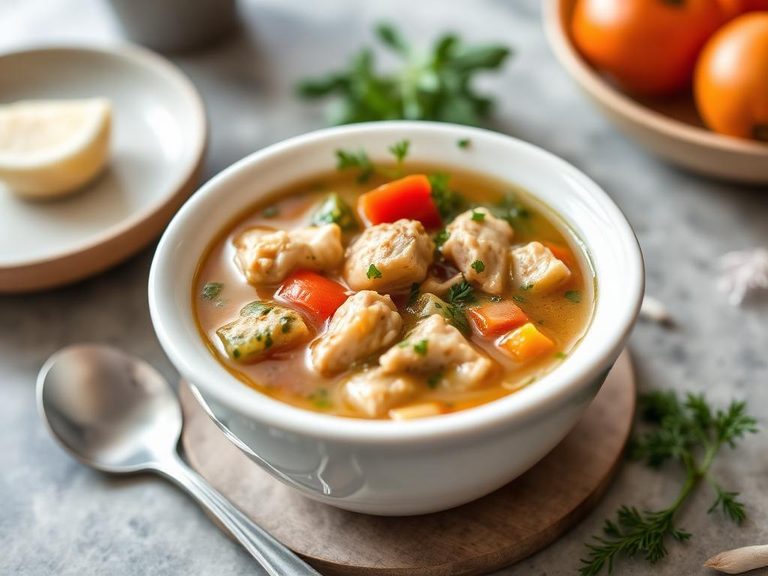
🌍 Where it's eaten
💡 Did you know?
The 'added solution' can account for up to 15% of the product's weight, meaning you might be paying for added water and broth, not just pure chicken meat.
Full nutrition (USDA data · scales with serving)
| Water | 68.0 g |
| Energy | 145 kcal |
| Energy | 609 kj |
| Protein | 28.2 g |
| Total lipid (fat) | 3.6 g |
| Ash | 1.3 g |
| Carbohydrate, by difference | 0.00 g |
| Fiber, total dietary | 0.00 g |
| Total Sugars | 0.00 g |
| Calcium, Ca | 5.0 mg |
| Iron, Fe | 0.43 mg |
| Magnesium, Mg | 28.0 mg |
| Phosphorus, P | 217 mg |
| Potassium, K | 313 mg |
| Sodium, Na | 172 mg |
| Zinc, Zn | 0.80 mg |
| Copper, Cu | 0.03 mg |
| Manganese, Mn | 0.01 mg |
| Selenium, Se | 40.2 ug |
| Vitamin C, total ascorbic acid | 0.00 mg |
| Thiamin | 0.07 mg |
| Riboflavin | 0.17 mg |
| Niacin | 9.2 mg |
| Pantothenic acid | 1.3 mg |
| Vitamin B-6 | 0.96 mg |
| Vitamin B-12 | 0.17 ug |
| Vitamin B-12, added | 0.00 ug |
| Vitamin A, RAE | 9.0 ug |
| Retinol | 9.0 ug |
| Carotene, beta | 0.00 ug |
| Carotene, alpha | 0.00 ug |
| Cryptoxanthin, beta | 0.00 ug |
| Vitamin A, IU | 31.0 iu |
| Lycopene | 0.00 ug |
| Lutein + zeaxanthin | 0.00 ug |
| Vitamin E (alpha-tocopherol) | 0.42 mg |
| Vitamin E, added | 0.00 mg |
| Tocopherol, beta | 0.00 mg |
| Tocopherol, gamma | 0.05 mg |
| Tocopherol, delta | 0.00 mg |
| Tocotrienol, alpha | 0.02 mg |
| Tocotrienol, beta | 0.00 mg |
| Tocotrienol, gamma | 0.00 mg |
| Tocotrienol, delta | 0.00 mg |
| Vitamin D (D2 + D3), International Units | 1.0 iu |
| Vitamin D (D2 + D3) | 0.00 ug |
| Vitamin D3 (cholecalciferol) | 0.00 ug |
| Alcohol, ethyl | 0.00 g |
| Caffeine | 0.00 mg |
| Theobromine | 0.00 mg |
Fat & fatty acid profile (per 100g)
| Fatty acids, total saturated | 1.2 g |
| SFA 4:0 | 0.00 g |
| SFA 6:0 | 0.00 g |
| SFA 8:0 | 0.00 g |
| SFA 10:0 | 0.01 g |
| SFA 12:0 | 0.00 g |
| SFA 14:0 | 0.02 g |
| SFA 15:0 | 0.00 g |
| SFA 16:0 | 0.87 g |
| SFA 17:0 | 0.00 g |
| SFA 18:0 | 0.27 g |
| SFA 20:0 | 0.00 g |
| SFA 22:0 | 0.01 g |
| SFA 24:0 | 0.00 g |
| Fatty acids, total monounsaturated | 1.6 g |
| MUFA 14:1 | 0.01 g |
| MUFA 15:1 | 0.00 g |
| MUFA 16:1 | 0.20 g |
| MUFA 16:1 c | 0.20 g |
| MUFA 17:1 | 0.00 g |
| MUFA 18:1 | 1.3 g |
| MUFA 18:1 c | 1.3 g |
| MUFA 20:1 | 0.02 g |
| MUFA 22:1 | 0.00 g |
| MUFA 22:1 c | 0.00 g |
| MUFA 24:1 c | 0.00 g |
| Fatty acids, total polyunsaturated | 0.79 g |
| PUFA 18:2 | 0.63 g |
| PUFA 18:2 n-6 c,c | 0.62 g |
| PUFA 18:2 CLAs | 0.00 g |
| PUFA 18:3 | 0.02 g |
| PUFA 18:3 n-3 c,c,c (ALA) | 0.02 g |
| PUFA 18:3 n-6 c,c,c | 0.00 g |
| PUFA 18:3i | 0.00 g |
| PUFA 18:4 | 0.00 g |
| PUFA 20:2 n-6 c,c | 0.01 g |
| PUFA 20:3 | 0.02 g |
| PUFA 20:3 n-3 | 0.00 g |
| PUFA 20:3 n-6 | 0.02 g |
| PUFA 20:4 | 0.08 g |
| PUFA 20:5 n-3 (EPA) | 0.00 g |
| PUFA 22:4 | 0.02 g |
| PUFA 22:5 n-3 (DPA) | 0.01 g |
| PUFA 22:6 n-3 (DHA) | 0.01 g |
| Fatty acids, total trans | 0.01 g |
| Fatty acids, total trans-monoenoic | 0.01 g |
| TFA 16:1 t | 0.00 g |
| TFA 18:1 t | 0.01 g |
| TFA 22:1 t | 0.00 g |
| TFA 18:2 t not further defined | 0.00 g |
| Fatty acids, total trans-polyenoic | 0.00 g |
| Cholesterol | 99.0 mg |
Amino acid profile (per 100g)
| Tryptophan | 0.36 g |
| Threonine | 1.3 g |
| Isoleucine | 1.4 g |
| Leucine | 2.3 g |
| Lysine | 2.7 g |
| Methionine | 0.73 g |
| Cystine | 0.30 g |
| Phenylalanine | 1.1 g |
| Tyrosine | 1.0 g |
| Valine | 1.5 g |
| Arginine | 1.9 g |
| Histidine | 1.1 g |
| Alanine | 1.6 g |
| Aspartic acid | 2.7 g |
| Glutamic acid | 4.2 g |
| Glycine | 1.3 g |
| Proline | 0.90 g |
| Serine | 1.1 g |
FAQ
What does 'with added solution' mean?
It means the chicken was injected or marinated in a mixture (often water, salt, and flavorings) before packaging to increase weight, juiciness, and tenderness. This can add sodium and change the texture.
Is braised chicken breast healthy?
Yes, it's an exceptionally lean protein source. Braising is a moist-heat cooking method that doesn't require added fats, helping keep the dish low in calories and fat while ensuring the meat stays tender.
How can I reduce the sodium from the added solution?
Rinse the chicken under cool water for 30-60 seconds and pat dry before cooking. Using fresh herbs, citrus juice, and salt-free spice blends for flavor can also help you avoid adding extra salt.
Nutrient density (calculated · NRF9.3)
Nutrient Rich Foods index: beneficial nutrients (protein, fiber, vitamins, minerals) minus saturated fat, added sugar & sodium, per 100 kcal.
NRF9.3 index — Fulgoni, Keast & Drewnowski, 2009. Computed from USDA nutrients.
Weight-loss friendliness (composite index)
Energy density 1.45 kcal/g · 78% calories from protein · 0.0 g fiber · 0.0 g sugar per 100 g.
Composite of energy density (Rolls et al., 1999), protein & fiber satiety, minus sugar. A calculated heuristic — ranks satiety-per-calorie, not a clinical measure.
Dietary load (calculated from USDA values)
Potential renal acid load. Positive = acid-forming, negative = alkaline-forming.
Sodium-to-potassium ratio: 0.55 (lower is better — aim for ≤ 1)
Sodium:potassium per WHO potassium guidance. Computed from USDA nutrients.