

Turkey, retail parts, breast, meat only, cooked, roasted
Whole food · Poultry Products

Photo: Wikipedia
Roasted turkey breast is the lean, white-meat powerhouse of the holiday table, prized for its mild, subtly savory flavor and firm yet tender texture. It's a nutritional standout, delivering an exceptionally high protein-to-calorie ratio with virtually no fat or carbohydrates, making it a staple for clean eating and muscle maintenance.
Calorie split: 87% protein · 0% carbs · 13% fat
↓ Full nutrition💚 Why it's loved
People love roasted turkey breast for its incredible versatility—it's a blank canvas that absorbs marinades and seasonings beautifully, fitting seamlessly into salads, sandwiches, or as a classic dinner centerpiece. Its association with festive gatherings and comfort food also gives it a strong cultural appeal.
⚠️ Watch-outs & how to enjoy it better
The primary downside is its tendency to be dry and bland if overcooked or prepared without added moisture or fat. To counteract this, brine the breast before cooking, roast it to a precise internal temperature (165°F/74°C) and let it rest, or pair it with a flavorful sauce, gravy, or healthy fat like avocado to enhance moisture and satisfaction.
Key benefits
- Extremely high in lean protein (29.5g per 100g).
- Very low in fat (under 2g per 100g).
- Carb-free, making it ideal for low-carb and ketogenic diets.
- Rich in B vitamins like niacin (B3) and B6, essential for energy metabolism.
- A good source of selenium, an important antioxidant mineral.
🍽️ Popular dishes
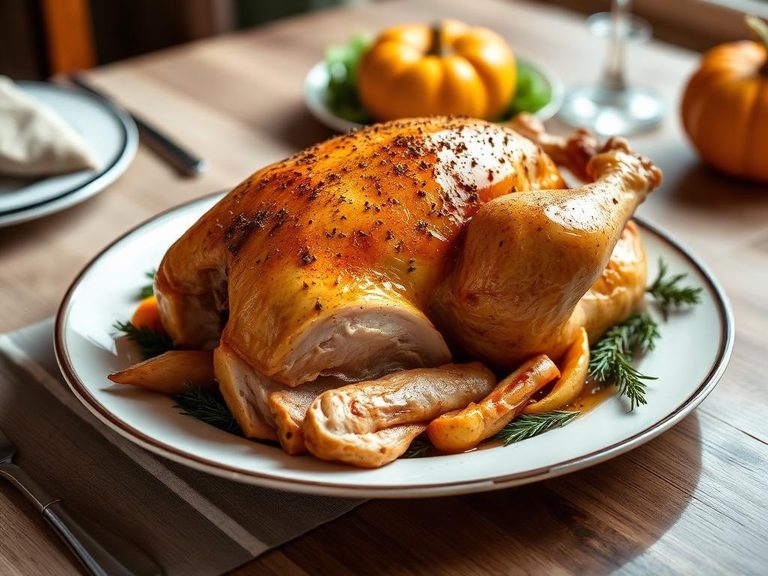
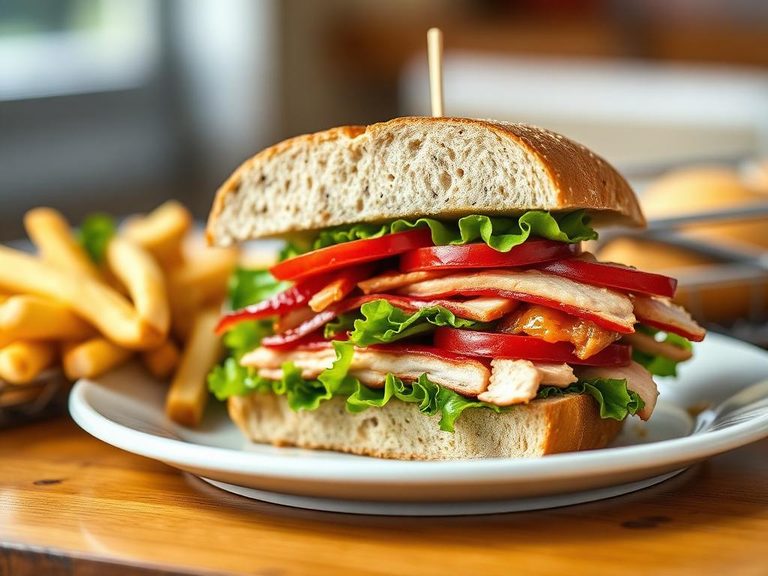
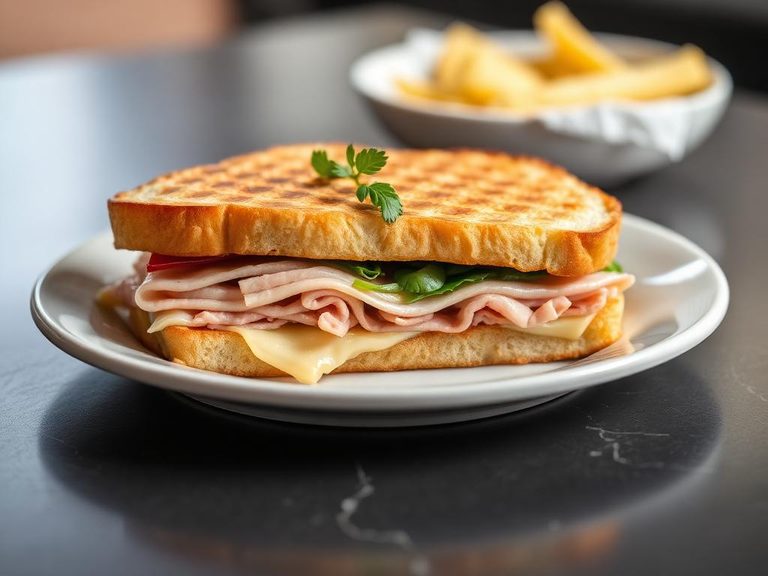

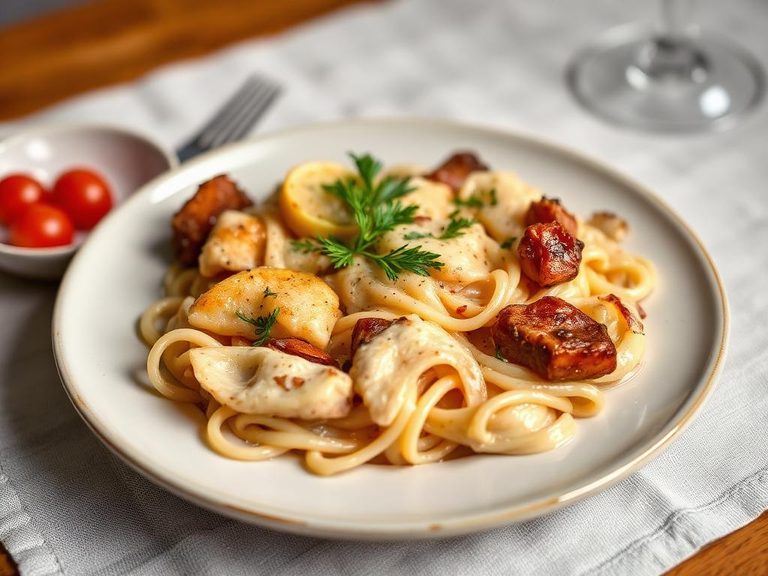
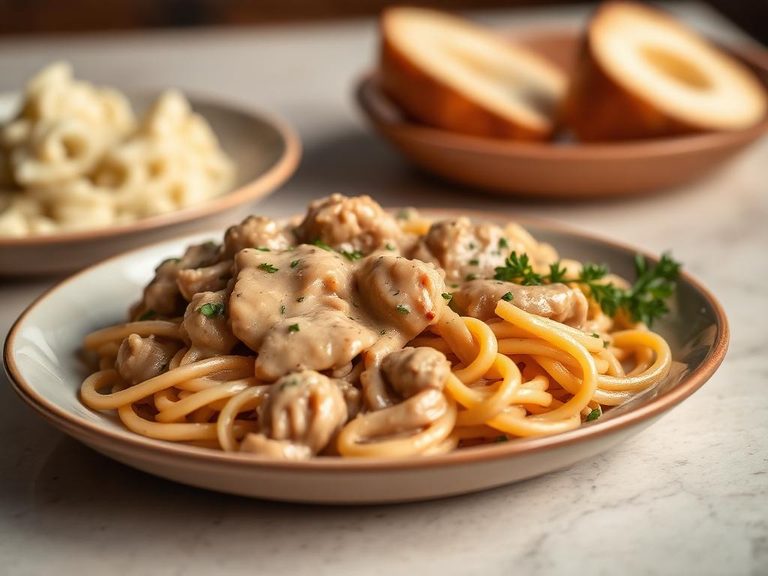
🌍 Where it's eaten
💡 Did you know?
The wild turkey was almost made the national bird of the United States, but Benjamin Franklin famously argued it was a 'much more respectable Bird' than the bald eagle, though he never formally proposed it.
Full nutrition (USDA data · scales with serving)
| Water | 67.5 g |
| Energy | 136 kcal |
| Energy | 568 kj |
| Protein | 29.5 g |
| Total lipid (fat) | 2.0 g |
| Ash | 1.3 g |
| Carbohydrate, by difference | 0.00 g |
| Fiber, total dietary | 0.00 g |
| Total Sugars | 0.00 g |
| Calcium, Ca | 14.0 mg |
| Iron, Fe | 0.97 mg |
| Magnesium, Mg | 28.0 mg |
| Phosphorus, P | 253 mg |
| Potassium, K | 297 mg |
| Sodium, Na | 114 mg |
| Zinc, Zn | 1.5 mg |
| Copper, Cu | 0.06 mg |
| Manganese, Mn | 0.01 mg |
| Selenium, Se | 30.7 ug |
| Vitamin C, total ascorbic acid | 0.00 mg |
| Thiamin | 0.04 mg |
| Riboflavin | 0.19 mg |
| Niacin | 11.8 mg |
| Pantothenic acid | 1.0 mg |
| Vitamin B-6 | 0.83 mg |
| Folate, total | 9.0 ug |
| Folic acid | 0.00 ug |
| Folate, food | 9.0 ug |
| Folate, DFE | 9.0 ug |
| Choline, total | 76.4 mg |
| Betaine | 3.2 mg |
| Vitamin B-12 | 1.8 ug |
| Vitamin B-12, added | 0.00 ug |
| Vitamin A, RAE | 3.0 ug |
| Retinol | 3.0 ug |
| Carotene, beta | 0.00 ug |
| Carotene, alpha | 0.00 ug |
| Cryptoxanthin, beta | 0.00 ug |
| Vitamin A, IU | 9.0 iu |
| Lycopene | 0.00 ug |
| Lutein + zeaxanthin | 7.0 ug |
| Vitamin E (alpha-tocopherol) | 0.06 mg |
| Vitamin E, added | 0.00 mg |
| Vitamin D (D2 + D3), International Units | 10.0 iu |
| Vitamin D (D2 + D3) | 0.20 ug |
| Vitamin D3 (cholecalciferol) | 0.20 ug |
| Vitamin K (phylloquinone) | 0.00 ug |
| Alcohol, ethyl | 0.00 g |
| Caffeine | 0.00 mg |
| Theobromine | 0.00 mg |
Fat & fatty acid profile (per 100g)
| Fatty acids, total saturated | 0.66 g |
| SFA 4:0 | 0.00 g |
| SFA 6:0 | 0.00 g |
| SFA 8:0 | 0.00 g |
| SFA 10:0 | 0.00 g |
| SFA 12:0 | 0.00 g |
| SFA 14:0 | 0.02 g |
| SFA 15:0 | 0.00 g |
| SFA 16:0 | 0.40 g |
| SFA 17:0 | 0.01 g |
| SFA 18:0 | 0.21 g |
| SFA 20:0 | 0.00 g |
| SFA 22:0 | 0.00 g |
| SFA 24:0 | 0.00 g |
| Fatty acids, total monounsaturated | 0.64 g |
| MUFA 14:1 | 0.00 g |
| MUFA 15:1 | 0.00 g |
| MUFA 16:1 | 0.04 g |
| MUFA 16:1 c | 0.04 g |
| MUFA 17:1 | 0.00 g |
| MUFA 18:1 | 0.58 g |
| MUFA 18:1 c | 0.56 g |
| MUFA 20:1 | 0.01 g |
| MUFA 22:1 | 0.00 g |
| MUFA 22:1 c | 0.00 g |
| MUFA 24:1 c | 0.00 g |
| Fatty acids, total polyunsaturated | 0.67 g |
| PUFA 18:2 | 0.55 g |
| PUFA 18:2 n-6 c,c | 0.54 g |
| PUFA 18:2 CLAs | 0.00 g |
| PUFA 18:3 | 0.04 g |
| PUFA 18:3 n-3 c,c,c (ALA) | 0.03 g |
| PUFA 18:3 n-6 c,c,c | 0.00 g |
| PUFA 18:4 | 0.00 g |
| PUFA 20:2 n-6 c,c | 0.01 g |
| PUFA 20:3 | 0.01 g |
| PUFA 20:3 n-3 | 0.00 g |
| PUFA 20:3 n-6 | 0.01 g |
| PUFA 20:4 | 0.05 g |
| PUFA 20:5 n-3 (EPA) | 0.00 g |
| PUFA 22:4 | 0.01 g |
| PUFA 22:5 n-3 (DPA) | 0.01 g |
| PUFA 22:6 n-3 (DHA) | 0.01 g |
| Fatty acids, total trans | 0.02 g |
| Fatty acids, total trans-monoenoic | 0.02 g |
| TFA 16:1 t | 0.00 g |
| TFA 18:1 t | 0.02 g |
| TFA 22:1 t | 0.00 g |
| TFA 18:2 t not further defined | 0.01 g |
| Fatty acids, total trans-polyenoic | 0.01 g |
| Cholesterol | 70.0 mg |
Amino acid profile (per 100g)
| Tryptophan | 0.36 g |
| Threonine | 1.3 g |
| Isoleucine | 1.1 g |
| Leucine | 2.4 g |
| Lysine | 3.0 g |
| Methionine | 0.82 g |
| Cystine | 0.28 g |
| Phenylalanine | 1.1 g |
| Tyrosine | 1.0 g |
| Valine | 1.1 g |
| Arginine | 1.9 g |
| Histidine | 0.90 g |
| Alanine | 1.8 g |
| Aspartic acid | 2.8 g |
| Glutamic acid | 4.5 g |
| Glycine | 1.4 g |
| Proline | 1.4 g |
| Serine | 1.2 g |
FAQ
Is roasted turkey breast a good source of protein?
Yes, it's an excellent source. With nearly 30 grams of protein per 100 grams, it's one of the leanest and most protein-dense meats available, making it ideal for muscle building and satiety.
How can I keep roasted turkey breast from drying out?
Brining the turkey in a saltwater solution before cooking helps it retain moisture. Also, avoid overcooking by using a meat thermometer and letting the meat rest for 10-15 minutes after roasting to allow juices to redistribute.
Is turkey breast healthier than chicken breast?
They are very similar nutritionally, both being lean, high-protein meats. Turkey breast is slightly higher in protein and lower in fat per 100g, but the difference is minimal. The best choice often comes down to personal taste and availability.
Nutrient density (calculated · NRF9.3)
Nutrient Rich Foods index: beneficial nutrients (protein, fiber, vitamins, minerals) minus saturated fat, added sugar & sodium, per 100 kcal.
NRF9.3 index — Fulgoni, Keast & Drewnowski, 2009. Computed from USDA nutrients.
Weight-loss friendliness (composite index)
Energy density 1.36 kcal/g · 87% calories from protein · 0.0 g fiber · 0.0 g sugar per 100 g.
Composite of energy density (Rolls et al., 1999), protein & fiber satiety, minus sugar. A calculated heuristic — ranks satiety-per-calorie, not a clinical measure.
Dietary load (calculated from USDA values)
Potential renal acid load. Positive = acid-forming, negative = alkaline-forming.
Sodium-to-potassium ratio: 0.38 (lower is better — aim for ≤ 1)
Sodium:potassium per WHO potassium guidance. Computed from USDA nutrients.