

SUBWAY, steak & cheese sub on white bread with American cheese, lettuce and tomato
Whole food · Fast Foods

Photo: Wikipedia
A classic American submarine sandwich featuring tender, seasoned steak slices, melted American cheese, crisp lettuce, and juicy tomato on soft, white bread. It delivers a satisfying savory bite with a mild, creamy cheese pull and fresh, crunchy contrast. Nutritionally, it offers a solid protein base from the steak, though it's relatively light in calories per 100 grams.
Calorie split: 27% protein · 47% carbs · 26% fat
↓ Full nutrition💚 Why it's loved
People love it for the comforting, familiar combination of savory steak, gooey cheese, and fresh vegetables in a handheld format. It's a quick, satisfying lunch staple that balances hearty protein with the lightness of fresh toppings.
⚠️ Watch-outs & how to enjoy it better
The white bread and American cheese can contribute to a rapid blood-sugar spike, and the overall sodium content may be high. To counteract this, pair it with a side salad or extra vegetables to add fiber, and consider choosing whole-grain bread if available to slow digestion.
Key benefits
- Good source of protein from beef steak
- Provides energy from carbohydrate-rich bread
- Contains fresh vegetables for added texture and micronutrients
- Convenient, portable meal format
- Customizable with different toppings and sauces
🍽️ Popular dishes
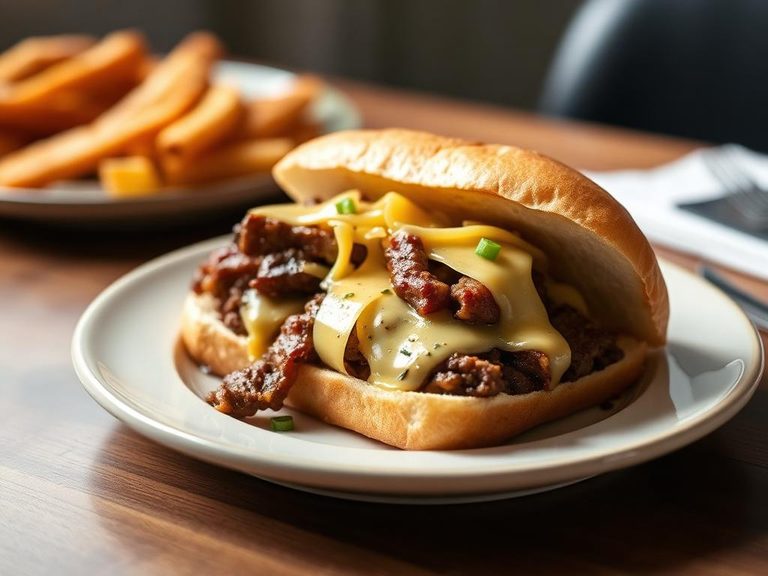
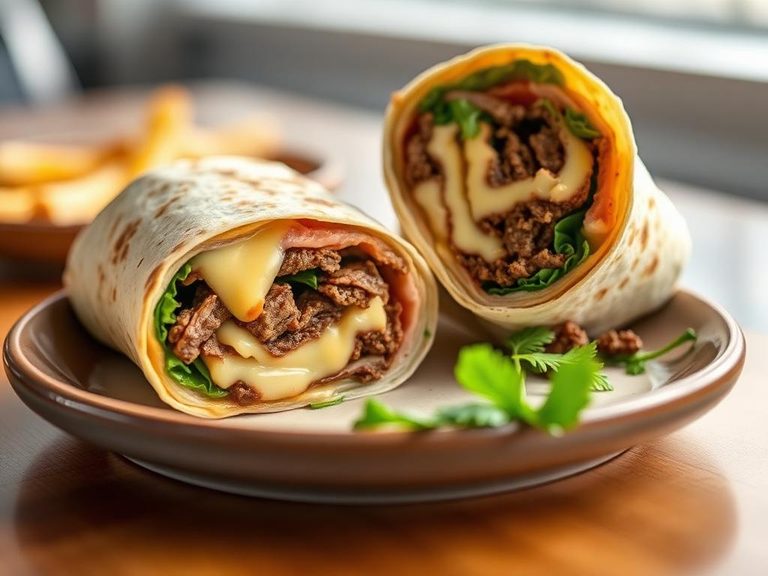
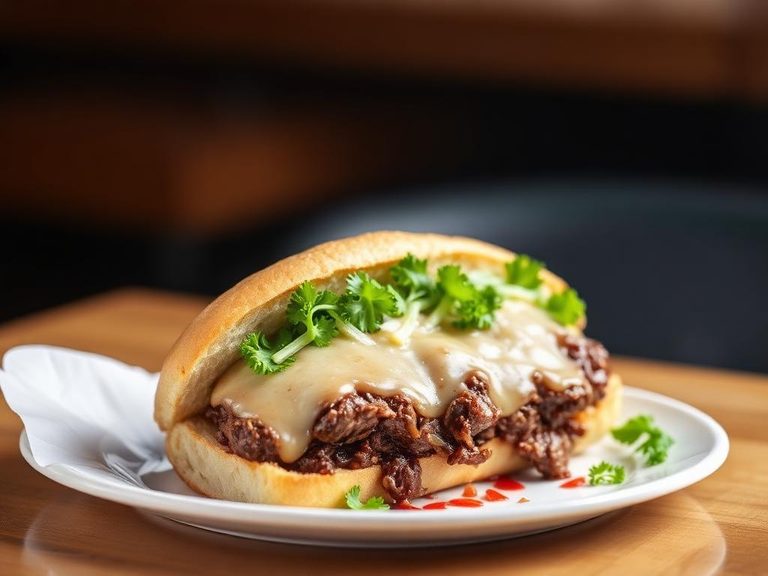
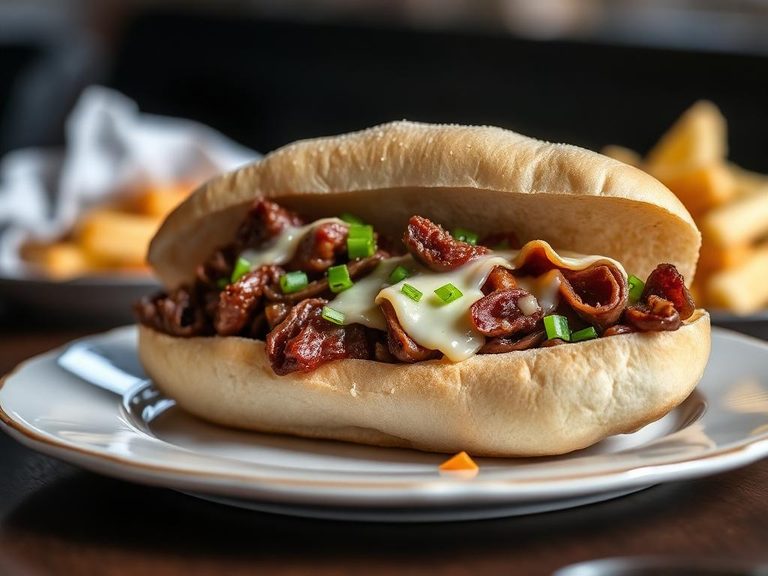
🌍 Where it's eaten
💡 Did you know?
The modern 'submarine sandwich' name is widely believed to have originated from the resemblance of the long sandwich to the shape of a submarine, with early references appearing in the early 20th century in American port cities.
Full nutrition (USDA data · scales with serving)
| Water | 58.9 g |
| Energy | 183 kcal |
| Energy | 766 kj |
| Protein | 12.3 g |
| Total lipid (fat) | 5.3 g |
| Ash | 2.0 g |
| Carbohydrate, by difference | 21.5 g |
| Fiber, total dietary | 1.2 g |
| Total Sugars | 3.4 g |
| Sucrose | 0.00 g |
| Glucose | 1.4 g |
| Fructose | 1.4 g |
| Lactose | 0.00 g |
| Maltose | 0.60 g |
| Galactose | 0.00 g |
| Starch | 16.4 g |
| Calcium, Ca | 183 mg |
| Iron, Fe | 2.0 mg |
| Magnesium, Mg | 22.0 mg |
| Phosphorus, P | 132 mg |
| Potassium, K | 183 mg |
| Sodium, Na | 444 mg |
| Zinc, Zn | 2.0 mg |
| Copper, Cu | 0.09 mg |
| Manganese, Mn | 0.28 mg |
| Selenium, Se | 17.5 ug |
| Vitamin C, total ascorbic acid | 0.60 mg |
| Thiamin | 0.25 mg |
| Riboflavin | 0.26 mg |
| Niacin | 3.6 mg |
| Pantothenic acid | 0.44 mg |
| Vitamin B-6 | 0.19 mg |
| Folate, total | 63.0 ug |
| Vitamin B-12 | 0.58 ug |
| Vitamin A, RAE | 12.0 ug |
| Retinol | 9.0 ug |
| Carotene, beta | 33.0 ug |
| Carotene, alpha | 0.00 ug |
| Cryptoxanthin, beta | 0.00 ug |
| Vitamin A, IU | 87.0 iu |
| Lycopene | 203 ug |
| Lutein + zeaxanthin | 56.0 ug |
| Vitamin E (alpha-tocopherol) | 0.40 mg |
| Tocopherol, beta | 0.06 mg |
| Tocopherol, gamma | 0.44 mg |
| Tocopherol, delta | 0.15 mg |
| Tocotrienol, alpha | 0.03 mg |
| Tocotrienol, beta | 0.40 mg |
| Tocotrienol, gamma | 0.00 mg |
| Tocotrienol, delta | 0.00 mg |
Fat & fatty acid profile (per 100g)
| Fatty acids, total saturated | 2.0 g |
| SFA 4:0 | 0.03 g |
| SFA 6:0 | 0.02 g |
| SFA 8:0 | 0.01 g |
| SFA 10:0 | 0.03 g |
| SFA 12:0 | 0.04 g |
| SFA 14:0 | 0.20 g |
| SFA 15:0 | 0.03 g |
| SFA 16:0 | 1.1 g |
| SFA 17:0 | 0.04 g |
| SFA 18:0 | 0.48 g |
| SFA 20:0 | 0.01 g |
| SFA 22:0 | 0.01 g |
| SFA 24:0 | 0.00 g |
| Fatty acids, total monounsaturated | 1.7 g |
| MUFA 14:1 | 0.03 g |
| MUFA 15:1 | 0.00 g |
| MUFA 16:1 | 0.13 g |
| MUFA 16:1 c | 0.12 g |
| MUFA 17:1 | 0.03 g |
| MUFA 18:1 | 1.5 g |
| MUFA 18:1 c | 1.4 g |
| MUFA 20:1 | 0.01 g |
| MUFA 22:1 | 0.00 g |
| MUFA 22:1 c | 0.00 g |
| MUFA 24:1 c | 0.00 g |
| Fatty acids, total polyunsaturated | 0.84 g |
| PUFA 18:2 | 0.73 g |
| PUFA 18:2 n-6 c,c | 0.69 g |
| PUFA 18:2 CLAs | 0.02 g |
| PUFA 18:3 | 0.07 g |
| PUFA 18:3 n-3 c,c,c (ALA) | 0.07 g |
| PUFA 18:3 n-6 c,c,c | 0.00 g |
| PUFA 18:3i | 0.00 g |
| PUFA 18:4 | 0.00 g |
| PUFA 20:2 n-6 c,c | 0.00 g |
| PUFA 20:3 | 0.01 g |
| PUFA 20:3 n-3 | 0.00 g |
| PUFA 20:3 n-6 | 0.01 g |
| PUFA 20:4 | 0.02 g |
| PUFA 20:5 n-3 (EPA) | 0.00 g |
| PUFA 22:4 | 0.01 g |
| PUFA 22:5 n-3 (DPA) | 0.01 g |
| PUFA 22:6 n-3 (DHA) | 0.00 g |
| Fatty acids, total trans | 0.18 g |
| Fatty acids, total trans-monoenoic | 0.16 g |
| TFA 16:1 t | 0.01 g |
| TFA 18:1 t | 0.15 g |
| TFA 22:1 t | 0.00 g |
| TFA 18:2 t not further defined | 0.02 g |
| Fatty acids, total trans-polyenoic | 0.02 g |
| Cholesterol | 24.0 mg |
Amino acid profile (per 100g)
Estimated from SUBWAY, cold cut sub on white bread with lettuce and tomato — USDA does not publish this profile for SUBWAY.
| Tryptophan | 0.10 g |
| Threonine | 0.33 g |
| Isoleucine | 0.43 g |
| Leucine | 0.75 g |
| Lysine | 0.49 g |
| Methionine | 0.21 g |
| Phenylalanine | 0.43 g |
| Tyrosine | 0.26 g |
| Valine | 0.50 g |
| Arginine | 0.50 g |
| Histidine | 0.30 g |
| Alanine | 0.48 g |
| Aspartic acid | 0.74 g |
| Glutamic acid | 2.5 g |
| Glycine | 0.45 g |
| Proline | 1.0 g |
| Serine | 0.41 g |
| Hydroxyproline | 0.07 g |
FAQ
How does this sub compare nutritionally to a roast beef sub?
A steak and cheese sub typically has slightly more fat and calories than a plain roast beef sub due to the added cheese and often fattier cut of beef used for steak, but both are comparable in protein content.
Is the steak in this sub typically processed or whole muscle?
In most quick-service restaurants like Subway, the 'steak' is a pre-seasoned, thinly sliced or chopped beef product, which may include added water, soy protein, and flavorings to ensure consistency and tenderness.
Can I make a lower-carb version at home?
Yes, you can easily make a lower-carb version by using a lettuce wrap, a low-carb tortilla, or by hollowing out the bread. Load up on extra vegetables like spinach, peppers, and onions to add volume and nutrients.
Nutrient density (calculated · NRF9.3)
Nutrient Rich Foods index: beneficial nutrients (protein, fiber, vitamins, minerals) minus saturated fat, added sugar & sodium, per 100 kcal.
NRF9.3 index — Fulgoni, Keast & Drewnowski, 2009. Computed from USDA nutrients.
Weight-loss friendliness (composite index)
Energy density 1.83 kcal/g · 27% calories from protein · 1.2 g fiber · 3.4 g sugar per 100 g.
Composite of energy density (Rolls et al., 1999), protein & fiber satiety, minus sugar. A calculated heuristic — ranks satiety-per-calorie, not a clinical measure.
Dietary load (calculated from USDA values)
Potential renal acid load. Positive = acid-forming, negative = alkaline-forming.
Sodium-to-potassium ratio: 2.43 (lower is better — aim for ≤ 1)
Sodium:potassium per WHO potassium guidance. Computed from USDA nutrients.