

SUBWAY, roast beef sub on white bread with lettuce and tomato
Whole food · Fast Foods

Photo: Wikipedia
A classic Subway roast beef sub on white bread is a soft, mild-flavored sandwich where tender, thinly sliced beef is layered with crisp lettuce and juicy tomato. The white bread provides a neutral, fluffy base, letting the savory beef and fresh vegetables shine. Nutritionally, it's a lean protein source with a moderate calorie count, making it a straightforward, filling option.
Calorie split: 31% protein · 53% carbs · 16% fat
↓ Full nutrition💚 Why it's loved
People love it for its familiar, savory comfort and the satisfying contrast between the soft bread, tender beef, and fresh crunch of lettuce and tomato. It's a reliable, customizable staple in fast-casual dining, often seen as a better-for-you fast food choice.
⚠️ Watch-outs & how to enjoy it better
The white bread offers little fiber and can cause quicker blood-sugar spikes compared to whole-grain options. To counteract this, you can ask for whole-wheat bread, add more fiber-rich vegetables like spinach or peppers, or pair the sub with a side salad instead of chips.
Key benefits
- High-quality lean protein source
- Low in total fat
- Quick and convenient meal
- Customizable with vegetables
- Provides a moderate energy boost
🍽️ Popular dishes

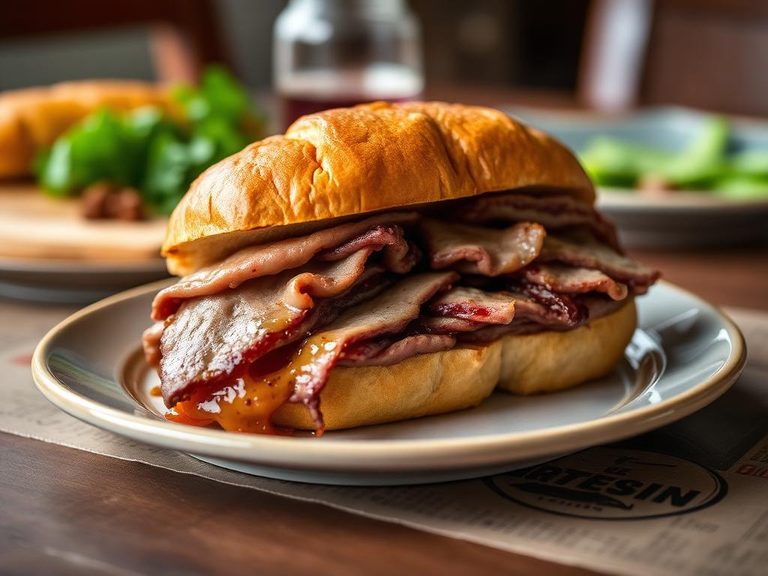
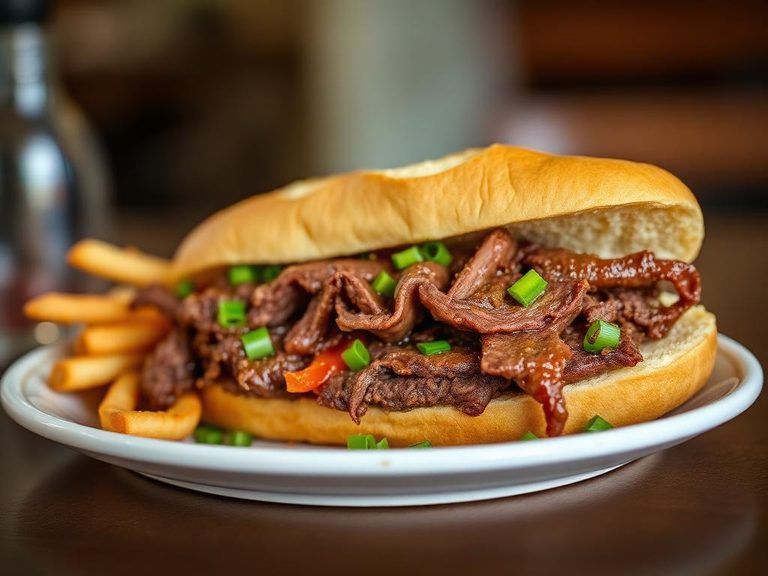
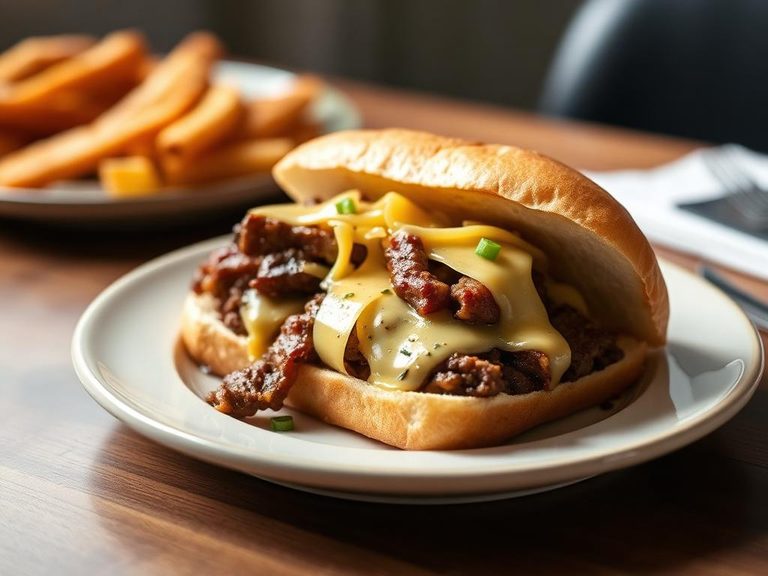
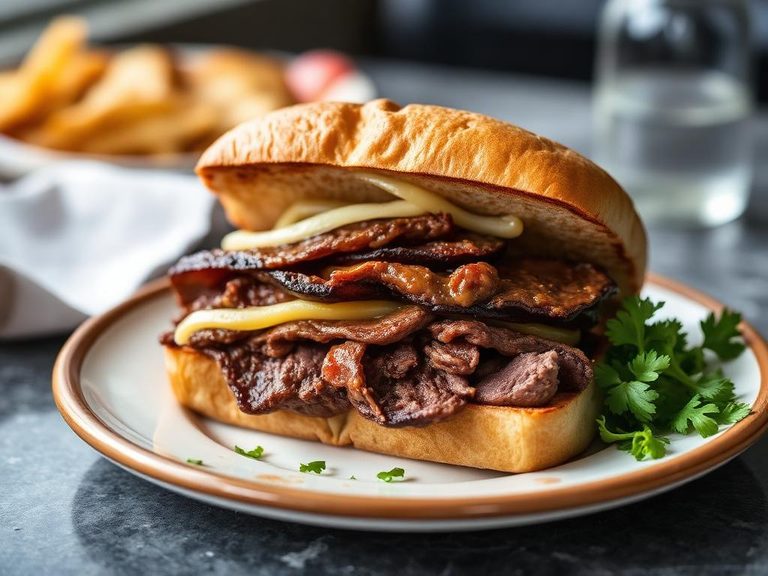
🌍 Where it's eaten
💡 Did you know?
Subway's roast beef is actually slow-roasted and then cooked again in-store, which helps it stay tender even when served cold.
Full nutrition (USDA data · scales with serving)
| Water | 63.1 g |
| Energy | 155 kcal |
| Energy | 647 kj |
| Protein | 12.2 g |
| Total lipid (fat) | 2.7 g |
| Ash | 1.7 g |
| Carbohydrate, by difference | 20.3 g |
| Fiber, total dietary | 0.70 g |
| Total Sugars | 3.0 g |
| Sucrose | 0.00 g |
| Glucose | 1.1 g |
| Fructose | 1.4 g |
| Lactose | 0.00 g |
| Maltose | 0.53 g |
| Galactose | 0.00 g |
| Starch | 15.6 g |
| Calcium, Ca | 164 mg |
| Iron, Fe | 2.1 mg |
| Magnesium, Mg | 20.0 mg |
| Phosphorus, P | 118 mg |
| Potassium, K | 188 mg |
| Sodium, Na | 329 mg |
| Zinc, Zn | 1.5 mg |
| Copper, Cu | 0.08 mg |
| Manganese, Mn | 0.27 mg |
| Selenium, Se | 17.0 ug |
| Vitamin C, total ascorbic acid | 0.00 mg |
| Thiamin | 0.23 mg |
| Riboflavin | 0.26 mg |
| Niacin | 4.2 mg |
| Pantothenic acid | 0.41 mg |
| Vitamin B-6 | 0.28 mg |
| Folate, total | 67.0 ug |
| Choline, total | 34.7 mg |
| Betaine | 19.7 mg |
| Vitamin B-12 | 0.44 ug |
| Vitamin A, RAE | 6.0 ug |
| Retinol | 3.0 ug |
| Carotene, beta | 40.0 ug |
| Carotene, alpha | 0.00 ug |
| Cryptoxanthin, beta | 2.0 ug |
| Vitamin A, IU | 77.0 iu |
| Lycopene | 213 ug |
| Lutein + zeaxanthin | 44.0 ug |
| Vitamin E (alpha-tocopherol) | 0.29 mg |
| Tocopherol, beta | 0.07 mg |
| Tocopherol, gamma | 0.43 mg |
| Tocopherol, delta | 0.13 mg |
| Tocotrienol, alpha | 0.02 mg |
| Tocotrienol, beta | 0.33 mg |
| Tocotrienol, gamma | 0.00 mg |
| Tocotrienol, delta | 0.00 mg |
Fat & fatty acid profile (per 100g)
| Fatty acids, total saturated | 0.97 g |
| SFA 4:0 | 0.01 g |
| SFA 6:0 | 0.00 g |
| SFA 8:0 | 0.00 g |
| SFA 10:0 | 0.01 g |
| SFA 12:0 | 0.01 g |
| SFA 14:0 | 0.06 g |
| SFA 15:0 | 0.01 g |
| SFA 16:0 | 0.52 g |
| SFA 17:0 | 0.01 g |
| SFA 18:0 | 0.33 g |
| SFA 20:0 | 0.01 g |
| SFA 22:0 | 0.01 g |
| SFA 24:0 | 0.00 g |
| Fatty acids, total monounsaturated | 0.79 g |
| MUFA 14:1 | 0.01 g |
| MUFA 15:1 | 0.00 g |
| MUFA 16:1 | 0.05 g |
| MUFA 16:1 c | 0.04 g |
| MUFA 17:1 | 0.01 g |
| MUFA 18:1 | 0.71 g |
| MUFA 18:1 c | 0.67 g |
| MUFA 20:1 | 0.01 g |
| MUFA 22:1 | 0.00 g |
| MUFA 22:1 c | 0.00 g |
| MUFA 24:1 c | 0.00 g |
| Fatty acids, total polyunsaturated | 0.72 g |
| PUFA 18:2 | 0.62 g |
| PUFA 18:2 n-6 c,c | 0.60 g |
| PUFA 18:2 CLAs | 0.01 g |
| PUFA 18:3 | 0.07 g |
| PUFA 18:3 n-3 c,c,c (ALA) | 0.06 g |
| PUFA 18:3 n-6 c,c,c | 0.00 g |
| PUFA 18:3i | 0.00 g |
| PUFA 18:4 | 0.00 g |
| PUFA 20:2 n-6 c,c | 0.00 g |
| PUFA 20:3 | 0.01 g |
| PUFA 20:3 n-3 | 0.00 g |
| PUFA 20:3 n-6 | 0.01 g |
| PUFA 20:4 | 0.01 g |
| PUFA 20:5 n-3 (EPA) | 0.00 g |
| PUFA 22:4 | 0.00 g |
| PUFA 22:5 n-3 (DPA) | 0.01 g |
| PUFA 22:6 n-3 (DHA) | 0.00 g |
| Fatty acids, total trans | 0.05 g |
| Fatty acids, total trans-monoenoic | 0.04 g |
| TFA 16:1 t | 0.01 g |
| TFA 18:1 t | 0.04 g |
| TFA 22:1 t | 0.00 g |
| TFA 18:2 t not further defined | 0.01 g |
| Fatty acids, total trans-polyenoic | 0.01 g |
| Cholesterol | 18.0 mg |
Amino acid profile (per 100g)
| Tryptophan | 0.14 g |
| Threonine | 0.42 g |
| Isoleucine | 0.55 g |
| Leucine | 0.95 g |
| Lysine | 0.70 g |
| Methionine | 0.27 g |
| Phenylalanine | 0.52 g |
| Tyrosine | 0.33 g |
| Valine | 0.61 g |
| Arginine | 0.65 g |
| Histidine | 0.38 g |
| Alanine | 0.60 g |
| Aspartic acid | 0.93 g |
| Glutamic acid | 2.8 g |
| Glycine | 0.50 g |
| Proline | 1.1 g |
| Serine | 0.49 g |
| Hydroxyproline | 0.06 g |
FAQ
Is this a good post-workout meal?
Yes, the lean protein from the roast beef supports muscle recovery, and the carbohydrates from the bread help replenish glycogen stores. For optimal recovery, consider a whole-grain bread option and adding extra vegetables.
How does it compare nutritionally to a turkey sub?
Roast beef and turkey subs are often very similar in calories and protein. Roast beef may have slightly more iron and zinc, while turkey can be marginally lower in fat. The biggest nutritional difference usually comes from the specific sauces and cheeses added.
Can I make a healthier version at home?
Absolutely. Use whole-grain bread, low-sodium deli roast beef, load up on vegetables like spinach, bell peppers, and onions, and skip high-sugar condiments. A light spread of avocado or hummus adds healthy fats and flavor.
Nutrient density (calculated · NRF9.3)
Nutrient Rich Foods index: beneficial nutrients (protein, fiber, vitamins, minerals) minus saturated fat, added sugar & sodium, per 100 kcal.
NRF9.3 index — Fulgoni, Keast & Drewnowski, 2009. Computed from USDA nutrients.
Weight-loss friendliness (composite index)
Energy density 1.55 kcal/g · 31% calories from protein · 0.7 g fiber · 3.0 g sugar per 100 g.
Composite of energy density (Rolls et al., 1999), protein & fiber satiety, minus sugar. A calculated heuristic — ranks satiety-per-calorie, not a clinical measure.
Dietary load (calculated from USDA values)
Potential renal acid load. Positive = acid-forming, negative = alkaline-forming.
Sodium-to-potassium ratio: 1.75 (lower is better — aim for ≤ 1)
Sodium:potassium per WHO potassium guidance. Computed from USDA nutrients.