

Spices, ginger, ground
Whole food · Spices and Herbs

Photo: Wikipedia
Ground ginger is the finely milled, warm, and peppery root of the Zingiber officinale plant, offering a potent, slightly sweet heat with a fibrous, powdery texture. It is a nutritional powerhouse, delivering a remarkable 14.1g of fiber per 100g, alongside a significant 8.98g of protein for a spice, making it far more than just a flavoring agent.
Calorie split: 10% protein · 79% carbs · 11% fat
↓ Full nutrition💚 Why it's loved
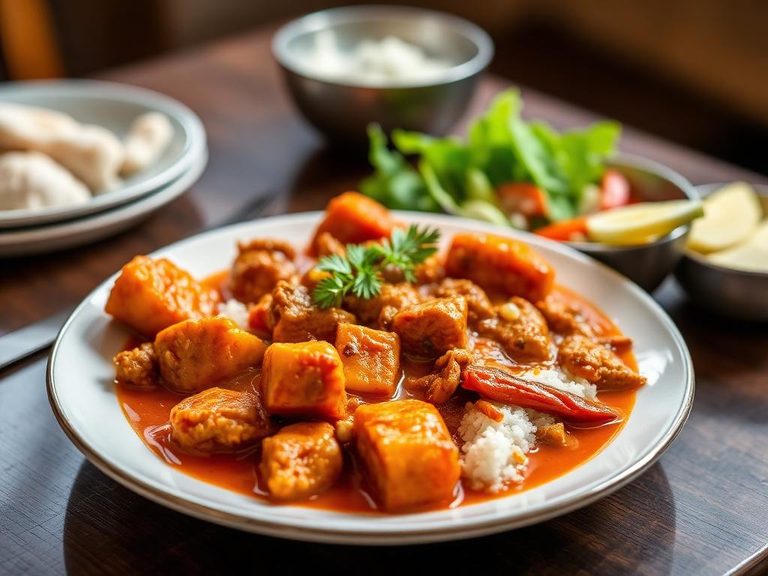
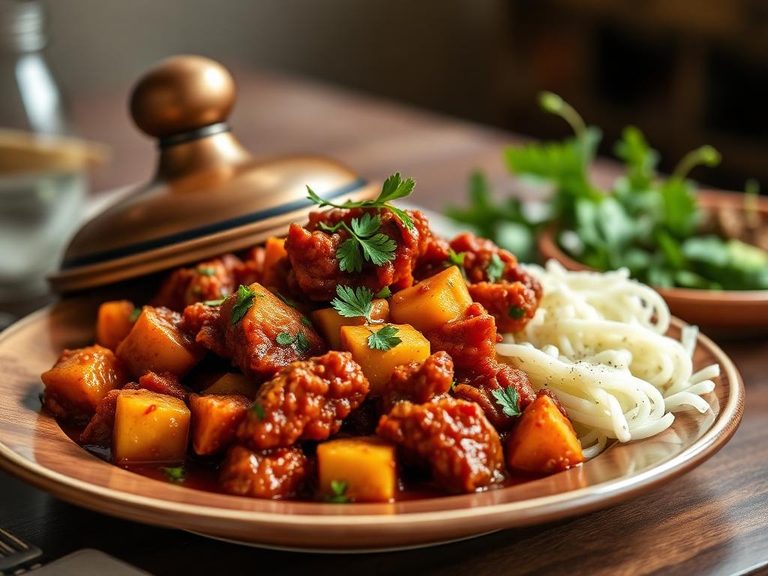
People love ground ginger for its fiery, aromatic warmth that can transform both sweet and savory dishes, from gingerbread to curries. Its incredible versatility and deep cultural roots in global cuisines make it a beloved, indispensable pantry staple.
⚠️ Watch-outs & how to enjoy it better
While generally safe, its potent bioactive compounds can cause digestive upset (heartburn, diarrhea) in sensitive individuals or at high doses. To mitigate, consume it with food, start with small amounts, and avoid it if you have gallstones or are on blood-thinning medication without consulting a doctor.
Key benefits
- Exceptionally high in dietary fiber (14.1g/100g), supporting digestive health.
- Good source of plant-based protein (8.98g/100g) for a spice.
- Rich in bioactive compounds like gingerol with antioxidant properties.
- Contains essential minerals like manganese and potassium.
- Low in fat (4.24g/100g) and sodium-free.
🍽️ Popular dishes

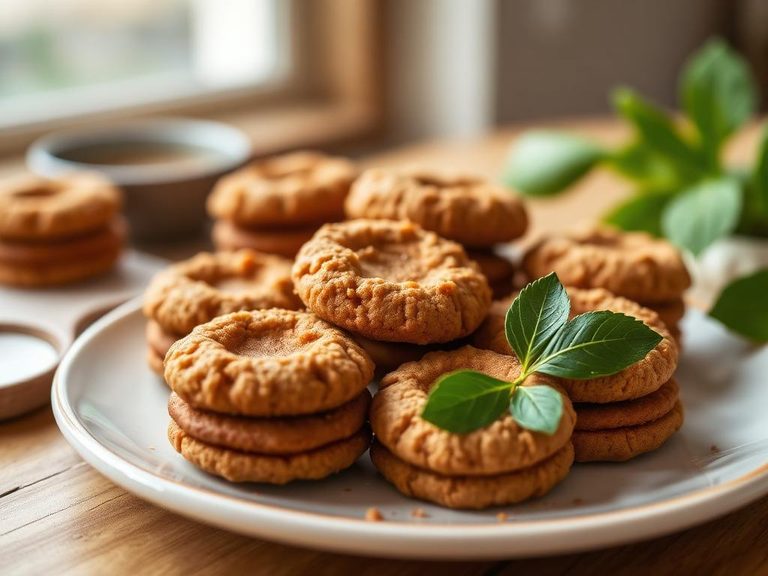
🌍 Where it's eaten
💡 Did you know?
Ground ginger is not just dried ginger root; the commercial spice is often made from the dried, fibrous rhizome that has been boiled, peeled, and then ground, which can alter its flavor profile compared to fresh ginger.
Full nutrition (USDA data · scales with serving)
| Water | 9.9 g |
| Energy | 335 kcal |
| Energy | 1404 kj |
| Protein | 9.0 g |
| Total lipid (fat) | 4.2 g |
| Ash | 5.2 g |
| Carbohydrate, by difference | 71.6 g |
| Fiber, total dietary | 14.1 g |
| Total Sugars | 3.4 g |
| Sucrose | 0.20 g |
| Glucose | 1.2 g |
| Fructose | 1.8 g |
| Lactose | 0.00 g |
| Maltose | 0.00 g |
| Galactose | 0.19 g |
| Calcium, Ca | 114 mg |
| Iron, Fe | 19.8 mg |
| Magnesium, Mg | 214 mg |
| Phosphorus, P | 168 mg |
| Potassium, K | 1320 mg |
| Sodium, Na | 27.0 mg |
| Zinc, Zn | 3.6 mg |
| Copper, Cu | 0.48 mg |
| Manganese, Mn | 33.3 mg |
| Selenium, Se | 55.8 ug |
| Vitamin C, total ascorbic acid | 0.70 mg |
| Thiamin | 0.05 mg |
| Riboflavin | 0.17 mg |
| Niacin | 9.6 mg |
| Pantothenic acid | 0.48 mg |
| Vitamin B-6 | 0.63 mg |
| Folate, total | 13.0 ug |
| Folic acid | 0.00 ug |
| Folate, food | 13.0 ug |
| Folate, DFE | 13.0 ug |
| Choline, total | 41.2 mg |
| Betaine | 3.4 mg |
| Vitamin B-12 | 0.00 ug |
| Vitamin B-12, added | 0.00 ug |
| Vitamin A, RAE | 2.0 ug |
| Retinol | 0.00 ug |
| Carotene, beta | 18.0 ug |
| Carotene, alpha | 0.00 ug |
| Cryptoxanthin, beta | 0.00 ug |
| Vitamin A, IU | 30.0 iu |
| Lycopene | 0.00 ug |
| Lutein + zeaxanthin | 0.00 ug |
| Vitamin E (alpha-tocopherol) | 0.00 mg |
| Vitamin E, added | 0.00 mg |
| Tocopherol, beta | 0.00 mg |
| Tocopherol, gamma | 3.0 mg |
| Tocopherol, delta | 0.00 mg |
| Tocotrienol, alpha | 0.00 mg |
| Tocotrienol, beta | 0.00 mg |
| Tocotrienol, gamma | 0.00 mg |
| Tocotrienol, delta | 0.00 mg |
| Vitamin D (D2 + D3), International Units | 0.00 iu |
| Vitamin D (D2 + D3) | 0.00 ug |
| Vitamin K (phylloquinone) | 0.80 ug |
| Vitamin K (Dihydrophylloquinone) | 2.4 ug |
| Alcohol, ethyl | 0.00 g |
| Caffeine | 0.00 mg |
| Theobromine | 0.00 mg |
Fat & fatty acid profile (per 100g)
| Fatty acids, total saturated | 2.6 g |
| SFA 4:0 | 0.00 g |
| SFA 6:0 | 0.03 g |
| SFA 8:0 | 0.00 g |
| SFA 10:0 | 1.6 g |
| SFA 12:0 | 0.07 g |
| SFA 13:0 | 0.00 g |
| SFA 14:0 | 0.04 g |
| SFA 15:0 | 0.00 g |
| SFA 16:0 | 0.57 g |
| SFA 17:0 | 0.00 g |
| SFA 18:0 | 0.23 g |
| SFA 20:0 | 0.00 g |
| SFA 22:0 | 0.00 g |
| SFA 24:0 | 0.00 g |
| Fatty acids, total monounsaturated | 0.48 g |
| MUFA 14:1 | 0.03 g |
| MUFA 15:1 | 0.00 g |
| MUFA 16:1 | 0.04 g |
| MUFA 17:1 | 0.02 g |
| MUFA 18:1 | 0.36 g |
| MUFA 18:1 c | 0.36 g |
| MUFA 20:1 | 0.00 g |
| MUFA 22:1 | 0.04 g |
| MUFA 24:1 c | 0.00 g |
| Fatty acids, total polyunsaturated | 0.93 g |
| PUFA 18:2 | 0.71 g |
| PUFA 18:3 | 0.22 g |
| PUFA 18:3 n-3 c,c,c (ALA) | 0.22 g |
| PUFA 18:3 n-6 c,c,c | 0.00 g |
| PUFA 18:4 | 0.00 g |
| PUFA 20:2 n-6 c,c | 0.00 g |
| PUFA 20:3 | 0.00 g |
| PUFA 20:4 | 0.00 g |
| PUFA 20:5 n-3 (EPA) | 0.00 g |
| PUFA 22:5 n-3 (DPA) | 0.00 g |
| PUFA 22:6 n-3 (DHA) | 0.00 g |
| Fatty acids, total trans | 0.00 g |
| Fatty acids, total trans-monoenoic | 0.00 g |
| TFA 18:1 t | 0.00 g |
| Cholesterol | 0.00 mg |
| Phytosterols | 83.0 mg |
Amino acid profile (per 100g)
| Tryptophan | 0.15 g |
| Threonine | 0.29 g |
| Isoleucine | 0.34 g |
| Leucine | 0.51 g |
| Lysine | 0.24 g |
| Methionine | 0.09 g |
| Cystine | 0.10 g |
| Phenylalanine | 0.31 g |
| Tyrosine | 0.24 g |
| Valine | 0.41 g |
| Arginine | 0.71 g |
| Histidine | 0.20 g |
| Alanine | 0.27 g |
| Aspartic acid | 1.4 g |
| Glutamic acid | 0.79 g |
| Glycine | 0.50 g |
| Proline | 0.33 g |
| Serine | 0.25 g |
| Hydroxyproline | 0.00 g |
FAQ
Is ground ginger the same as fresh ginger?
No. Ground ginger is dried and powdered, offering a more concentrated, less pungent flavor than fresh ginger. Fresh ginger has a brighter, more complex taste and contains more moisture and volatile oils.
How much ground ginger should I use in a recipe?
A general rule is 1/4 teaspoon of ground ginger for every 1 tablespoon of fresh ginger called for in a recipe. Start with less and adjust to taste, as its flavor is potent.
Can I substitute ground ginger for fresh ginger in all recipes?
Not always. Ground ginger works well in baked goods, marinades, and spice blends, but fresh ginger is preferred in stir-fries, soups, and dishes where its texture and fresh, zesty flavor are key.
Nutrient density (calculated · NRF9.3)
Nutrient Rich Foods index: beneficial nutrients (protein, fiber, vitamins, minerals) minus saturated fat, added sugar & sodium, per 100 kcal.
NRF9.3 index — Fulgoni, Keast & Drewnowski, 2009. Computed from USDA nutrients.
Weight-loss friendliness (composite index)
Energy density 3.35 kcal/g · 11% calories from protein · 14.1 g fiber · 3.4 g sugar per 100 g.
Composite of energy density (Rolls et al., 1999), protein & fiber satiety, minus sugar. A calculated heuristic — ranks satiety-per-calorie, not a clinical measure.
Dietary load (calculated from USDA values)
Potential renal acid load. Positive = acid-forming, negative = alkaline-forming.
Sodium-to-potassium ratio: 0.02 (lower is better — aim for ≤ 1)
Sodium:potassium per WHO potassium guidance. Computed from USDA nutrients.