

Seeds, sunflower seed butter, without salt
Whole food · Nut and Seed Products

Photo: Wikipedia
Sunflower seed butter is a thick, creamy paste made from ground roasted sunflower seeds, boasting a deep, nutty, and slightly earthy flavor with a satisfyingly gritty texture. It's a nutritional powerhouse, packing over 55 grams of healthy fats and a solid 17 grams of protein per 100 grams, making it a dense source of energy and essential minerals like magnesium and selenium.
Calorie split: 10% protein · 14% carbs · 75% fat
↓ Full nutrition💚 Why it's loved
People adore its robust, toasty flavor that's both comforting and versatile, perfect for spreading on toast, blending into smoothies, or using as a dip. It's celebrated as a staple in nut-free kitchens and a protein-packed snack for active lifestyles.
⚠️ Watch-outs & how to enjoy it better
Its high calorie density (over 600 kcal per 100g) requires mindful portioning to avoid excess intake. As a seed, it can still trigger allergies in some individuals, and its thick texture can be a challenge to spread straight from the jar. Tip: Stir well before use and consider warming slightly for easier spreading; measure portions with a tablespoon for calorie control.
Key benefits
- Excellent source of vitamin E, a powerful antioxidant.
- High in magnesium, supporting muscle and nerve function.
- Provides plant-based protein and healthy monounsaturated fats.
- Naturally free of common tree nuts, making it a good alternative for many.
🍽️ Popular dishes
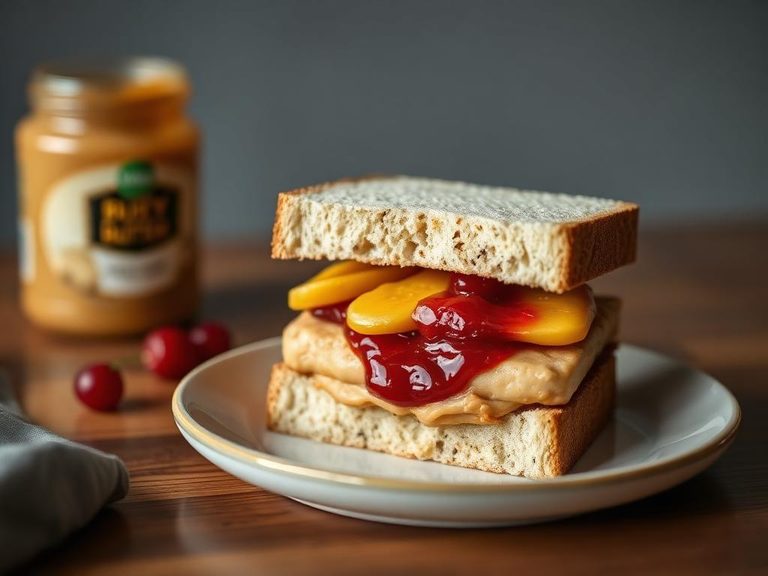
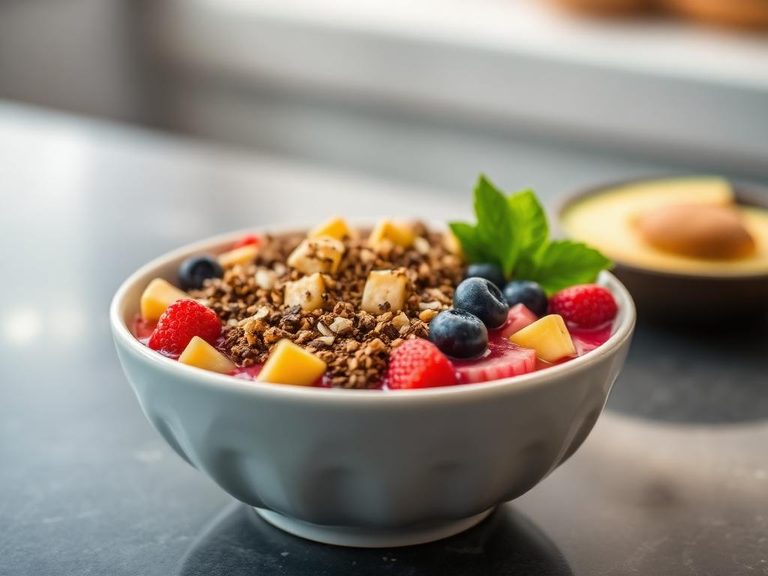
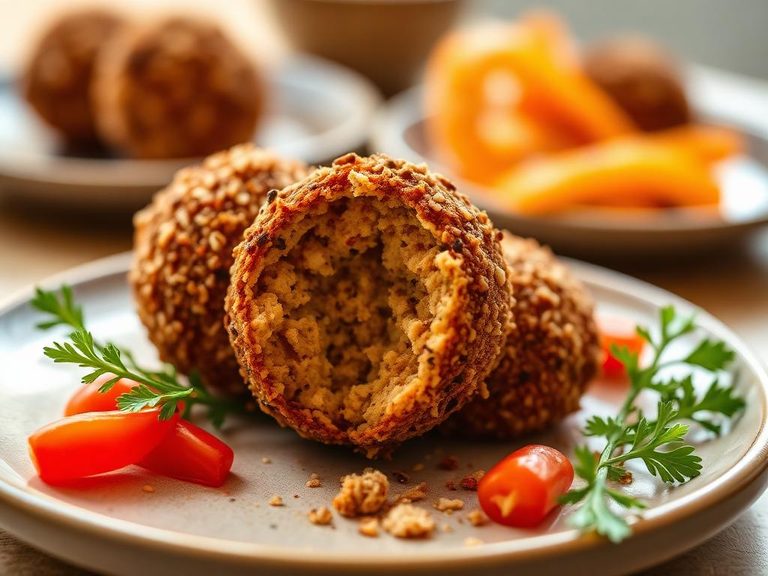
🌍 Where it's eaten
💡 Did you know?
Sunflower seed butter is sometimes called 'sunbutter' and became a hugely popular school-safe alternative after many U.S. schools banned peanuts and tree nuts due to allergy concerns.
Full nutrition (USDA data · scales with serving)
| Water | 0.62 g |
| Energy | 617 kcal |
| Energy | 2581 kj |
| Protein | 17.3 g |
| Total lipid (fat) | 55.2 g |
| Ash | 3.6 g |
| Carbohydrate, by difference | 23.3 g |
| Fiber, total dietary | 5.7 g |
| Total Sugars | 10.5 g |
| Sucrose | 10.5 g |
| Glucose | 0.00 g |
| Fructose | 0.00 g |
| Lactose | 0.00 g |
| Maltose | 0.00 g |
| Galactose | 0.00 g |
| Starch | 0.83 g |
| Calcium, Ca | 64.0 mg |
| Iron, Fe | 4.1 mg |
| Magnesium, Mg | 311 mg |
| Phosphorus, P | 666 mg |
| Potassium, K | 576 mg |
| Sodium, Na | 3.0 mg |
| Zinc, Zn | 4.9 mg |
| Copper, Cu | 1.6 mg |
| Manganese, Mn | 2.1 mg |
| Selenium, Se | 104 ug |
| Vitamin C, total ascorbic acid | 2.7 mg |
| Thiamin | 0.05 mg |
| Riboflavin | 0.16 mg |
| Niacin | 6.7 mg |
| Pantothenic acid | 1.2 mg |
| Vitamin B-6 | 0.55 mg |
| Folate, total | 237 ug |
| Folic acid | 0.00 ug |
| Folate, food | 237 ug |
| Folate, DFE | 237 ug |
| Vitamin B-12 | 0.00 ug |
| Retinol | 0.00 ug |
| Vitamin A, IU | 52.0 iu |
| Vitamin E (alpha-tocopherol) | 22.9 mg |
| Tocopherol, beta | 1.3 mg |
| Tocopherol, gamma | 15.0 mg |
| Tocopherol, delta | 5.7 mg |
| Tocotrienol, alpha | 0.00 mg |
| Tocotrienol, beta | 0.00 mg |
| Tocotrienol, gamma | 0.13 mg |
| Tocotrienol, delta | 0.00 mg |
| Vitamin D (D2 + D3), International Units | 0.00 iu |
| Vitamin D (D2 + D3) | 0.00 ug |
Fat & fatty acid profile (per 100g)
| Fatty acids, total saturated | 4.7 g |
| SFA 4:0 | 0.01 g |
| SFA 6:0 | 0.00 g |
| SFA 8:0 | 0.00 g |
| SFA 10:0 | 0.00 g |
| SFA 12:0 | 0.00 g |
| SFA 14:0 | 0.01 g |
| SFA 15:0 | 0.01 g |
| SFA 16:0 | 1.9 g |
| SFA 17:0 | 0.01 g |
| SFA 18:0 | 2.0 g |
| SFA 20:0 | 0.13 g |
| SFA 22:0 | 0.44 g |
| SFA 24:0 | 0.14 g |
| Fatty acids, total monounsaturated | 39.0 g |
| MUFA 14:1 | 0.00 g |
| MUFA 15:1 | 0.00 g |
| MUFA 16:1 | 0.02 g |
| MUFA 16:1 c | 0.02 g |
| MUFA 17:1 | 0.00 g |
| MUFA 18:1 | 38.9 g |
| MUFA 18:1 c | 38.8 g |
| MUFA 20:1 | 0.14 g |
| MUFA 22:1 | 0.00 g |
| MUFA 22:1 c | 0.00 g |
| MUFA 24:1 c | 0.00 g |
| Fatty acids, total polyunsaturated | 9.8 g |
| PUFA 18:2 | 9.7 g |
| PUFA 18:2 n-6 c,c | 9.7 g |
| PUFA 18:2 CLAs | 0.00 g |
| PUFA 18:3 | 0.05 g |
| PUFA 18:3 n-3 c,c,c (ALA) | 0.05 g |
| PUFA 18:3 n-6 c,c,c | 0.00 g |
| PUFA 18:4 | 0.00 g |
| PUFA 20:2 n-6 c,c | 0.00 g |
| PUFA 20:3 | 0.00 g |
| PUFA 20:3 n-3 | 0.00 g |
| PUFA 20:3 n-6 | 0.00 g |
| PUFA 20:4 | 0.01 g |
| PUFA 20:5 n-3 (EPA) | 0.00 g |
| PUFA 22:4 | 0.00 g |
| PUFA 22:5 n-3 (DPA) | 0.00 g |
| PUFA 22:6 n-3 (DHA) | 0.00 g |
| Fatty acids, total trans | 0.03 g |
| Fatty acids, total trans-monoenoic | 0.02 g |
| TFA 16:1 t | 0.00 g |
| TFA 18:1 t | 0.02 g |
| TFA 22:1 t | 0.00 g |
| TFA 18:2 t not further defined | 0.01 g |
| Fatty acids, total trans-polyenoic | 0.01 g |
| Cholesterol | 0.00 mg |
| Stigmasterol | 18.0 mg |
| Campesterol | 21.0 mg |
| Beta-sitosterol | 170 mg |
Amino acid profile (per 100g)
| Tryptophan | 0.28 g |
| Threonine | 0.72 g |
| Isoleucine | 0.84 g |
| Leucine | 1.3 g |
| Lysine | 0.53 g |
| Methionine | 0.43 g |
| Cystine | 0.27 g |
| Phenylalanine | 0.94 g |
| Tyrosine | 0.43 g |
| Valine | 1.0 g |
| Arginine | 1.8 g |
| Histidine | 0.49 g |
| Alanine | 0.86 g |
| Aspartic acid | 1.8 g |
| Glutamic acid | 4.3 g |
| Glycine | 1.1 g |
| Proline | 0.88 g |
| Serine | 0.86 g |
FAQ
Is sunflower seed butter healthier than peanut butter?
It's comparable in calories and fat but is free of peanuts and tree nuts, making it a crucial alternative for those with allergies. It's higher in certain minerals like magnesium and selenium.
Why does my sunflower seed butter turn green?
A harmless reaction between the natural chlorogenic acid in sunflower seeds and baking soda (often added for texture) can cause a green hue when mixed with alkaline ingredients like baking soda or certain flours. It's safe to eat.
How should I store it?
Natural versions without stabilizers will separate. Store upside down at room temperature to help remix the oil, or stir thoroughly and refrigerate after opening to slow separation and extend freshness.
Nutrient density (calculated · NRF9.3)
Nutrient Rich Foods index: beneficial nutrients (protein, fiber, vitamins, minerals) minus saturated fat, added sugar & sodium, per 100 kcal.
NRF9.3 index — Fulgoni, Keast & Drewnowski, 2009. Computed from USDA nutrients.
Weight-loss friendliness (composite index)
Energy density 6.17 kcal/g · 11% calories from protein · 5.7 g fiber · 10.5 g sugar per 100 g.
Composite of energy density (Rolls et al., 1999), protein & fiber satiety, minus sugar. A calculated heuristic — ranks satiety-per-calorie, not a clinical measure.
Dietary load (calculated from USDA values)
Potential renal acid load. Positive = acid-forming, negative = alkaline-forming.
Sodium-to-potassium ratio: 0.01 (lower is better — aim for ≤ 1)
Sodium:potassium per WHO potassium guidance. Computed from USDA nutrients.