

Salami, cooked, beef and pork
Whole food · Sausages and Luncheon Meats

Photo: Wikipedia
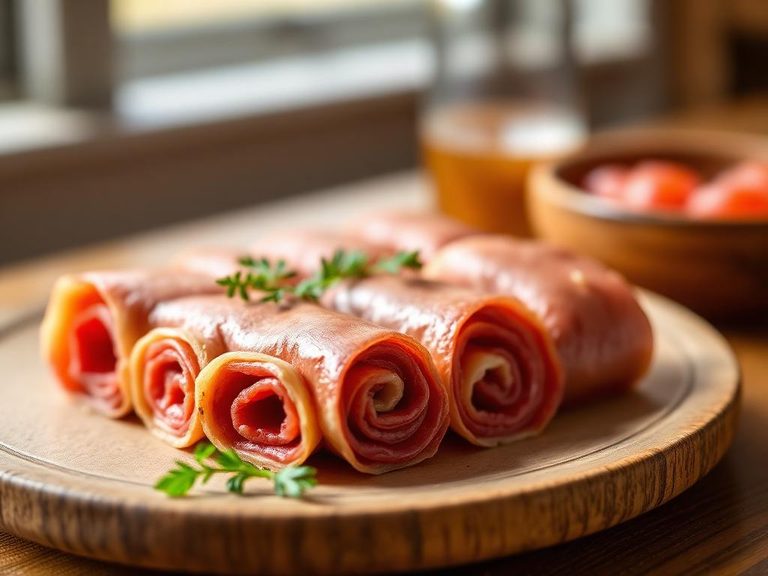
Cooked salami is a dense, savory cured sausage made from a blend of beef and pork, seasoned with garlic, salt, and spices like paprika and fennel. Its texture is firm yet slightly yielding, with a rich, salty, and umami-forward flavor profile that's less tangy than its fermented counterpart. Nutritionally, it's a high-fat, high-protein food with minimal carbohydrates, making it a calorie-dense source of energy.
Calorie split: 26% protein · 3% carbs · 71% fat
↓ Full nutrition💚 Why it's loved
People adore its intense, savory flavor and satisfying chew, which makes it a standout on charcuterie boards and in sandwiches. Its cultural significance in European and American deli traditions adds a nostalgic, communal appeal to meals and gatherings.
⚠️ Watch-outs & how to enjoy it better
High sodium and saturated fat content can be a concern for those with hypertension or heart health goals. To mitigate this, pair it with potassium-rich foods like leafy greens or avocado, practice strict portion control (e.g., 30-50g), and choose lower-sodium varieties when available. It is also not suitable for those with pork allergies or following kosher/halal diets.
Key benefits
- Excellent source of complete protein (21.85g per 100g) for muscle maintenance.
- Very low in carbohydrates and sugars, suitable for low-carb diets.
- Provides essential minerals like iron and zinc from red meat.
- Rich in B vitamins, particularly B12, from animal sources.
- Long shelf life and portability make it a convenient protein source.
🍽️ Popular dishes
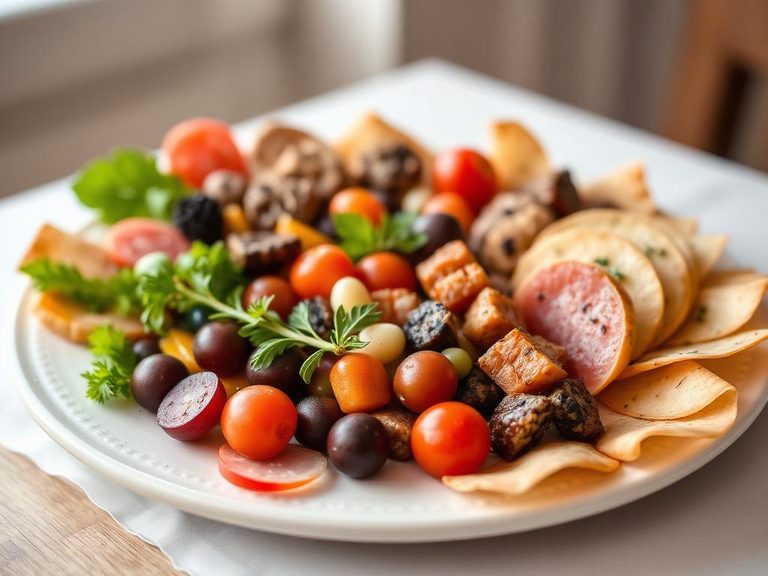
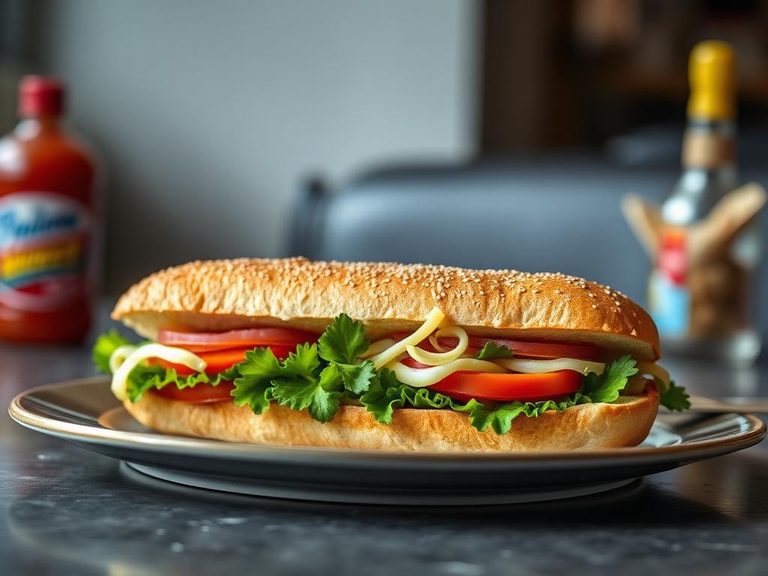
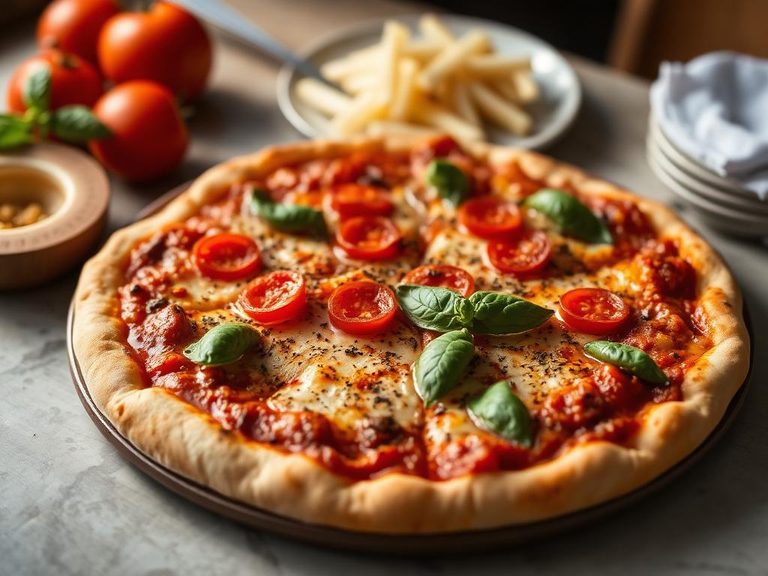
🌍 Where it's eaten
💡 Did you know?
The word 'salami' comes from the Latin 'salumen,' meaning salted meat, and the practice of salting and curing sausages dates back to ancient Rome.
Full nutrition (USDA data · scales with serving)
| Water | 45.2 g |
| Energy | 336 kcal |
| Energy | 1407 kj |
| Protein | 21.9 g |
| Total lipid (fat) | 25.9 g |
| Ash | 4.7 g |
| Carbohydrate, by difference | 2.4 g |
| Fiber, total dietary | 0.00 g |
| Total Sugars | 0.96 g |
| Sucrose | 0.44 g |
| Glucose | 0.52 g |
| Fructose | 0.00 g |
| Lactose | 0.00 g |
| Maltose | 0.00 g |
| Galactose | 0.00 g |
| Calcium, Ca | 15.0 mg |
| Iron, Fe | 1.6 mg |
| Magnesium, Mg | 19.0 mg |
| Phosphorus, P | 191 mg |
| Potassium, K | 316 mg |
| Sodium, Na | 1740 mg |
| Zinc, Zn | 2.9 mg |
| Copper, Cu | 0.36 mg |
| Manganese, Mn | 0.98 mg |
| Selenium, Se | 31.3 ug |
| Fluoride, F | 41.2 ug |
| Vitamin C, total ascorbic acid | 0.00 mg |
| Thiamin | 0.37 mg |
| Riboflavin | 0.36 mg |
| Niacin | 6.1 mg |
| Pantothenic acid | 1.2 mg |
| Vitamin B-6 | 0.46 mg |
| Folate, total | 3.0 ug |
| Folic acid | 0.00 ug |
| Folate, food | 3.0 ug |
| Folate, DFE | 3.0 ug |
| Choline, total | 93.5 mg |
| Betaine | 4.3 mg |
| Vitamin B-12 | 1.5 ug |
| Vitamin B-12, added | 0.00 ug |
| Vitamin A, RAE | 0.00 ug |
| Retinol | 0.00 ug |
| Carotene, beta | 0.00 ug |
| Carotene, alpha | 0.00 ug |
| Cryptoxanthin, beta | 0.00 ug |
| Vitamin A, IU | 0.00 iu |
| Lycopene | 0.00 ug |
| Lutein + zeaxanthin | 0.00 ug |
| Vitamin E (alpha-tocopherol) | 0.22 mg |
| Vitamin E, added | 0.00 mg |
| Vitamin D (D2 + D3), International Units | 41.0 iu |
| Vitamin D (D2 + D3) | 1.0 ug |
| Vitamin K (phylloquinone) | 3.2 ug |
| Vitamin K (Dihydrophylloquinone) | 0.00 ug |
| Vitamin K (Menaquinone-4) | 28.0 ug |
| Alcohol, ethyl | 0.00 g |
| Caffeine | 0.00 mg |
| Theobromine | 0.00 mg |
Fat & fatty acid profile (per 100g)
| Fatty acids, total saturated | 9.3 g |
| SFA 4:0 | 0.00 g |
| SFA 6:0 | 0.00 g |
| SFA 8:0 | 0.00 g |
| SFA 10:0 | 0.00 g |
| SFA 12:0 | 0.00 g |
| SFA 14:0 | 0.47 g |
| SFA 15:0 | 0.05 g |
| SFA 16:0 | 5.6 g |
| SFA 17:0 | 0.13 g |
| SFA 18:0 | 3.0 g |
| SFA 20:0 | 0.04 g |
| SFA 22:0 | 0.00 g |
| SFA 24:0 | 0.00 g |
| Fatty acids, total monounsaturated | 11.1 g |
| MUFA 14:1 | 0.08 g |
| MUFA 15:1 | 0.00 g |
| MUFA 16:1 | 0.69 g |
| MUFA 17:1 | 0.00 g |
| MUFA 18:1 | 10.2 g |
| MUFA 18:1 c | 9.8 g |
| MUFA 20:1 | 0.14 g |
| MUFA 22:1 | 0.00 g |
| MUFA 22:1 c | 0.00 g |
| Fatty acids, total polyunsaturated | 2.5 g |
| PUFA 18:2 | 2.3 g |
| PUFA 18:2 n-6 c,c | 2.1 g |
| PUFA 18:3 | 0.13 g |
| PUFA 18:3 n-3 c,c,c (ALA) | 0.13 g |
| PUFA 18:3 n-6 c,c,c | 0.00 g |
| PUFA 18:4 | 0.00 g |
| PUFA 20:2 n-6 c,c | 0.08 g |
| PUFA 20:3 | 0.00 g |
| PUFA 20:4 | 0.06 g |
| PUFA 20:5 n-3 (EPA) | 0.00 g |
| PUFA 22:5 n-3 (DPA) | 0.00 g |
| PUFA 22:6 n-3 (DHA) | 0.00 g |
| Fatty acids, total trans | 0.59 g |
| Fatty acids, total trans-monoenoic | 0.43 g |
| TFA 18:1 t | 0.43 g |
| TFA 18:2 t,t | 0.15 g |
| Fatty acids, total trans-polyenoic | 0.15 g |
| Cholesterol | 89.0 mg |
| Phytosterols | 0.00 mg |
Amino acid profile (per 100g)
| Tryptophan | 0.11 g |
| Threonine | 0.52 g |
| Isoleucine | 0.68 g |
| Leucine | 0.93 g |
| Lysine | 1.1 g |
| Methionine | 0.30 g |
| Cystine | 0.20 g |
| Phenylalanine | 0.48 g |
| Tyrosine | 0.55 g |
| Valine | 0.67 g |
| Arginine | 0.85 g |
| Histidine | 0.36 g |
| Alanine | 0.88 g |
| Aspartic acid | 1.3 g |
| Glutamic acid | 1.9 g |
| Glycine | 1.2 g |
| Proline | 0.83 g |
| Serine | 0.54 g |
| Hydroxyproline | 0.32 g |
FAQ
Is cooked salami the same as cured salami?
No. Cooked salami (like this beef and pork version) is heat-treated and ready to eat, while traditional cured salami is fermented and air-dried, developing a tangier flavor and firmer texture.
Can I freeze cooked salami?
Yes, it freezes well for up to 2 months. Wrap tightly in plastic and foil to prevent freezer burn; thaw in the refrigerator before use.
What's the best way to store it?
Keep unopened packages in the refrigerator. Once opened, wrap tightly in plastic or place in an airtight container and consume within 5-7 days.
Is it high in cholesterol?
Yes, like most processed meats, it contains dietary cholesterol. Moderation is key, especially for those monitoring cholesterol levels.
Nutrient density (calculated · NRF9.3)
Nutrient Rich Foods index: beneficial nutrients (protein, fiber, vitamins, minerals) minus saturated fat, added sugar & sodium, per 100 kcal.
NRF9.3 index — Fulgoni, Keast & Drewnowski, 2009. Computed from USDA nutrients.
Weight-loss friendliness (composite index)
Energy density 3.36 kcal/g · 26% calories from protein · 0.0 g fiber · 1.0 g sugar per 100 g.
Composite of energy density (Rolls et al., 1999), protein & fiber satiety, minus sugar. A calculated heuristic — ranks satiety-per-calorie, not a clinical measure.
Dietary load (calculated from USDA values)
Potential renal acid load. Positive = acid-forming, negative = alkaline-forming.
Sodium-to-potassium ratio: 5.51 (lower is better — aim for ≤ 1)
Sodium:potassium per WHO potassium guidance. Computed from USDA nutrients.